Absolutely. Here is a magazine-style article draft with a full 1–48 power ranking for all 2026 FIFA World Cup teams.
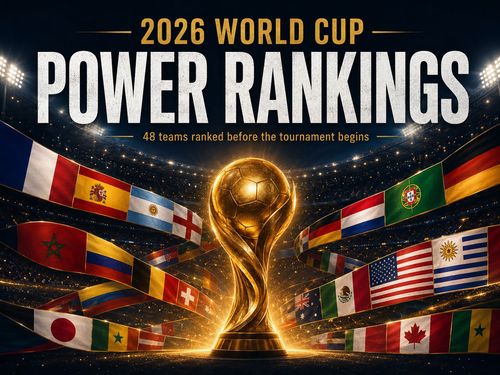
2026 FIFA World Cup Power Ranking: Every Team Ranked Before the Biggest World Cup Ever
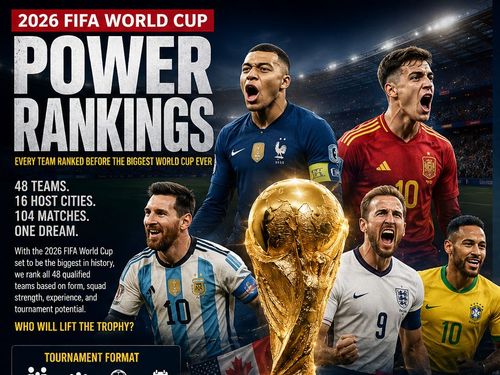
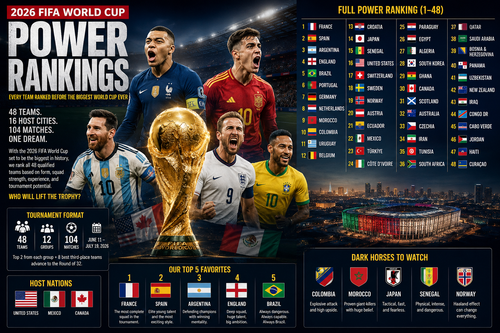
The 2026 FIFA World Cup is not just another tournament. It is the biggest World Cup in history, expanding to 48 teams, split across 12 groups of four, with the top two from each group plus the eight best third-place teams moving into a new Round of 32. The tournament will be hosted across the United States, Mexico, and Canada from June 11 to July 19, 2026. (Roadtrips)
That expansion changes everything. More teams means more surprise stories, more uneven groups, more pressure on favorites, and a real chance for dark horses to go deeper than expected. This ranking is not just the official FIFA ranking. The latest official FIFA men’s ranking, updated on April 1, 2026, has France first, Spain second, Argentina third, England fourth, Portugal fifth, and Brazil sixth. (Inside FIFA)
But World Cups are not won by spreadsheets. They are won by squads, form, experience, chemistry, knockout mentality, group path, and sometimes one superstar who refuses to go home.
So here is our full pre-tournament power ranking of all 48 teams.
1. France
France enter the tournament as the most complete team in the field. They have elite players in almost every area of the pitch, a proven tournament culture, and the kind of squad depth most nations can only dream of. Even if one star has an off night, France can usually bring another world-class player from the bench.
Their ranking at No. 1 is not just about reputation. France are also first in the latest official FIFA ranking, and their recent run has pushed them back to the top of world football. (Inside FIFA)
The biggest question is pressure. France are expected to go deep, and anything short of the semifinals would feel like a disappointment. But on paper, no team looks better built for a long tournament.
Group: I — France, Senegal, Norway, Iraq
Why this rank: Best overall squad, elite depth, proven knockout DNA.
2. Spain
Spain may be the most exciting team in the tournament. They combine technical control, fearless young talent, and a style that can dominate possession against almost anyone. When Spain are at their best, they do not just beat teams — they suffocate them.
The reason they sit just behind France is physical balance and tournament experience. Spain have the talent to win it all, but they may still need to prove they can survive the ugly knockout games where control disappears and chaos takes over.
Their group is tricky because Uruguay are dangerous, but Spain should still be strong favorites to finish first.
Group: H — Spain, Cabo Verde, Saudi Arabia, Uruguay
Why this rank: Elite technical quality, rising generation, serious title contender.
3. Argentina
Argentina are the defending world champions, and that alone demands respect. They know how to suffer, how to control moments, and how to win when the game becomes emotional. This is a team with belief built into its identity.
The only reason they are not higher is the natural question around age, freshness, and whether the same core can climb the mountain again. Winning one World Cup is historic. Defending it is brutal.
Still, Argentina have one of the friendlier group draws among the major contenders. That could allow them to build rhythm before the knockout rounds.
Group: J — Argentina, Algeria, Austria, Jordan
Why this rank: Champions’ mentality, elite experience, favorable group path.
4. England
England have one of the most talented squads in the world. Their attacking depth is frightening, their midfield has star power, and their younger players are no longer just promising — they are proven at the highest level.
The question is psychological. England often look like a champion on paper, then run into the emotional weight of history. This time, though, the squad looks balanced enough to go all the way.
Group L will not be easy, especially with Croatia and Ghana, but England should still be the strongest side in it.
Group: L — England, Croatia, Ghana, Panama
Why this rank: Huge talent pool, dangerous attack, but still carrying tournament pressure.
5. Brazil
Brazil are always Brazil. Even when they are not at their most dominant, they remain one of the most dangerous teams in the world. No opponent wants to see them in a knockout game.
Their squad has individual magic, pace, creativity, and big-game reputation. But compared with France or Spain, Brazil feel slightly less stable. The ceiling is enormous, but the floor may be lower than usual.
Group C has Morocco and Scotland, so Brazil cannot sleepwalk through it. But if they click early, they could easily look like the best team in the tournament by the second week.
Group: C — Brazil, Morocco, Haiti, Scotland
Why this rank: Superstar talent and World Cup pedigree, but not the most balanced favorite.
6. Portugal
Portugal have one of the deepest squads in the tournament. They can attack in many ways, control possession, press, counter, and change games from the bench. On pure player quality, they belong in the top five conversation.
The challenge is identity. Portugal sometimes look like a team with too many options and not always a clear final version. The Cristiano Ronaldo storyline also adds drama. It can inspire the team, but it can also dominate the conversation.
Still, Portugal’s group is very manageable. Colombia are a serious test, but Portugal should expect to advance comfortably.
Group: K — Portugal, Uzbekistan, Colombia, Congo DR
Why this rank: Elite squad depth, big names, but tactical clarity is the key.
7. Germany
Germany are not always pretty, but they are never irrelevant. They have tournament history, high-level players, and a national football culture built around surviving pressure. Even when Germany are not ranked among the very top favorites, they can become terrifying once knockout football begins.
Their group gives them a strong chance to start fast. Ecuador and Côte d’Ivoire will test them physically, but Germany should have enough quality to control the group.
They are ranked below Portugal and Brazil because they still need to prove they are fully back. But if they find momentum, nobody will want them in the Round of 16.
Group: E — Germany, Curaçao, Côte d’Ivoire, Ecuador
Why this rank: Tournament pedigree, strong squad, dangerous if momentum builds.
8. Netherlands
The Netherlands are balanced, disciplined, and difficult to beat. They may not have the same attacking glamour as France, Spain, Brazil, or Portugal, but they are one of the most complete teams in the tournament.
Their strength is structure. The Dutch usually know who they are. They defend well, move the ball cleanly, and have enough individual quality to punish mistakes.
Group F is one of the more interesting groups, with Japan, Sweden, and Tunisia. It is not impossible for the Netherlands to stumble, but they are still the clear favorite.
Group: F — Netherlands, Japan, Tunisia, Sweden
Why this rank: Balanced, experienced, organized, and built for knockout football.
9. Morocco
Morocco are no longer a surprise. After their historic 2022 run, every team knows how dangerous they can be. They are organized, aggressive, confident, and comfortable playing without fear against giants.
Their No. 9 ranking is about respect. Morocco have the mentality and tactical discipline to frustrate elite teams, and their players now carry big-tournament experience.
The group is hard because Brazil are there and Scotland can be uncomfortable, but Morocco should believe they can qualify and possibly do damage again.
Group: C — Brazil, Morocco, Haiti, Scotland
Why this rank: Elite defensive organization, huge belief, proven giant-killer profile.
10. Colombia
Colombia are one of the most dangerous dark horses in the tournament. They are technical, intense, emotional, and capable of playing with the kind of rhythm that can overwhelm teams.
They are ranked this high because they look like a team that can hurt a favorite. Maybe they are not a full title contender, but they have enough quality to reach the quarterfinals if the bracket opens.
The problem is the group. Portugal are favorites, and Uzbekistan and Congo DR will not be easy. Colombia need a strong start.
Group: K — Portugal, Uzbekistan, Colombia, Congo DR
Why this rank: High upside, South American edge, dangerous knockout potential.
11. Uruguay
Uruguay are built for uncomfortable football. They are physical, intense, street-smart, and never afraid of a fight. In a World Cup, that matters.
They also have enough attacking quality to be more than just a defensive team. Uruguay can press, counter, and turn matches into emotional battles.
The reason they are outside the top 10 is the group. Spain are favorites, and Uruguay may have to work harder than other contenders just to control their path.
Group: H — Spain, Cabo Verde, Saudi Arabia, Uruguay
Why this rank: Tough, talented, and dangerous, but stuck behind Spain in a tricky group.
12. Belgium
Belgium are no longer at the peak of their golden generation, but they still have serious quality. They can control games, create chances, and punish weaker teams.
The question is whether they still have enough energy and defensive security to beat the best sides in knockout football. Belgium can reach the quarterfinals, but winning the whole thing feels less likely than it did a few years ago.
Their group is favorable. Egypt and Iran are dangerous, but Belgium should still be expected to finish first.
Group: G — Belgium, Egypt, Iran, New Zealand
Why this rank: Still talented, favorable group, but not as feared as before.
13. Croatia
Croatia should never be underestimated. They have made a habit of turning tournaments into endurance tests, surviving extra time, penalties, and pressure better than almost anyone.
Their midfield intelligence and tournament experience keep them high in this ranking. The concern is age and whether they can keep up physically with faster, younger sides.
In Group L, England are favorites, but Croatia are absolutely capable of finishing second and becoming a nightmare knockout opponent.
Group: L — England, Croatia, Ghana, Panama
Why this rank: Tournament specialists with experience, but aging legs are a concern.
14. Japan
Japan are one of the most respected “non-traditional” powers in the tournament. They are organized, technically strong, quick in transition, and tactically disciplined.
They are ranked above several bigger-name teams because they consistently look like a side that knows exactly what it wants to do. Japan can beat teams who underestimate them, and by now, nobody should.
Group F is tough, but Japan have a real chance to finish second behind the Netherlands — and maybe even challenge for first.
Group: F — Netherlands, Japan, Tunisia, Sweden
Why this rank: Tactical discipline, speed, organization, and real upset potential.
15. Senegal
Senegal are one of Africa’s strongest teams and one of the most physically complete sides in the tournament. They have pace, power, confidence, and experience.
Their problem is the draw. France are in their group, and Norway bring one of the world’s most dangerous strikers. Senegal are good enough to advance, but there is very little room for error.
If they survive the group, they could become one of the most uncomfortable knockout opponents in the field.
Group: I — France, Senegal, Norway, Iraq
Why this rank: Physical strength and talent, but placed in a brutal group.
16. United States
The United States enter as co-hosts with one of their most talented generations. Home advantage matters, especially in a tournament where travel, climate, and crowd energy could all play a role.
The U.S. have athleticism, pressing ability, and enough attacking talent to beat good teams. But they still need to prove they can control big matches rather than just compete in them.
Their group is very open. Paraguay, Australia, and Türkiye are all dangerous, but the U.S. should see this as a major opportunity.
Group: D — United States, Paraguay, Australia, Türkiye
Why this rank: Home advantage, athletic squad, but needs consistency.
17. Switzerland
Switzerland are reliable. They may not excite casual fans, but they are experienced, disciplined, and very difficult to knock out early.
Their strength is tournament professionalism. Switzerland often do the basics well: defend compactly, stay calm, and punish mistakes. That makes them a strong bet to advance.
They land at No. 17 because their ceiling may not be as high as teams above them. They can reach the last 16 or even the quarterfinals, but a title run feels unlikely.
Group: B — Canada, Switzerland, Qatar, Bosnia and Herzegovina
Why this rank: Stable, disciplined, and well-positioned to escape the group.
18. Sweden
Sweden return with a dangerous profile. They are physical, direct, organized, and capable of turning matches into battles. That style can be very effective in a tournament.
Their group is difficult because the Netherlands and Japan are both strong. But Sweden are not the kind of team anyone will enjoy facing.
They are ranked 18th because they are good enough to qualify and maybe win a knockout game, but they need attacking efficiency to go deeper.
Group: F — Netherlands, Japan, Tunisia, Sweden
Why this rank: Physical, organized, dangerous, but stuck in a tough group.
19. Norway
Norway are one of the tournament’s most fascinating teams because of one obvious reason: Erling Haaland. Any team with a striker like that has knockout potential.
But World Cup success requires more than one superstar. Norway need service, midfield control, and defensive discipline. If those pieces work, they can scare anybody.
The group is brutal. France are favorites, Senegal are strong, and Iraq are not there just to participate. Norway could be ranked higher on star power, but the path is hard.
Group: I — France, Senegal, Norway, Iraq
Why this rank: Haaland gives them huge upside, but the group is unforgiving.
20. Austria
Austria are one of the better European teams outside the obvious giants. They are structured, intense, and tactically sharp.
They may not have the same global reputation as Croatia, Switzerland, or Sweden, but they are a dangerous side that can make games uncomfortable. Their ranking reflects balance more than star power.
In Group J, Argentina are the clear favorites, but Austria should believe they can fight Algeria for second place.
Group: J — Argentina, Algeria, Austria, Jordan
Why this rank: Well-coached, intense, and capable of beating mid-tier opponents.
21. Ecuador
Ecuador have one of the more talented young cores in the tournament. They are athletic, energetic, and capable of pressing teams into mistakes.
Their issue is consistency. They can look like a top-15 team on one night and then struggle to create enough clear chances on another.
Group E is difficult but open behind Germany. Ecuador have a serious chance to qualify if they handle Côte d’Ivoire and Curaçao.
Group: E — Germany, Curaçao, Côte d’Ivoire, Ecuador
Why this rank: Young, athletic, high upside, but still needs tournament maturity.
22. Mexico
Mexico have home advantage, history, and pressure. Playing in front of their own fans can be a major weapon, especially in the group stage.
But this is not Mexico at their most convincing. They should advance from Group A, but the question is whether they can finally break through and make a deeper run.
They are ranked 22nd because the floor is solid, but the ceiling is uncertain.
Group: A — Mexico, South Africa, Korea Republic, Czechia
Why this rank: Home boost and experience, but doubts remain about top-level quality.
23. Türkiye
Türkiye are always dangerous because they play with emotion, intensity, and attacking courage. On their day, they can upset stronger teams.
The problem is volatility. Türkiye can be brilliant, chaotic, or both in the same match. That makes them hard to rank and hard to trust.
Group D is one of the most balanced groups in the tournament. Türkiye could finish second, third, or even first if everything clicks.
Group: D — United States, Paraguay, Australia, Türkiye
Why this rank: High ceiling, unpredictable style, dangerous but inconsistent.
24. Côte d’Ivoire
Côte d’Ivoire are physically strong, technically capable, and always dangerous when they find rhythm. They have enough talent to challenge for second place in Group E.
Their ranking reflects potential more than certainty. They can overpower weaker teams, but they must stay organized against Germany and Ecuador.
If they advance, they are the type of team that could make life miserable for a favorite.
Group: E — Germany, Curaçao, Côte d’Ivoire, Ecuador
Why this rank: Physical power and talent, but needs defensive control.
25. Paraguay
Paraguay are not glamorous, but they are tough. They defend with intensity, compete physically, and know how to frustrate better teams.
In a balanced Group D, that profile is valuable. They may not dominate possession, but they can grind out results.
They are ranked just below Türkiye because their attacking ceiling feels slightly lower, but they may be more stable.
Group: D — United States, Paraguay, Australia, Türkiye
Why this rank: Compact, competitive, difficult to beat, but limited attacking spark.
26. Egypt
Egypt have star power and experience, and that makes them a dangerous opponent. They know how to play tournament football and can slow games down when needed.
Their ranking is held back by questions around squad balance and whether they can create enough beyond their main attacking threats.
Group G gives them a real chance. Belgium are favorites, but Egypt should see second place as realistic.
Group: G — Belgium, Egypt, Iran, New Zealand
Why this rank: Star quality and experience, but needs more attacking variety.
27. Algeria
Algeria return with confidence and a squad capable of competing well in Group J. They are technical, aggressive, and dangerous in transition.
The issue is consistency at World Cup level. Algeria can be excellent, but they need to turn talent into control.
They sit just behind Egypt because their group path is slightly more complicated with Argentina and Austria.
Group: J — Argentina, Algeria, Austria, Jordan
Why this rank: Technical quality and danger, but must prove consistency.
28. South Korea
South Korea are experienced, quick, and usually well-prepared. They have enough international know-how to survive a tricky group.
But compared with Japan, South Korea feel slightly less balanced right now. They still have match-winners, but the overall structure may not be as convincing.
Group A is open. Mexico are favorites because of home advantage, but South Korea can absolutely qualify.
Group: A — Mexico, South Africa, Korea Republic, Czechia
Why this rank: Experience and pace, but less complete than Asia’s top contender Japan.
29. Ghana
Ghana are dangerous because of their athleticism, directness, and attacking energy. They can hurt teams that give them space.
The challenge is the group. England and Croatia are both very tough, and Panama cannot be ignored either. Ghana may need to take points from Croatia to feel safe.
They are ranked 29th because their upside is real, but the path is difficult.
Group: L — England, Croatia, Ghana, Panama
Why this rank: Athletic and dangerous, but stuck in a hard group.
30. Canada
Canada have home advantage and a growing football identity. They are no longer just happy to be involved; they expect to compete.
The issue is tournament control. Canada can be fast and aggressive, but they need to show they can manage games against experienced opponents like Switzerland and Bosnia.
Their group gives them a fair chance. The crowd can help, but they must handle pressure.
Group: B — Canada, Switzerland, Qatar, Bosnia and Herzegovina
Why this rank: Home advantage and athleticism, but still needs big-tournament maturity.
31. Scotland
Scotland bring fight, physicality, and a strong team spirit. They are the kind of side that can make a group uncomfortable quickly.
Their problem is Group C. Brazil and Morocco are both strong, and even Haiti will see Scotland as a target game.
Scotland can qualify, but they probably need at least one upset.
Group: C — Brazil, Morocco, Haiti, Scotland
Why this rank: Tough and committed, but facing a difficult route.
32. Australia
Australia are always competitive. They are organized, physical, and mentally strong in tournament settings.
They may lack the elite technical ceiling of teams above them, but they are rarely easy to beat. That gives them a chance in a group where every match could be close.
They rank 32nd because the group is balanced, but they may need efficiency in front of goal to advance.
Group: D — United States, Paraguay, Australia, Türkiye
Why this rank: Disciplined and experienced, but limited attacking ceiling.
33. Czechia
Czechia are solid, organized, and capable of producing awkward matches. They may not be among Europe’s elite, but they are strong enough to frustrate teams in Group A.
Their ranking is affected by Mexico’s home advantage and South Korea’s pace. Czechia can qualify, but they may need a big result against one of those two.
They are a classic “better than casual fans think” team.
Group: A — Mexico, South Africa, Korea Republic, Czechia
Why this rank: Organized and disciplined, but not explosive enough to rank higher.
34. Iran
Iran are experienced and tactically disciplined. They know how to compete in difficult group-stage environments.
Their issue is attacking ambition. Against Belgium and Egypt, Iran may need more than defensive organization. They will need to take chances when they come.
They are ranked 34th because they are competitive, but Group G still feels difficult.
Group: G — Belgium, Egypt, Iran, New Zealand
Why this rank: Experienced and disciplined, but questions in attack.
35. Tunisia
Tunisia are difficult to play against. They are organized, physical, and capable of slowing games down.
But Group F is one of the worst possible draws for them. The Netherlands, Japan, and Sweden all bring different problems.
Tunisia can steal points, but reaching the knockout stage would require a major performance.
Group: F — Netherlands, Japan, Tunisia, Sweden
Why this rank: Tough and organized, but caught in a strong group.
36. South Africa
South Africa have a major opportunity in Group A. They are not favorites, but the expanded format gives teams like them a real chance.
Their ranking reflects uncertainty. They can be energetic and dangerous, but they need consistency against teams with more World Cup experience.
If they beat Czechia or South Korea, the whole group changes.
Group: A — Mexico, South Africa, Korea Republic, Czechia
Why this rank: Real chance to surprise, but less proven than group rivals.
37. Qatar
Qatar are no longer World Cup newcomers, and they will be better prepared than they were in previous cycles. They have structure, regional tournament experience, and a clear identity.
But Group B is not simple. Switzerland are strong, Canada have home advantage, and Bosnia are physical and experienced.
Qatar can compete, but they need a major step up to advance.
Group: B — Canada, Switzerland, Qatar, Bosnia and Herzegovina
Why this rank: Organized and experienced, but group rivals look stronger.
38. Saudi Arabia
Saudi Arabia have already shown they can shock the world on a World Cup stage. Nobody should forget that.
But doing it once is different from building a full tournament run. Spain and Uruguay make Group H extremely difficult, and Cabo Verde will also see Saudi Arabia as a beatable opponent.
They are ranked 38th because the path is one of the toughest among lower-ranked sides.
Group: H — Spain, Cabo Verde, Saudi Arabia, Uruguay
Why this rank: Capable of an upset, but stuck with two heavyweights.
39. Bosnia and Herzegovina
Bosnia and Herzegovina are a dangerous European opponent with physicality and experience. They will not be intimidated by Canada, Qatar, or Switzerland.
Their group is actually one of the better draws for a mid-lower European qualifier. The problem is that Switzerland are more stable, Canada have home support, and Qatar are organized.
Bosnia can qualify, but they need to start fast.
Group: B — Canada, Switzerland, Qatar, Bosnia and Herzegovina
Why this rank: Competitive European side, but slightly behind Switzerland and Canada.
40. Panama
Panama are experienced enough to know what this tournament demands. They will be physical, organized, and emotionally committed.
But Group L is very difficult. England and Croatia are strong, and Ghana are dangerous. Panama may need to target Ghana and hope for a third-place route.
They are ranked 40th because their group gives them little margin for error.
Group: L — England, Croatia, Ghana, Panama
Why this rank: Experienced and competitive, but facing a tough draw.
41. Uzbekistan
Uzbekistan are one of the debutants, and that makes them one of the most interesting stories of the tournament. Britannica lists Uzbekistan among the nations making their first World Cup appearance in 2026. (Encyclopedia Britannica)
Their ranking is cautious because World Cup experience matters. Portugal and Colombia are strong, while Congo DR are physically difficult.
Still, debutants often play with freedom. Uzbekistan could surprise someone.
Group: K — Portugal, Uzbekistan, Colombia, Congo DR
Why this rank: Historic debut and real potential, but difficult group and no World Cup experience.
42. New Zealand
New Zealand benefit from the expanded format and Oceania’s guaranteed place. They will be disciplined, physical, and proud to compete.
The problem is Group G. Belgium, Egypt, and Iran all have more experience and higher-level individual quality.
New Zealand’s best chance is to keep games tight and turn one match into a set-piece battle.
Group: G — Belgium, Egypt, Iran, New Zealand
Why this rank: Organized and physical, but clear underdog in the group.
43. Iraq
Iraq return to the World Cup stage with momentum and emotion. Just being here is a major achievement.
But Group I is brutal. France, Senegal, and Norway may be one of the hardest combinations any lower-ranked team could face.
Iraq can compete with pride, but advancing would be a major upset.
Group: I — France, Senegal, Norway, Iraq
Why this rank: Strong story, difficult group, huge outsider.
44. Congo DR
Congo DR are physically powerful and capable of making matches uncomfortable. They are not a team opponents will enjoy facing.
But Group K is demanding. Portugal are elite, Colombia are dangerous, and Uzbekistan are a tricky unknown.
Congo DR have upset potential, but they may need a perfect tournament start.
Group: K — Portugal, Uzbekistan, Colombia, Congo DR
Why this rank: Physical and dangerous, but limited margin in a hard group.
45. Cabo Verde
Cabo Verde are one of the great stories of the tournament. They are among the debut nations in this expanded World Cup field. (Encyclopedia Britannica)
The issue is the draw. Spain and Uruguay are two of the worst possible opponents for a debutant, and Saudi Arabia bring World Cup experience.
Cabo Verde can make the tournament emotional and memorable, but advancing would be a major achievement.
Group: H — Spain, Cabo Verde, Saudi Arabia, Uruguay
Why this rank: Inspiring debut story, but very difficult group.
46. Jordan
Jordan are another debutant, and their qualification is a major moment for their football history. Britannica lists Jordan among the first-time World Cup participants in 2026. (Encyclopedia Britannica)
Their group gives them one giant in Argentina and two competitive opponents in Algeria and Austria. That is not impossible, but it is still very difficult.
Jordan’s best chance is to defend bravely and steal points in one low-scoring game.
Group: J — Argentina, Algeria, Austria, Jordan
Why this rank: Historic debut, but low knockout probability.
47. Haiti
Haiti return to the World Cup for only the second time, making them one of the tournament’s emotional stories. Britannica notes Haiti among the countries appearing in the tournament for the second time. (Encyclopedia Britannica)
But Group C is very difficult. Brazil and Morocco are top-level opponents, and Scotland will be physically intense.
Haiti can create a memorable moment, but escaping this group would be a huge upset.
Group: C — Brazil, Morocco, Haiti, Scotland
Why this rank: Great story, but tough group and limited margin.
48. Curaçao
Curaçao are one of the most fascinating debut stories in the tournament. Like Cabo Verde, Jordan, and Uzbekistan, they are making their first World Cup appearance. (Encyclopedia Britannica)
Their group includes Germany, Ecuador, and Côte d’Ivoire, which is a very difficult mix of European structure, South American athleticism, and African power.
They are ranked last because they have the least proven World Cup profile in a hard group. But last in a power ranking does not mean irrelevant. In a 48-team World Cup, one shock result can change everything.
Group: E — Germany, Curaçao, Côte d’Ivoire, Ecuador
Why this rank: Historic debut, but the hardest road among the outsiders.
Bottom Line
France are the safest pick. Spain may be the most exciting pick. Argentina are the champions nobody should dismiss. England and Brazil have the talent to win it, while Portugal, Germany, and the Netherlands are close enough to punish any mistake.
The best dark horses are Morocco, Colombia, Japan, Senegal, and Uruguay.
The best “one superstar can change everything” team is Norway.
The most dangerous groups are Group F and Group I.
And the best storylines among the outsiders belong to Cabo Verde, Curaçao, Jordan, and Uzbekistan, all making their World Cup debut in the biggest edition the tournament has ever seen.