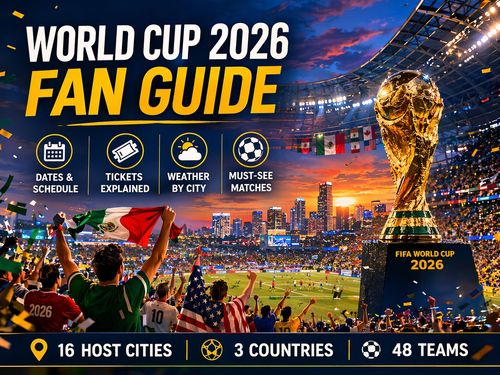
The 2026 FIFA World Cup is not just another edition of the tournament. It is the biggest version the sport has ever staged: 48 teams, 104 matches, 16 host cities, and three host countries across North America. The tournament runs from 11 June 2026 to 19 July 2026, with the opener in Mexico City and the final in New York New Jersey Stadium. For fans, that means more options, more travel decisions, more ticket confusion, and a much wider gap between the matches that are merely interesting and the ones that already feel like mini-finals.
Bigger Than Ever
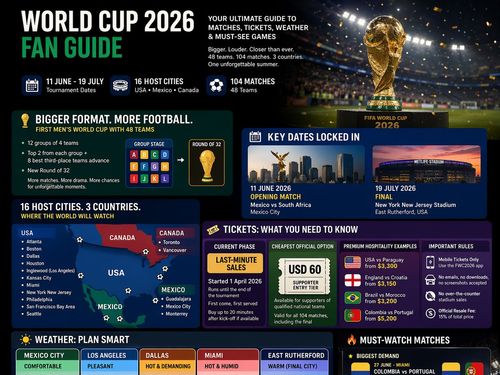
This is the first men’s World Cup to use the 48-team format, and that changes the fan experience as much as it changes the football. The tournament now has 12 groups of four, and the top two teams in each group plus the eight best third-place teams move into a new Round of 32. In practical terms, that means the group stage should stay alive for longer, more teams will feel they still have something to play for, and fans planning trips can think beyond just one nation’s first three matches.
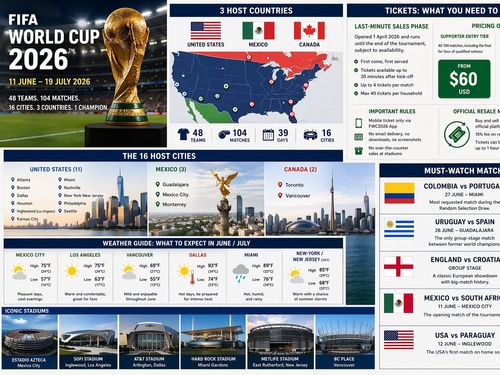
It also means scale. FIFA’s official tournament materials list 16 host cities spread across Canada, Mexico, and the United States, with the U.S. carrying the bulk of the schedule. Stadium capacity and location matter here because not every host experience will feel the same: a match in Mexico City or Los Angeles will feel very different from one in Miami or Dallas, both in atmosphere and in the practical realities around weather, travel, and price.

What’s Public Now
Fans do not need to wait for hidden schedule drops anymore. FIFA’s official schedule is already public, and it includes the fixtures, dates, teams, and venues for the full tournament. FIFA also has a live scores and fixtures page running alongside it. That makes World Cup 2026 feel very real already: you can look up exact matchdays, matchups, and host cities right now rather than talking about the tournament in general terms.
Two dates especially matter. The competition opens on 11 June 2026 in Mexico City, and the final is on 19 July 2026 in New York New Jersey Stadium. Those anchor points shape the whole tournament, especially for fans deciding whether they want to chase a team, chase the best atmosphere, or build a trip around the biggest bracket stages.
Tickets Explained
The part most fans get wrong is assuming there is one simple public chart with every match and every standard seat price. That is not really how FIFA’s public ticketing works. The tournament is currently in the Last-Minute Sales Phase, which opened on 1 April 2026 and runs through the end of the tournament, subject to availability. FIFA says tickets in this phase are sold first come, first served, and can even be purchased up to 20 minutes after kick-off if inventory remains.
The clearest low-end official number fans can point to is the Supporter Entry Tier, which FIFA set at USD 60 for supporters of qualified national teams. FIFA said that tier applies to all 104 matches, including the final. That sounds simple, but it is only one part of the pricing picture. General availability still moves by inventory and phase, so there is no neat universal price board that tells every fan exactly what they will pay for any match on demand.
If you want a more realistic sense of how hot some matches already are, the official hospitality market gives a clue. As of 19 April 2026, FIFA hospitality listings showed examples such as USA vs Paraguay from about $3,300, England vs Croatia from about $3,150, Brazil vs Morocco from about $3,200, and Colombia vs Portugal from about $5,200. Those are premium packages, not ordinary seats, but they are still useful because they show which group games are already being treated like major events.
The Rules That Matter
This tournament is also highly digital in a way some fans still underestimate. FIFA says tickets are handled through the FWC2026 Mobile Tickets app. They are not sent by email, cannot be downloaded as files, and screenshots or photos are not accepted for entry. There will also be no over-the-counter stadium ticket sales, which means buying outside official channels carries real risk.
Resale is official, but it is not frictionless. FIFA’s published guidance says the official resale/exchange marketplace charges a 15% fee on the total resale purchase price. Transfer tools are also available close to matchday, which is helpful for fans whose plans change, but it also means prices and availability can move fast.
The Weather Story
This far out, the honest way to talk about weather is not as an exact forecast but as a likely climate guide. That still matters a lot because some host cities already look much friendlier for match-going than others. In Mexico City, typical June highs ease from about 79°F to 75°F (26°C to 24°C), with cool nights around 57°F (14°C). In Inglewood/Los Angeles, June is also relatively comfortable, with daytime highs around 70°F to 75°F (21°C to 24°C) and evenings in the low 60s Fahrenheit. For fans walking all day, sightseeing, and arriving early to stadium zones, those conditions are a major advantage.
The tougher fan experiences look much easier to predict. Arlington/Dallas is the heat-warning city, with June daily highs running from about 88°F to 93°F (31°C to 34°C). East Rutherford, where the final will be played in July, looks warm rather than brutal, with average highs around 85°F (29°C). In other words, the final should feel like real summer, but not necessarily like the furnace conditions some supporters may face in Texas.
That is why weather should not be treated as a side note in any serious fan guide. A “cheaper” trip can stop feeling cheap very quickly if the city is exhausting, the transport is longer, and matchday turns into an all-day endurance test. A city like Los Angeles or Mexico City may end up being a smarter fan pick than a more glamorous but harder venue, depending on the fixture.
The Games With Real Heat
If you want one match that clearly stands above the rest in early fan demand, FIFA has already given the answer: Colombia vs Portugal in Miami on 27 June received the most ticket requests during the Random Selection Draw period. That makes it the cleanest fact-based choice for “most wanted group-stage match” in the tournament so far.
FIFA’s early high-demand list also flagged Brazil vs Morocco, Mexico vs Korea Republic, Ecuador vs Germany, and Scotland vs Brazil as standout draws. That is useful because it gives your article something stronger than pure opinion: it shows which fixtures are already attracting serious global demand rather than simply sounding attractive on paper.
Then there are the matches that football fans will circle even without ticket data. Uruguay vs Spain in Guadalajara on 26 June jumps out because it is the only group-stage meeting between former world champions. It feels like the kind of match that belongs in the knockout rounds even though it arrives earlier. England vs Croatia works the same way for a different reason: it is an instantly recognizable heavyweight clash, rich in tournament memory, and easy for casual fans to understand as a must-watch game.
Atmosphere Matters
Not every match becomes huge because of football logic alone. Sometimes the occasion is the story. The tournament opener in Mexico City should be one of the emotional peaks of the whole month simply because opening matches come with a global spotlight and host-nation pressure that ordinary group games do not. The same idea applies to the U.S. opener, which already looks like one of the standout early atmosphere plays of the American side of the tournament.
For fans, that distinction matters. A technically “better” matchup is not always the better live experience. A host-nation game can be louder, more emotional, more memorable, and more defining even when the football purist would choose another fixture. That is part of why World Cup planning is never only about rankings. It is also about mood, city, crowd, and timing.
Plan The Trip Not The Match
The smartest World Cup advice is to stop asking only, “Which team do I want to see?” and start asking three better questions: What can I realistically afford, what will the city feel like on matchday, and how likely is this fixture to feel huge in person? That is how a fan ends up making smarter choices. A glamorous city is not always the easiest one. A big-name game is not always the best atmosphere. A cheaper ticket is not always the better overall experience once climate, transit, and timing are added in.
Right now, the clearest fan picture looks like this: the schedule is fully public, ticket sales are active, the cheapest official entry point is known but the broader pricing picture is still fluid, Los Angeles and Mexico City look friendlier than Dallas, and Colombia vs Portugal already stands out as a full-blown blockbuster. That is the real shape of World Cup 2026 at this moment.