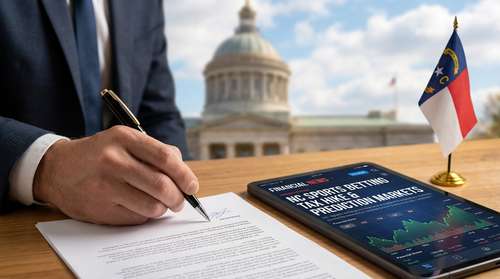

The landscape of 2026 World Cup betting has undergone a seismic shift. As the tournament unfolds across North America, traditional sportsbooks are no longer the only game in town. Peer-to-peer prediction markets have captured the zeitgeist of global sports wagering, transforming how sharp money and casual fans back their favorite teams. Analysts from Bernstein project that the tournament could drive up to $10 billion in World Cup betting volume across regulated sportsbooks and prediction exchanges. However, this unprecedented financial boom has triggered fierce resistance, with international regulators and legacy casino operators launching an aggressive, coordinated crackdown on major platforms.
The $10 Billion Boom: World Cup Betting Volume Surges
The sheer scale of capital flowing through these decentralized exchanges is staggering. On Polymarket alone, the flagship World Cup Winner contract rapidly eclipsed $2.5 billion in trading volume during the initial group stage. Liquidity pools for heavyweights like France and Spain have attracted tens of millions of dollars per match. The stakes are extraordinarily high for individual traders; one Polymarket participant trading under the pseudonym FlickRaw reportedly lost $4.2 million on World Cup matches in a single 24-hour window.
Kalshi has experienced similarly explosive growth. Despite starting with a broader focus on economic and political event contracts, the platform saw nearly $23 billion in overall contract volume last year, with roughly 89% of that activity driven by sports wagering. Today, Kalshi World Cup odds are setting the pace for the broader industry, drawing vital liquidity and attention away from traditional oddsmakers.
Prediction Markets vs Sportsbooks: A Fundamental Shift
The growing debate surrounding prediction markets vs sportsbooks centers on market structure and pricing efficiency. In traditional sports betting, a bookmaker acts as the house, setting the odds and baking in a profit margin commonly known as the vig. Players are essentially betting against the casino, which limits potential profitability.
Prediction platforms operate entirely differently. They function as peer-to-peer exchanges where traders buy and sell shares of an outcome, typically priced between 1 cent and $1. If you believe a team will win their next match, you purchase 'Yes' shares from another user willing to take the 'No' side. The market organically dictates the price based on collective sentiment rather than a bookmaker's strict risk assessment. This transparent, order-book-driven model—combined with significantly lower fees—explains why Polymarket sports betting has become the preferred avenue for high-volume traders seeking true probability pricing.
The Global Backlash: Nations Move to Block Access
This meteoric rise has not gone unnoticed by global authorities. Because these platforms blur the line between financial derivatives and traditional gambling, regulators are rushing to assert control. In recent weeks, Spain, Indonesia, and India implemented sweeping measures to restrict domestic access to Kalshi and Polymarket.
Spain's Ministry of Consumer Rights formally initiated disciplinary proceedings against both companies, arguing they operate without the necessary administrative gambling licenses. Spanish officials ordered domestic web blocks that will remain active while the investigation unfolds over the next several months. These nations are not acting in isolation; earlier this year, Brazil aggressively shut down 27 different prediction platforms shortly after their operations began. The overarching concern among these governments is the lack of traditional consumer protections, such as stringent identity verification and safeguards against underage gambling.
US Casino Lobby and Sports Betting Regulation 2026
Within the United States, the friction between emerging tech platforms and established gambling empires is reaching a boiling point. Legacy casino groups and major sportsbook operators are actively lobbying lawmakers to restrict or ban sports-based event contracts, arguing these platforms operate as unregulated, illegal sportsbooks that threaten the integrity of the market.
State officials are actively answering the call. Just days ago, Kentucky Attorney General Russell Coleman filed lawsuits in Franklin Circuit Court against both Kalshi and Polymarket, along with affiliated entities like Coinbase. The state vehemently accuses the platforms of bypassing vital consumer protection laws and tax requirements mandated for legal gambling operations. Kentucky regulators explicitly noted that simply relabeling traditional point spreads and money lines as 'sports event contracts' does not exempt companies from state gaming oversight.
As the final matches of the tournament approach, the trajectory of sports betting regulation 2026 remains highly volatile. Prediction markets have definitively proven their product-market fit, successfully drawing billions of dollars away from legacy betting applications. Yet, whether they can survive the coordinated legal onslaught from global regulators and entrenched casino lobbyists will ultimately determine the future of modern sports wagering.