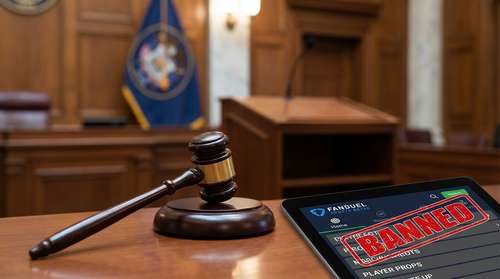
Utah is aggressively moving to seal its digital borders against the rising tide of sports gambling, with state lawmakers advancing a landmark piece of legislation this week that explicitly outlaws proposition betting. House Bill 243, sponsored by Rep. Joseph Elison (R-Toquerville), cleared a major hurdle on Wednesday, unanimously passing the Senate Business and Labor Committee. The move signals a decisive escalation in the Utah prop betting ban effort, aiming to close legal loopholes used by daily fantasy sports (DFS) operators and sweepstakes apps to offer player-specific wagers in a state with some of the strictest anti-gambling laws in the nation.
HB243 Targets the "Gray Market" of Player Wagers
As the national conversation around sports gambling legislation intensifies, Utah's HB243 has emerged as a blueprint for states looking to curb the proliferation of unregulated betting markets. The bill amends the state's criminal code to specifically define "proposition betting" as any wager placed on an individual athlete's performance, statistic, or a specific in-game occurrence, rather than the final outcome of a match. By codifying this definition, lawmakers intend to eliminate the ambiguity that has allowed "pick'em" style games to operate under the guise of fantasy sports or sweepstakes.
"It’s a huge gray area and there’s lots of lawsuits all over the country right now," Rep. Elison told the committee, emphasizing that the bill is designed to modernize Utah's constitutional gambling prohibition for the digital age. The legislation comes as a direct response to the explosion of apps offering over/under bets on player stats—like a quarterback's passing yards or a basketball player's rebounds—which closely mimic the player props offered by regulated sportsbooks like DraftKings and FanDuel in other states.
Closing the Loophole Before it Widens
The urgency behind HB243 sports betting restrictions reflects a broader anxiety about the rapid evolution of gambling products. While traditional sportsbooks have no foothold in Utah, the state has seen a surge in users accessing unregulated platforms that frame betting as "skill-based" contests. Under the new law, offering these player-specific wagers would constitute a Class B misdemeanor, sending a stark warning to operators who attempt to bypass state regulations.
NCAA Betting Integrity and the National Context
Utah's legislative push aligns with a growing national crackdown on player wagers, fueled largely by concerns over NCAA betting integrity. College administrators and the NCAA have aggressively lobbied states to ban player props, citing harassment of student-athletes and the increased risk of match-fixing. While Utah has no legal sports betting market to regulate, HB243 serves as a preventative shield, ensuring that the player prop regulations 2026 landscape in the Beehive State remains hostile to these products.
Governor Spencer Cox has been a vocal critic of the expansion of gambling, recently engaging in a public spat with federal regulators over the intrusion of betting markets into daily life. "Gambling used to be really clear and obvious," Utah Attorney General Derek Brown noted during the hearings. "Proposition betting, generally, is starting to blur that line between traditional gambling and gambling on apps."
Prediction Markets vs. Sports Betting: The Federal Clash
One of the most contentious aspects of the debate involves the distinction between state-banned gambling and federally regulated prediction markets. Platforms like Kalshi and Polymarket, which operate under the oversight of the Commodity Futures Trading Commission (CFTC), have argued they offer financial hedging tools rather than sports bets. Rep. Elison acknowledged this jurisdictional friction, noting that while HB243 targets state-level actors, the battle over prediction market vs sports betting definitions may ultimately be decided in federal court.
Despite these complexities, the bill's advancement puts Utah at the forefront of the anti-gambling resistance. Unlike states scrambling to tax and regulate, Utah is doubling down on prohibition. The legislation clarifies that regardless of whether a platform calls itself a "sweepstakes" or a "prediction exchange," if it looks like a prop bet and acts like a prop bet, it is illegal in Utah.
What's Next for HB243?
Following its unanimous committee approval on February 25, the bill now heads to the full Senate floor. With the legislative session entering its final weeks, political analysts expect the measure to pass with broad support, given the legislature's Republican supermajority and the influence of the Church of Jesus Christ of Latter-day Saints, which opposes all forms of gambling. If signed by Governor Cox, the law would take effect later this year, cementing Utah's status as a fortress against the DraftKings Utah news cycle and the broader sports betting industry.