
The Los Angeles Dodgers have effectively declared war on Major League Baseball’s competitive balance, finalizing a staggering four-year, $240 million contract with All-Star outfielder Kyle Tucker on Wednesday. The deal, which officially brings the former Astros slugger to a roster fresh off back-to-back World Series titles, has sent shockwaves through the league and reignited a fierce debate over the necessity of a salary cap. With this latest acquisition, the Dodgers haven't just reloaded for a potential three-peat; they have fundamentally challenged the economic structure of the sport.
Inside the Massive $240 Million Contract
The financial specifics of Tucker’s deal are as eye-watering as they are strategic. Sources confirmed to SportsVot that the four-year agreement includes a massive $64 million signing bonus and $30 million in deferred salary, a structure designed to navigate the Dodgers' already unprecedented luxury tax bill. The contract carries an average annual value (AAV) of approximately $60 million, setting a new benchmark for short-term, high-value deals in the modern era.
Crucially, the deal includes player opt-outs after the second and third seasons, giving Tucker the flexibility to re-enter the market at age 31 or 32. For the Dodgers, the immediate cost is astronomical. Because Los Angeles has exceeded the highest luxury tax threshold for consecutive seasons, they face a 110% tax rate on every dollar spent above the limit. This means Tucker’s $60 million AAV could effectively cost the franchise upwards of $120 million in 2026 alone—a price tag that ownership is clearly willing to pay to secure a dynasty.
The Competitive Balance Controversy
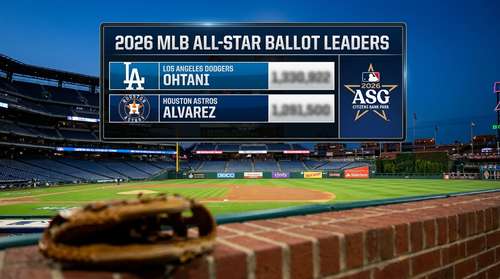
Reaction from rival front offices and fanbases has been swift and furious. The signing has intensified the cries for a hard salary cap, a topic that is expected to dominate the upcoming collective bargaining negotiations when the current CBA expires in December 2026. Critics argue that the Dodgers' ability to stockpile elite talent—adding Tucker to a lineup that already features Shohei Ohtani, Mookie Betts, and Freddie Freeman—makes a mockery of the league’s competitive balance measures.
"It's becoming impossible for small-market teams to sell hope to their fans when one team plays by an entirely different set of financial rules," said one National League executive who requested anonymity. "The luxury tax was supposed to be a deterrent. For Los Angeles, it’s just a line item in the budget."
A 'Super-Team' Unlike Any Other
The addition of Tucker creates what is arguably the most terrifying lineup in baseball history. Tucker, 29, is coming off another stellar campaign where he solidified his reputation as one of the game's premier two-way outfielders. His left-handed power bat provides yet another layer of protection for Ohtani and Freeman, making the top half of the Dodgers' order a relentless gauntlet for opposing pitchers.
This move signals that the Dodgers are not satisfied with their 2024 victory over the Yankees or their thrilling Game 7 triumph over the Toronto Blue Jays in the 2025 World Series. President of Baseball Operations Andrew Friedman has made it clear that the goal is not just winning, but historic dominance. By signing the top free agent on the market despite having a championship roster, the Dodgers are aggressively pursuing MLB's first three-peat since the 1998-2000 New York Yankees.
Luxury Tax Implications for 2026
The financial ramifications of this signing will be felt for years. The Dodgers' projected payroll for the 2026 season is now skyrocketing past $400 million, obliterating previous league records. The resulting tax penalties will likely fund revenue-sharing checks for smaller market teams, but for many owners, the cash influx does little to quell the frustration of facing an on-field juggernaut that feels mathematically unbeatable.
As Spring Training approaches, the narrative for the 2026 season is set. It is the Dodgers versus the field, and also the Dodgers versus the economic future of baseball. While fans in Los Angeles celebrate the arrival of yet another superstar, the rest of the league is left wondering if the current system can survive a team this willing to spend whatever it takes to win.