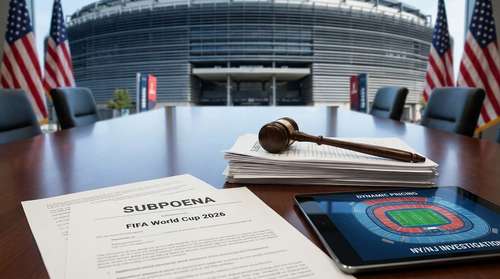
In what is rapidly becoming the biggest off-pitch controversy of the tournament, the FIFA World Cup 2026 ticket scandal has drawn the scrutiny of top U.S. law enforcement. On Wednesday, the attorneys general of New York and New Jersey officially issued subpoenas to soccer's global governing body. This joint consumer protection probe targets the controversial ticketing practices that have left thousands of fans feeling exploited just weeks before the games begin.
With 2026 World Cup ticket prices reaching unprecedented highs, investigators are specifically focusing on matches set for East Rutherford, New Jersey. Fans who thought they had secured prime seats for the event of a lifetime are now grappling with alleged bait-and-switch tactics, astronomical costs, and what officials are calling 'fake scarcity'.
The Letitia James FIFA Subpoena: Demanding Answers
The sweeping New York New Jersey FIFA investigation is being spearheaded by New York Attorney General Letitia James and New Jersey Attorney General Jennifer Davenport. State officials have demanded internal records detailing how FIFA allocated tickets and communicated pricing to the public.
"New Yorkers have been waiting years for the World Cup to come to their backyard, and they deserve a fair shot at affordable tickets," James stated during the announcement. "No one should be manipulated into paying sky-high prices for seats, and fans should be able to trust that the tickets they purchase will be the ones they receive".
Davenport echoed this sentiment, delivering a scathing rebuke of the organization's tactics. She accused FIFA of turning the purchasing process into a gauntlet of confusion, fake scarcity, and impossibly high prices. While FIFA President Gianni Infantino has previously justified the costs by claiming the organization is adapting to the North American market, the Letitia James FIFA subpoena signals that U.S. officials believe these practices may violate regional consumer protection laws.
The FIFA Dynamic Pricing Controversy and Fake Scarcity
At the core of the uproar is the FIFA dynamic pricing controversy. For the first time, FIFA utilized a variable pricing model for World Cup tickets, fluctuating costs based on real-time demand. This strategy has caused 2026 World Cup ticket prices to jump dramatically—by as much as 34 percent since the initial October sales window.
The escalation has been staggering. The most expensive face-value tickets for the tournament final initially sold for $6,730, but by April, FIFA's dynamic pricing pushed that identical category to an eye-watering $10,990. On the resale market, tickets for the final have exploded past $30,000. Even group stage matches are reportedly commanding prices upward of $2,000, leaving ordinary supporters effectively priced out of the tournament.
MetLife Stadium World Cup Tickets in the Crosshairs
While the investigation spans FIFA's broader business practices, officials are paying special attention to MetLife Stadium World Cup tickets. The venue, temporarily rebranded as New York New Jersey Stadium, is slated to host eight pivotal matches, culminating in the highly anticipated World Cup final on July 19, 2026. Given the massive scale of the stadium and the immense local demand, New York and New Jersey authorities are demanding complete transparency on how tickets for these specific matches were withheld, released, and priced.
World Cup 2026 Seat Map Complaints: Did Fans Get What They Paid For?
High prices are only half the battle; the investigation is also aggressively pursuing World Cup 2026 seat map complaints. According to the attorneys general, numerous fans purchased premium Category 1 tickets under the impression they were securing the best sightlines in the stadium. However, reports indicate that FIFA later redrew stadium maps and introduced a new, ultra-expensive front category.
This mid-stream seating adjustment effectively bumped original ticket holders further back from the pitch, moving them to less desirable locations than they originally purchased. This alleged bait-and-switch has become a central pillar of the investigation, as fans claim the seating maps presented during the checkout process were fundamentally deceptive.
Local Leaders Intervene as Scrutiny Intensifies
The state-level response is being bolstered by local authorities. Samuel A. A. Levine, commissioner of the New York City Department of Consumer and Worker Protection, recently noted that the reported ticketing maneuvers could be in direct violation of the city's stringent consumer protection laws. Officials are deeply concerned that the economic windfall expected from hosting the tournament could instead manifest as predatory exploitation of tourists and local residents alike.
The fallout from this investigation extends beyond the legal sphere into the court of public opinion. Public frustration is mounting, drawing commentary from high-profile figures, including former U.S. President Donald Trump, who publicly criticized the exorbitant costs and stated he personally would not pay them. In a localized effort to combat the affordability crisis, New York City Mayor Zohran Mamdani recently announced a $50 ticket lottery. This initiative aims to provide 1,000 affordable seats to local residents, a desperate bid to keep the people's game accessible to the working-class supporters who built the sport.
What This Means for the Future of the Tournament
As the June 11 kickoff in Mexico City rapidly approaches, FIFA finds itself scrambling to manage a massive legal crisis on the eve of its marquee event. The organization has so far declined to publicly comment on the active subpoenas. However, if New York and New Jersey prosecutors uncover systemic violations of consumer protection laws, FIFA could face severe financial penalties, mandated refunds, and potential injunctions forcing alterations to its ongoing ticketing operations.
The joint investigation sends a definitive message: hosting the world's largest sporting event does not grant global organizations immunity from domestic consumer protection laws. For now, millions of soccer fans watching the FIFA World Cup 2026 ticket scandal unfold are left hoping this unprecedented legal action will finally force accountability and transparency upon a system that many feel has fundamentally lost touch with the everyday supporter.