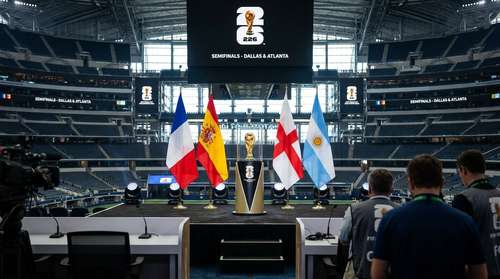
The highly anticipated FIFA World Cup 2026 has delivered on its grandest promise. For the first time in the tournament's illustrious history, the top four nations in the FIFA World Rankings have successfully navigated the gauntlet to become the final four World Cup semifinalists. After a dramatic quarterfinal weekend, the stage is set for a pair of monumental clashes. European powerhouses France and Spain will battle in Dallas on July 14, followed by a fierce showdown between defending champions Argentina and a resilient England squad in Atlanta on July 15. The expanded 48-team format was designed to bring more global representation to the pitch, but it is the traditional juggernauts who have capitalized on the new knockout structure to create the ultimate finale.
The Perfect World Cup Bracket 2026 Plays Out
When organizers redesigned the draw format for the largest World Cup ever staged across North America, they aimed to reward the highest-seeded nations. The strategy involved placing the top four ranked teams into separate quadrants of the World Cup bracket 2026. This ensured that if they won their respective groups and advanced through the knockout rounds, they could not cross paths before the semifinals.
This masterstroke of tournament planning has resulted in a final four that reads like a dream scenario for football purists and casual fans alike. There are no Cinderella stories left in the tournament—only battle-tested giants. Fans heading to the World Cup 2026 Semifinals are guaranteed to witness the absolute pinnacle of international football, featuring squads overflowing with generational talent, tactical brilliance, and championship pedigree.
France vs Spain 2026: A European Masterclass in Dallas
The first semifinal block features a sensational continental clash: France vs Spain 2026. Scheduled for July 14 at the colossal Dallas Stadium, this matchup pits two distinct footballing philosophies against one another. France secured their spot following a commanding 2-0 victory over Morocco, relying on their blistering pace and lethal transitions. They look every bit the team capable of securing another global crown.
Spain, meanwhile, outlasted Belgium in a gritty 2-1 quarterfinal thriller, punctuated by Mikel Merino's decisive winning goal. The Spanish side continues to dominate possession and dictate the tempo of every match they play. The clash in Texas will test whether Spain's intricate midfield passing can neutralize the explosive attacking threats posed by the French forwards. Dallas Stadium, known for its sheer scale and roaring acoustics, provides an atmosphere worthy of this monumental occasion. With tens of thousands of fans expected to pack the stands, the tactical chess match between the two European titans will unfold under the brightest lights. For fans tracking the World Cup bracket 2026, this is a fixture that easily possesses the quality of a grand final.
England vs Argentina 2026: A Heavyweight Rivalry Renewed in Atlanta
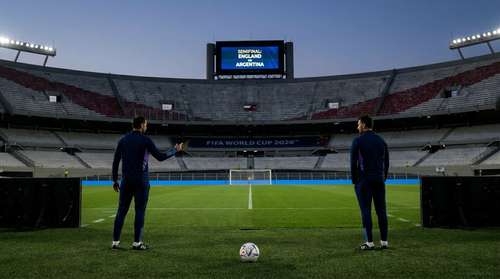
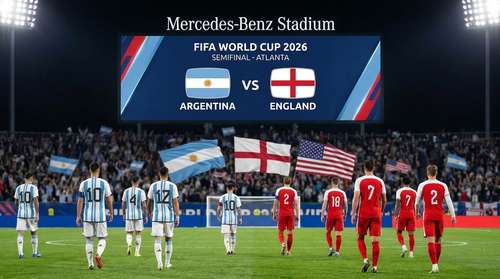
On July 15, the spotlight shifts to Atlanta for England vs Argentina 2026. This pairing reignites one of the most storied and passionate rivalries in international football. The defending champions, Argentina, secured their ticket to the semifinals after dismantling Switzerland 3-1 in Kansas City. Fueled by an early offensive barrage and Julian Alvarez's critical second goal, Lionel Messi continues to drive the South American giants alongside a new generation of dynamic attackers.
Standing in their way is an England squad that has demonstrated immense character throughout the knockout phase. The Three Lions survived a grueling encounter against Norway, scraping by with a 2-1 victory after extra time thanks to a heroic brace from Jude Bellingham. Will England's tactical discipline and late-game resilience be enough to halt Argentina's fluid, aggressive attacking style? The atmosphere at Atlanta Stadium is expected to be electric, drawing millions of viewers worldwide to witness this historic chapter of the World Cup 2026 Semifinals.
The Impact of the 48-Team Format
Critics initially questioned whether the expanded 48-team tournament would dilute the overall quality of play. Instead, the marathon group stages served as the ultimate crucible. By the time the weaker sides were eliminated, only the most resilient and deeply talented squads remained. The top-seeded teams utilized their superior squad depth to rotate players, manage fatigue, and avoid the upsets that plagued mid-tier nations. This rigorous path has elevated the prestige of becoming World Cup semifinalists, ensuring that the final four teams are undeniably the absolute best on the planet.
How FIFA World Rankings Predicted the Final Four
It is incredibly rare for tournament results to mirror official seeding so flawlessly. Historically, upsets, injuries, and unpredictable group stage dynamics disrupt the path for top-tier nations. However, the current iteration of the FIFA World Rankings proved to be an impeccable crystal ball for this year's tournament.
France, Argentina, Spain, and England entered the summer as the definitive elite, and their performances over the last month have validated those metrics. They have outscored opponents, managed fixture congestion, and executed tactical adjustments with surgical precision. The rankings simply did not lie. We are left with the four best teams on the planet, ready to deliver a conclusion befitting the biggest sporting event in history.