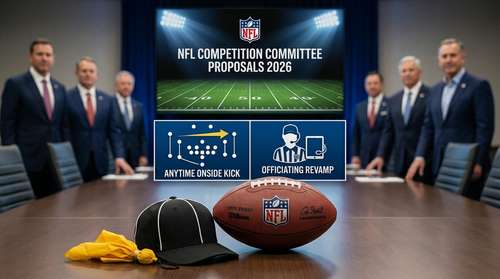
As the league prepares for the highly anticipated 2026 NFL Annual League Meeting, a wave of sweeping modernization is officially on the horizon. The league unveiled five major playing rule proposals on Tuesday, bringing massive NFL Competition Committee news to the forefront of the offseason news cycle. If approved by team owners, the NFL rule changes 2026 agenda will fundamentally alter late-game strategy, replay oversight, and long-term roster construction. Headlining the docket is a radical NFL onside kick proposal designed to revive one of the sport's most thrilling—yet increasingly rare—plays. Also included is a groundbreaking measure that would allow the league's officiating department to overturn clear on-field referee errors.
The upcoming league meetings in Phoenix, Arizona, scheduled for March 29 to April 1, will serve as the battleground for these transformative measures. Earning the required 24 out of 32 votes from team owners is never a guarantee, but the proposals reflect a concerted effort to balance competitive fairness, player safety, and entertainment value. Let's break down the most significant adjustments on the table and how they could reshape professional football.
Resurrecting the Surprise Factor: The NFL Onside Kick Proposal
In recent years, the standard onside kick has become virtually extinct. Due to recent player safety modifications to kickoff rules, recovery rates have plummeted, effectively removing late-game comeback miracles from the playbook. To inject drama back into special teams, the competition committee wants to permit the kicking team to declare an onside kick at any time during the game.
Under current regulations, teams have historically been restricted to attempting these desperate kicks only when trailing in the fourth quarter. The 2026 NFL onside kick proposal eliminates that restrictive situational criteria. While the attempt must still be officially declared—meaning true surprise onside kicks remain a thing of the past—restoring the ability to attempt them in any quarter gives coaches a massive tactical advantage. A gutsy head coach could now opt to steal a possession in the first quarter to swing momentum early in a crucial matchup.
Additional Special Teams Adjustments
Beyond the onside kick, special teams strategy is getting a comprehensive review. The committee aims to eliminate the kicking team's incentive to intentionally kick the ball out of bounds when kicking off from the 50-yard line—a scenario that typically occurs following an opponent's unsportsmanlike conduct penalty. Furthermore, officials are reviewing the NFL kickoff alignment 2026 guidelines to modify how receiving team players align in the designated setup zone. This ongoing effort to fine-tune the dynamic kickoff rules is designed to manage collision speeds and optimize player safety.
Sweeping NFL Officiating Corrections and Replay Assist
Few topics spark as much fiery debate among football fans as blown calls that decide the outcome of a game. In a monumental shift toward accountability, the committee has proposed a one-year rule to empower the league's Officiating Department in New York to correct clear and obvious misses by on-field officials.
These NFL officiating corrections would be specifically targeted at errors that significantly impact the game. Notably, this proposal arrives amid ongoing, slow-moving labor negotiations with the NFL Referees Association. Should a work stoppage occur, the NFL is preparing a list of potential replacement officials for the 2026 season. Granting New York the power to override blatant on-field mistakes serves as a vital safety net to maintain the integrity of the game.
Additionally, the league wants to streamline disciplinary actions by allowing New York personnel to consult with on-field referees regarding game ejections. Whether reviewing flagrant football acts or non-football altercations, this measure ensures that disqualifications are handled accurately, without requiring an initial penalty flag to be thrown on the play.
Roster Building Evolution: New NFL Draft Pick Trading Rules
The radical ideas aren't limited to what happens on the gridiron; front offices are seeking unprecedented flexibility in how they construct their rosters. Outside of the committee's playing rules, the Cleveland Browns have submitted a franchise resolution that would completely rewrite the NFL draft pick trading rules.
Currently, general managers can only trade draft capital up to three years in advance. The Browns' proposal asks the league to expand that window to five years. According to Cleveland's submission, extending the trade window would increase the liquidity of draft capital, encourage a more active trade market, and give clubs much-needed flexibility to navigate complex salary cap cycles. If passed, a new crop of aggressive general managers could engineer blockbuster trades more easily, moving the NFL's trade market slightly closer to the NBA, which currently permits teams to deal picks up to seven years out.
What to Expect at the 2026 NFL Annual League Meeting
In addition to the major on-field and trade proposals, the Pittsburgh Steelers have pitched a resolution to permanently cement the legal tampering rules surrounding free agency. Their proposal would lock in the 2025 rule allowing teams to conduct one video or phone call with up to five prospective unrestricted free agents during the two-day negotiation window, a move Pittsburgh argues is competitively fairer.
Interestingly absent from the ballot? Any renewed effort to ban the controversial Tush Push quarterback sneak. After failing to gain traction in previous years, it appears the unstoppable short-yardage play is here to stay for another season.
All eyes now turn to Arizona. As the 2026 NFL Annual League Meeting kicks off, these five competition committee proposals and two team-submitted resolutions will dictate the immediate future of the sport. If owners embrace these bold changes, the 2026 season could deliver the most dramatic shifts in strategy and game management we have seen in a decade.