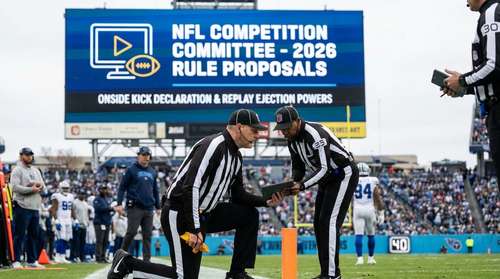
The landscape of professional football is preparing for another dramatic shift. Ahead of the upcoming 2026 NFL Annual League Meeting in Phoenix, the league's brass has formally introduced a slate of sweeping adjustments to the rulebook. Driving the conversation are the highly anticipated NFL rule changes 2026, which look to reshape special teams strategy, close glaring officiating loopholes, and prepare for potential labor disputes with referees. If you thought special teams strategy had peaked, these newest adjustments will force coordinators to completely rewrite their playbooks.
The NFL Competition Committee officially released five primary playing rule proposals this week. These measures will require a 75 percent approval rate—at least 24 of the 32 team owners—to take effect for the upcoming season. Let's break down exactly what the NFL Competition Committee rules entail and how they will fundamentally alter the game.
The New Onside Kick Declaration Rule
Special teams play has undergone massive renovations over the last three seasons, and the newest NFL onside kick proposal continues that aggressive trend. Under the proposed adjustments, the kicking team will be permitted to declare an onside kick at any time during the contest, regardless of the score.
Previously, strict restrictions mandated that only trailing teams could attempt an onside kick, and earlier iterations limited the play exclusively to the fourth quarter. While the beloved surprise onside kick remains outlawed to protect player safety, this new onside kick declaration rule provides trailing—and even leading—teams dynamic strategic options early in the game. By forcing teams to declare their intentions, the league keeps the alignment safe while injecting more volatile decision-making into the first three quarters. If a leading team feels their defense is completely exhausted, they could theoretically declare an onside kick in the third quarter to steal an extra possession, entirely flipping the standard momentum of a typical Sunday broadcast.
Unprecedented NFL Officiating Replay Intervention
Perhaps the most universally welcomed proposal stems from a highly controversial incident during the 2025 season involving Pittsburgh Steelers receiver DK Metcalf. After a physical altercation with a heckling fan on the sidelines in Detroit, Metcalf avoided an in-game ejection simply because on-field officials missed the play and failed to throw a penalty flag. Under current regulations, the replay center in New York can only step in to issue an ejection if a flag is actually thrown on the grass.
To fix this glaring blind spot, the committee wants to rapidly expand NFL officiating replay intervention. The new mandate would allow league personnel to consult with on-field officials and issue disqualifications for both flagrant football and non-football acts without a penalty ever being called on the field.
Contingency Plans for a Referee Work Stoppage
Looming over the upcoming season is a potential work stoppage involving the NFL Referees Association as they aggressively negotiate a new collective bargaining agreement. In preparation for the potential use of replacement officials, the committee proposed a one-year-only provision granting the NFL Officiating Department emergency power.
If a strike occurs, the replay center will be authorized to immediately correct clear and obvious misses by on-field officials that significantly impact the game. Avoiding the disastrous blown calls seen during the infamous 2012 referee lockout is the top priority. This standard ensures New York won't micromanage every minor holding call, but they will step in if a game-changing boundary ruling is blatantly mishandled.
Refining NFL Kickoff Alignment Rules and Closing Loopholes
The dynamic kickoff format is here to stay, but sharp front offices are always looking to exploit technicalities. During the 2025 season, the Dallas Cowboys intentionally kicked the ball out of bounds from the 50-yard line after a penalty against the Kansas City Chiefs. Under the existing rules, this forced Kansas City to start at their own 25-yard line, which was a substantially better outcome for Dallas than allowing a dynamic return or a standard touchback.
To explicitly counter this, the committee proposed closing the 50-yard kickoff loophole. Moving forward, intentionally kicking out of bounds from midfield will result in the receiving team taking possession at the 20-yard line, completely eliminating the strategic incentive.
Furthermore, the committee aims to thoughtfully adjust the NFL kickoff alignment rules. The new framework will tweak how the receiving team sets up in the setup zone, modifying the number of players on the restraining line to foster better return rates while maintaining the stringent safety standards established over the last few years.
Looking Ahead to the 2026 NFL Annual League Meeting
When powerful owners convene at the 2026 NFL Annual League Meeting, these five proposals will heavily dominate the agenda. Beyond the Competition Committee's immediate submissions, teams have also pitched their own independent resolutions to modernize operations.
The Cleveland Browns are pushing a radical bylaw that would allow franchises to trade draft picks up to five seasons into the future, fundamentally altering long-term roster building for general managers. Meanwhile, the Pittsburgh Steelers want to make permanent a highly successful trial rule that allows front offices to conduct up to five video or phone calls with prospective unrestricted free agents during the two-day legal tampering period.
If approved, these systemic modifications will usher in a highly unpredictable and wildly entertaining 2026 campaign. Between unrestricted onside kick declarations and a much more powerful replay command center, the margin for coaching errors and officiating blunders is about to shrink drastically.