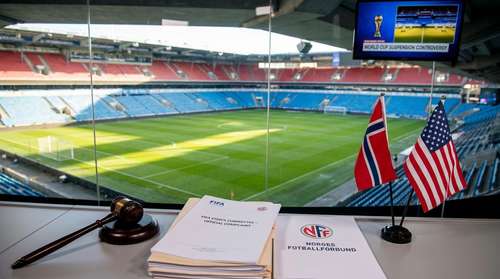
An unprecedented intervention by the White House into international football has triggered a massive global backlash, with the Norwegian Football Federation (NFF) now preparing a formal ethics complaint against FIFA. At the center of the storm is the Folarin Balogun red card controversy, a saga that saw U.S. President Donald Trump successfully pressure the sport's governing body to overturn a mandatory World Cup suspension.
Norway Leads the Charge Against Political Interference
In a move that highlights the growing rift between European football associations and FIFA leadership, Norway is taking a decisive stand against what it views as a catastrophic breach of sporting neutrality. The NFF's board of directors is scheduled to meet on August 6 to officially review and likely file the Norway FIFA ethics complaint.
Lise Klaveness Speaks Out on FIFA's Slippery Slope
NFF President Lise Klaveness has been vocal in her condemnation of the governing body's handling of the situation. A former national team player known for her staunch advocacy for integrity in football, Klaveness did not mince words regarding the Lise Klaveness NFF Trump dispute. She publicly demanded that FIFA acknowledge the mishandling of the disciplinary process.
"When you bend a rule like this, you're on a slippery slope that will put the whole game at risk," Klaveness stated in a recent interview. She added, "We all know that this verdict was influenced from external forces and did not have the proper process. We need our leader in FIFA to say that this was an error". The NFF plans to attach this latest grievance to an existing complaint regarding FIFA's controversial decision to award President Trump an inaugural Peace Prize last December.
The Folarin Balogun Red Card Controversy Explained
To understand the magnitude of the USMNT World Cup suspension reversal, one must look back at the chaotic sequence of events during the United States' tournament run. Striker Folarin Balogun had been a standout performer, even scoring twice in the team's opening match. However, during the Round of 32 victory over Bosnia and Herzegovina, the momentum abruptly halted. Balogun received a straight red card after stepping awkwardly on the ankle of Bosnian defender Tarik Muharemovic. Under standard FIFA disciplinary guidelines, this offense mandates an automatic, unappealable one-match ban.
The American striker was set to miss the crucial Round of 16 clash against Belgium. Yet, the narrative quickly shifted from the field to the political arena. Outraged by the 2026 World Cup referee decision, Donald Trump publicly condemned the call as "horrible". Trump did not stop at public commentary; he accused the match official of having a "suspect" past and argued that the challenge did not even constitute a foul.
The Gianni Infantino Donald Trump Call
The defining moment of the scandal occurred behind closed doors through a direct Gianni Infantino Donald Trump call. Following this conversation, FIFA's disciplinary committee utilized a rare interpretation of Article 27 of its code to defer Balogun's punishment for a "probationary period of one year". This marked the first time since 1962 that a World Cup red card did not result in a suspension for the subsequent match.
The extraordinary maneuver cleared Balogun to play against Belgium. Trump openly boasted about his influence during a reception at Trump Tower just days before the World Cup final. Sharing the stage with Infantino, the President praised the FIFA boss for making a "great decision," while Infantino thanked Trump and highlighted the tournament's massive television ratings and attendance.
Global Backlash and the Future of the 2026 World Cup
Despite the controversial reinstatement, the USMNT ultimately fell to a heavily motivated Belgian squad, suffering a 4-1 defeat. The Belgian team and their football association expressed profound outrage in the days leading up to the match, arguing that fundamental sporting protocols were bypassed to appease the host nation's political leader.
The ripple effects of the Donald Trump FIFA World Cup saga are continuing to destabilize international football's political landscape. Prominent figures across the sport have condemned the interference. Former FIFA President Sepp Blatter took to social media, asserting that football must never become a playground for political power and that red cards cannot be canceled by political phone calls. UEFA echoed this sentiment, issuing a strong statement that characterized the disciplinary reversal as "unprecedented, incomprehensible and unjustifiable".
Norway's impending ethics complaint, therefore, is not an isolated grievance but the spearhead of a broader demand for accountability. The complaint will challenge FIFA's independent ethics committee to investigate whether Infantino violated core political neutrality statutes. As the NFF prepares its formal filing for August 6, the sport faces a defining crossroads. Fans, players, and officials alike are left questioning the legitimacy of global tournaments if the rules of the game can be altered by a single phone call from a head of state.