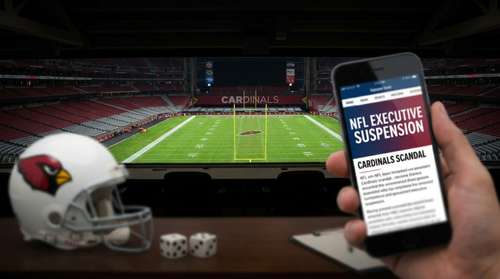
The National Football League sent shockwaves through its front-office ranks on Friday, July 17, 2026, announcing the immediate and indefinite Ryan Gold suspension. The Arizona Cardinals executive was sidelined following a comprehensive league investigation that uncovered multiple severe infractions, including unauthorized wagers and the sharing of confidential team information.
Operating as the Cardinals director of college scouting, Gold held one of the most sensitive positions in the organization's talent evaluation hierarchy. According to the NFL, he compromised that trust by providing third parties with non-public insider knowledge regarding Arizona's 2026 draft selections before the picks were officially announced to the public.
Beyond the NFL draft leaks, investigators discovered that Gold actively participated in sports betting. He placed parlay bets on both professional and collegiate football games, directly breaching the league's strict code of conduct for all personnel. This swift disciplinary action marks one of the most significant front-office bans in recent memory.
Anatomy of an NFL Gambling Policy Violation
The league has historically maintained a zero-tolerance approach to betting among its ranks, and this latest investigation reinforces that hardline stance. An NFL gambling policy violation carries massive consequences, especially for high-ranking talent evaluators who possess game-altering or market-moving information.
While the NFL did not publicly disclose the identities of the third parties who received Gold's inside information, they were clear about the severity of the offense. Disclosing draft secrets gives outside individuals an unfair advantage in legal sports wagering markets. To understand the gravity of the breach, consider the heavy lifting Gold's department did during the recent evaluation cycle. In the April 2026 draft, Arizona held premium draft capital, eventually selecting Notre Dame running back Jeremiyah Love with the No. 3 overall pick, Texas A&M guard Chase Bisonti in the second round, and Miami quarterback Carson Beck in the third. Gold's role meant he had advanced knowledge of exactly when and how the franchise planned to deploy those picks.
Despite the severity of the findings, the league offered reassurance to fans regarding the competitive fairness of actual matchups. "Although there is no reason to believe the integrity of any NFL game was affected, the League takes any violation of the Gambling Policy with the utmost seriousness," the NFL noted in its official press release.
The Rules Governing League Personnel
The rulebook strictly prohibits anyone employed by the NFL or its 32 clubs from participating in or facilitating any form of sports gambling. Furthermore, providing non-public information to third parties is explicitly banned. These rules are reviewed annually with all league personnel, a massive educational undertaking that reaches more than 20,000 people associated with the sport.
Fallout from the Arizona Cardinals Gambling Scandal
For a franchise trying to build momentum heading into their late-July training camp, the Arizona Cardinals gambling scandal is an unwelcome distraction. However, the organization moved swiftly to align itself with the league's disciplinary ruling and isolate the incident to a single bad actor.
The team fully cooperated with the NFL's digital and electronic records investigation. Fortunately for Arizona's coaching staff and roster, the probe found absolutely no evidence that any other player, coach, or front-office employee was aware of or participated in Gold's betting activities.
The Cardinals released a firm statement shortly after the suspension was handed down on Friday afternoon. "The NFL's policies and expectations for all employees are clear, comprehensive, and consistently communicated," the team stated. "We fully support the league's decision in this matter, which involves a single employee. Our focus remains on preparing for the start of training camp next week and the 2026 season."
Who is Ryan Gold? A Look at His Cardinals Tenure
Before his sudden fall from grace, Gold was considered a rising star in NFL scouting circles. He was preparing to enter his 13th season with the Cardinals organization, having meticulously worked his way up the personnel department ladder.
Gold initially joined Arizona in June 2014 as a scouting assistant. Over the next decade, he earned multiple promotions, serving as a college scouting coordinator from 2018 to 2021, and later as the assistant director of college scouting. In June 2025, he reached the prestigious role of director.
In his director capacity, Gold was responsible for overseeing the day-to-day operations of the college scouting department, managing staff, and finalizing evaluations of draft-eligible prospects. His intimate knowledge of the team's draft board ultimately became the focal point of his policy violations.
The Future of Sports Betting in NFL Operations
The intersection of professional football and legalized wagering continues to present massive challenges for league administrators. Sports betting in NFL operations is strictly policed for a reason: the sheer volume of proprietary data handled by scouts, coaches, and medical staff could easily disrupt the integrity of the sport if leaked to the public or oddsmakers.
Gold technically retains the right to appeal his indefinite suspension. However, given the electronic records usually involved in these investigations, coupled with the NFL's uncompromising track record on betting infractions, overturning the decision will be an incredibly difficult battle.
For now, the Cardinals are forced to restructure their scouting department just months away from the college football season. Meanwhile, front offices across the league are likely sending internal memos this weekend, reminding their staff that the shield's gambling rules apply to everyone, regardless of their title or tenure.