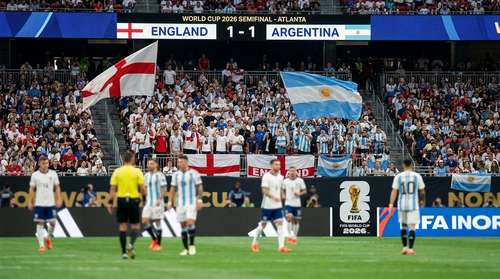
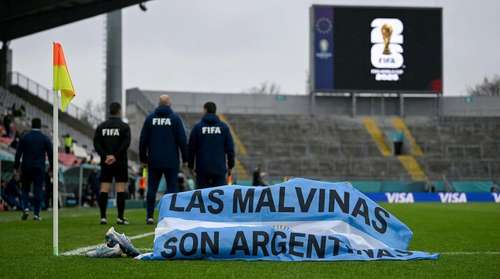
The dust had barely settled on a dramatic Argentina vs England semifinal at the FIFA World Cup 2026 when a massive diplomatic row overshadowed the action on the pitch. Following their late 2-1 victory in Atlanta on Wednesday, several Argentine players unfurled a flag reading 'Las Malvinas son Argentinas' (The Falkland Islands are Argentinian). The highly politicized post-match display has now prompted the UK government, led by Prime Minister Keir Starmer, to formally demand a comprehensive FIFA investigation into Argentina.
The fallout from this incident has rapidly transformed one of international football's greatest rivalries into a genuine geopolitical headache. With British officials increasingly vocal about the need for harsh sporting sanctions, the controversy threatens to derail Argentina's preparations as they seek to defend their global crown this weekend.
The Falklands Banner Controversy Unfolds in Atlanta
In what was already billed as a fiercely competitive grudge match, Argentina secured their spot in the tournament's climax by rallying from a late deficit. Down 1-0 with just five minutes remaining, the South American powerhouse scored twice in quick succession to defeat England 2-1. However, the post-match celebrations quickly crossed the line from sporting triumph to political theater.
Amid the jubilation on the turf of Atlanta Stadium, high-profile stars including Giovani Lo Celso, Lisandro Martínez, and Nicolas Otamendi were photographed proudly parading the contested banner before laying it face up on the grass. The bold declaration immediately reignited the Falklands banner controversy, which centers on the decades-old territorial dispute over the South Atlantic archipelago.
While the islands have remained under de facto British control since 1833—excluding a brief two-month occupation during the 1982 Falklands War—Argentina has consistently claimed sovereignty over the territory. By dragging the phrase 'Las Malvinas son Argentinas' onto the global stage, the players brazenly mixed international sport with nationalistic messaging, a move that clearly violates FIFA's core mandate of neutrality.
Keir Starmer Backs Sweeping FIFA Investigation
The reaction from London was swift, unapologetic, and delivered from the highest levels of government. UK Prime Minister Keir Starmer threw his full political weight behind calls for FIFA to launch immediate disciplinary proceedings. Endorsing remarks made by Business Secretary Peter Kyle—who labeled the stunt an 'egregious violation' of sporting rules—Starmer’s office made it clear that the British government will not tolerate the provocation.
'The World Cup might not be ours, but the Falkland Islands definitely are,' a spokesperson for Downing Street stated on Thursday, striking a defiant tone. 'Our position is unchanged. Self-determination rests with the islanders and our commitment to the Falklands will never waver. We've said throughout that politics should stay out of football.'
The clash involving Keir Starmer, FIFA regulations, and the Argentine national team places immense pressure on world football’s governing body to strictly enforce its own guidelines. According to the International Football Association Board (IFAB) Laws of the Game, player equipment and behavior must not feature any political, religious, or personal slogans. FIFA’s specific Stadium Code of Conduct goes further, explicitly prohibiting banners, flags, or paraphernalia of a political or offensive nature.
Pre-Match Tensions and Historical Precedent
The match was already fraught with geopolitical undertones before a ball was even kicked. In the days leading up to the semifinal, Argentine Vice President Victoria Villarruel posted inflammatory messages on social media, describing the English as 'invaders' and 'usurping pirates'. She later followed up with a celebratory post featuring archival footage of Argentine soldiers, cementing the fact that for many in the country, the victory represented more than just a ticket to the final.
Furthermore, this is not the first time the Argentine Football Association (AFA) has found itself facing disciplinary action over this exact slogan. Prior to a 2014 World Cup friendly against Slovenia, the national squad posed behind an identical banner. FIFA levied a $33,000 fine and an official reprimand on that occasion, citing team misconduct and provocative messaging. The 1982 war itself, a 74-day conflict that claimed the lives of 649 Argentinians and 255 Britons, remains a highly sensitive open wound.
Will Argentina Face Suspensions Ahead of Sunday?
With the highly anticipated World Cup final Argentina Spain clash scheduled for Sunday in New Jersey, the rapid escalation of this incident has sparked a frantic debate over potential consequences. Given the magnified platform of a global tournament semifinal, some British lawmakers argue that a mere financial penalty is no longer a sufficient deterrent for repeated infractions.
Speculation is mounting over whether FIFA will go as far as to issue player suspensions for those who actively displayed the banner. While the governing body has yet to issue a formal ruling, failing to take decisive action could set a dangerous precedent, essentially giving teams a free pass to utilize the World Cup broadcast as a vehicle for territorial claims.
As the diplomatic friction continues to simmer alongside the sporting anticipation, the UK government is making its rooting interests abundantly clear. When asked where the Prime Minister's football loyalties will lie this weekend as Argentina takes the pitch against the reigning European champions, Downing Street offered a pointedly wry response. The spokesperson noted that while Keir Starmer wishes both sides well, he will be cheering 'especially for Spain'.