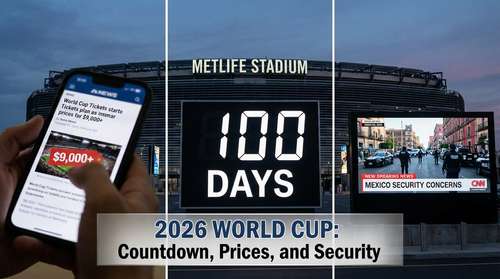
As the official 100-day countdown to the 2026 FIFA World Cup begins this Thursday, the excitement of the first-ever 48-team tournament is colliding with a wall of controversy. While stadium lights are being tested from Toronto to Mexico City, the mood among fans is shifting from anticipation to outrage. Two major clouds hang over the preparations: an aggressive 'dynamic pricing' model that has sent 2026 FIFA World Cup tickets soaring to nearly $9,000 for the final, and an eruption of cartel-related violence in Guadalajara that has security experts on high alert.
Ticket Shock: The $8,000 Price Tag at MetLife Stadium
The dream of attending the World Cup final at MetLife Stadium is rapidly becoming a financial nightmare for the average supporter. When the United Bid was first presented, organizers floated the idea of accessible pricing, with some tickets potentially starting as low as $21. The reality in March 2026 is starkly different. Following the latest ticket release phase, fans were greeted by sticker prices that rival the cost of a compact car.
FIFA's implementation of a "variable pricing" model—similar to the surge pricing used by ride-share apps—has seen the face value of premium seats for the July 19 final in New Jersey skyrocket. Reports confirm that Category 1 tickets are now listing for upwards of $8,680, while even the cheapest seats for the final are hovering around the $4,000 mark. Fan groups, including Football Supporters Europe, have labeled the move a "monumental betrayal," arguing that the tournament is being gated off from the working-class fans who built the sport's global popularity.
The 'Dynamic' Dilemma
Unlike previous tournaments where prices were fixed well in advance, the 2026 model adjusts based on demand spikes. With the expanded 104-match schedule creating unprecedented logistical challenges, FIFA has defended the revenue strategy as necessary for the sport's growth. However, for fans logging on this week hoping to secure a seat for the USMNT or Mexico, the sticker shock is the only talking point.
Security Turmoil: Cartel Violence Rocks Guadalajara
While fans in the U.S. battle their bank accounts, organizers in Mexico are battling a very different threat. 2026 World Cup security Mexico has become the top priority following a chaotic week in the state of Jalisco. The recent military operation that neutralized a high-ranking cartel leader has triggered a wave of retaliatory violence in Guadalajara, a key host city scheduled to stage four group-stage matches.
Images of burning buses and "narcobloqueos" (road blockades) have circulated globally, casting a shadow over the festive atmosphere. Despite the unrest, Mexican President Claudia Sheinbaum has issued a firm guarantee of safety, stating there is "no risk" to international visitors and that order is being restored. Federal security forces have been deployed in record numbers to secure the perimeter around Estadio Akron, but the timing—just over three months before kickoff—has foreign embassies and travel advisories on edge.
USMNT Preparations: Pochettino's Final Roster Push
On the pitch, the focus is strictly on performance. Mauricio Pochettino USMNT roster decisions are entering their final, critical phase. The U.S. Men's National Team is set to face heavyweights Belgium and Portugal in upcoming March friendlies—matches that will serve as the final audition for players on the bubble.
Pochettino, hired to bring a ruthless competitive edge to the squad, faces his own pressure cooker. With the team playing on home soil, anything less than a deep run will be viewed as a failure. Pundits are currently dissecting his potential selections, debating whether young talents like Noahkai Banks will commit to the U.S. over Germany, and if stalwarts like Christian Roldan can force their way into the final 26-man squad. The upcoming camp is not just about tactics; it's about finding the players with the mental fortitude to handle the immense expectations of a host nation.
Final Touches on a Continental Scale
Beyond the headlines of cost and conflict, the sheer scale of the World Cup 100 day countdown is becoming visible. In Toronto, renovations at BMO Field are entering the final stretch to expand capacity, while Mexico City's historic Estadio Azteca is receiving its finishing touches for the June 11 opener between Mexico and South Africa. The infrastructure is nearly ready, but as the clock ticks down, the organizers' biggest challenge isn't building stadiums—it's convincing the world that this massive, tri-nation experiment can remain safe, accessible, and united amidst the turmoil.