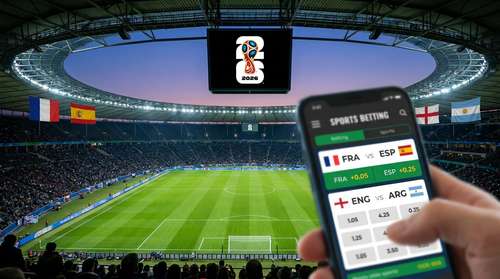

The expanded 2026 FIFA World Cup is already setting historic milestones, shattering 2026 World Cup betting records before the highly anticipated knockout stage has even kicked off. Driven by a larger field, prime-time North American television slots, and an increasingly regulated market, the sports betting industry is witnessing unprecedented engagement.
The Dawn of a $50 Billion Betting Phenomenon
As the tournament progresses through its final group stage matches this week, financial experts are aggressively updating their sports betting projections 2026. According to investment bank Macquarie, global wagers on the event are projected to surpass a staggering $50 billion. This represents a massive increase from the estimated $35 billion wagered during the 2022 edition in Qatar.
A significant factor driving this explosive growth is the tournament's revamped format. The expansion from 32 to 48 national teams means the schedule now boasts 104 matches, up from the traditional 64. That 60 percent increase in match inventory provides bettors with more opportunities than ever before, translating to roughly $500 million in wagers per match globally. Furthermore, the North American hosting duties mean matches are airing during prime viewing hours for the lucrative Western Hemisphere markets, capturing audiences that typically had to wake up at dawn for previous tournaments.
U.S. Market Explosion and Surging World Cup Betting Handle
While soccer has always dominated international betting markets, the true game-changer this cycle is the surge in legal sports betting US 2026 access. Four years ago, approximately 40 percent of the American population resided in jurisdictions with regulated sportsbooks. Today, that figure has climbed to roughly 65 percent, transforming the United States into a massive engine for the global World Cup betting handle.
With the tournament co-hosted by the United States, Canada, and Mexico, local fan fervor is amplifying viewer engagement and translating directly to the betting window. Analysts at Deutsche Bank project that the U.S. market alone could generate approximately $3.3 billion in domestic handle for the tournament, nearly double the projected figures for this year's Super Bowl. Among domestic operators, DraftKings and FanDuel are leading the pack, with the latter projected to bring in about $1.3 billion.
FanDuel and Major Sportsbooks Shatter Volume Records
The sheer scale of sportsbooks World Cup volume is already evident in the opening weeks of play. Flutter Entertainment, the global parent company of FanDuel, announced it expects to engage around 10 million customers across its various international platforms, which include Sky Bet, Paddy Power, and Sportsbet. At peak moments, the operator anticipates managing an astonishing 100,000 bets per minute. Overall staking is expected to be at least double what the company experienced during the Qatar World Cup.
Early metrics are backing up these lofty expectations. The opening matches featuring the United States and Brazil were recorded as FanDuel's top two soccer matches in history regarding active customer counts. DraftKings reported a similar phenomenon, citing the identical two matches as the biggest events in its sportsbook history for both active customers and total handle. The surge in FanDuel World Cup wagers highlights how operators are successfully leveraging the tournament as a premier customer acquisition and retention event.
Expanded Product Offerings Drive FIFA World Cup Sports Betting
The record-breaking handle isn't just about more fans placing bets; it's equally about how those bets are being placed. Operators have heavily invested in their technology and market offerings for FIFA World Cup sports betting, drastically expanding the menu for consumers. For instance, Caesars Sportsbook is currently offering ten times the number of betting options compared to the 2022 tournament, including features that proved wildly popular during domestic events like March Madness.
Bettors are rapidly moving beyond traditional moneyline wagers. The explosive popularity of same-game parlays, extensive player props, and dynamic micro-betting allows fans to wager on granular details, from the next goalscorer to the exact minute of a yellow card. Furthermore, prediction markets like Kalshi and Polymarket are capturing massive alternative action, experiencing record combined volumes that reached $7 billion in a single week. This marks the first modern World Cup where regulated prediction markets are taking action directly alongside traditional sportsbooks.
Looking Ahead to the High-Stakes Knockout Stage
If the group stage has already shattered previous benchmarks, the upcoming elimination rounds promise to push the industry to its absolute limits. With the newly introduced Round of 32, teams now need to win seven consecutive matches to lift the trophy instead of six. This extended pathway dramatically increases the exposure to potential upsets, which traditionally drive massive spikes in live betting.
Industry executives note that if the United States Men's National Team manages a deep run, engagement and betting volume could accelerate even further, creating an unprecedented compounding effect. As the stakes elevate on the pitch, the sports betting landscape will continue to evolve alongside it. Whether tracking the odds of a Cinderella run or wagering on a tournament heavyweight, the 2026 World Cup has decisively cemented its legacy as the largest single betting event in the history of sports.