For the first time in the 106-year history of the storied franchise, the Monsters of the Midway are preparing to cross state lines. In a massive development for NFL stadium news 2026, the Chicago Bears' Board of Directors has officially voted to advance plans for a new, enclosed Chicago Bears Indiana stadium. The landmark decision, announced by team officials on Friday, comes directly on the heels of the Illinois General Assembly adjourning its spring legislative session without passing the crucial tax incentives required to keep the team in its home state. As the prospect of the Bears leave Soldier Field transitions from an empty negotiating threat to an impending reality, fans and city officials alike are bracing for a seismic shift in the Midwest's sports landscape.
A Historic Vote: Bears Move to Hammond Indiana Advances
On Thursday, team executives convened to formally push the Bears move to Hammond Indiana into its next critical phase. This historic vote marks the most definitive step the franchise has ever taken toward an out-of-state relocation. While the front office has spent the better part of the last five years bouncing between proposals—including a $197 million land purchase for an Arlington Heights mega-complex and a revitalized Chicago Museum Campus lakefront dome—the shifting political winds in Illinois ultimately forced their hand.
State lawmakers in Springfield were unable to agree on a highly debated megaprojects bill that would have allowed the creation of local stadium authorities for municipalities of a certain size. This late-night legislative roadblock meant the Bears would still be on the hook for massive property tax burdens if they built in Illinois. Consequently, the team pivoted toward a much more hospitable financial climate just across the border, signaling what could be the end of a long-standing, public standoff with Illinois leadership.
Inside the Proposed Hammond Indiana Wolf Lake Stadium Vision
While Illinois stalled, Indiana officials did not hesitate to roll out the red carpet to attract a legacy NFL franchise. Earlier this year, Indiana Governor Mike Braun signed a bill authorizing the Northwest Indiana Stadium Authority, a strategic framework designed specifically to finance, construct, and lease a state-of-the-art professional sports facility. The public-private partnership offers a highly lucrative package funded by targeted regional taxes—including a 12% ticket tax, an innkeepers' tax, and a food and beverage tax—allowing the franchise to bypass the heavy property taxes that derailed their suburban Chicago ambitions.
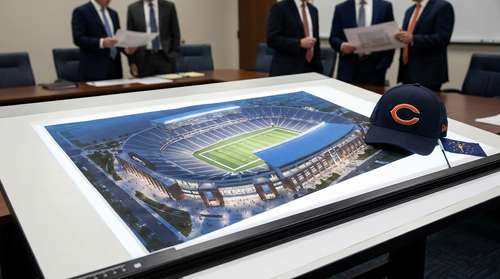
While the exact parcel of land has yet to be formally locked down, the primary focus centers around the Hammond Indiana Wolf Lake stadium concept, potentially incorporating the nearby Lost Marsh Golf Course footprint. The proposed $5 billion domed facility would serve as a year-round entertainment hub capable of hosting Super Bowls, Final Fours, and massive international concert tours. The team has already pledged a hefty $2 billion in private capital toward the development, underscoring their commitment to creating a premier destination that bridges the gap between Indiana and the greater Chicagoland area.
What the George McCaskey Hammond Stadium Plan Means for Chicago
In a joint statement released to the public, team Chairman George H. McCaskey and President & CEO Kevin Warren emphasized the unifying potential of the project. The overarching George McCaskey Hammond stadium vision hinges on transforming the local economy and delivering a world-class experience just minutes from the Illinois border. The leadership believes this new geographic positioning will foster immense economic growth while remaining highly accessible to their historic fan base via the Loop and surrounding suburban transit networks.
Despite the boardroom consensus, a permanent Chicago Bears relocation is not a completely done deal until construction crews break ground. Chicago Mayor Brandon Johnson has publicly stated that the city will continue aggressive negotiations to keep the franchise within city limits, noting that an exact site remains unselected. Illinois Governor J.B. Pritzker's office also highlighted the team's history of shifting its stadium focus over the past several years, suggesting the political maneuvering might not be entirely finished. However, without a concrete financial package from Illinois legislators, Chicago's bargaining power appears remarkably thin.
Looking Ahead: The Future of Soldier Field and the Franchise
The prospect of the team packing their bags is a bitter pill for Chicago traditionalists. The organization has played in Illinois since its inception as the Decatur Staleys in 1920, calling the historic Soldier Field home since the early 1970s. However, the modern NFL demands state-of-the-art, revenue-generating enclosed venues, a strict requirement that the aging, capacity-limited Soldier Field simply cannot meet.
As the newly formed Northwest Indiana Stadium Authority begins structuring the financing plan and local officials work diligently to finalize the site details, the clock is rapidly ticking for Illinois. If a last-minute legislative miracle doesn't emerge from Springfield or Chicago's City Hall, this monumental boardroom vote will be remembered as the definitive moment the Bears chose a new frontier.