The landscape of wagering in the Centennial State is facing a seismic transformation. On Tuesday, April 28, 2026, the state legislature approved the most aggressive overhaul to Colorado sports betting regulations since the market's inception in 2019. Pushed forward in a 20-14 vote, the new legislation introduces strict guardrails aimed at curbing impulsive behavior and protecting vulnerable consumers from debt.
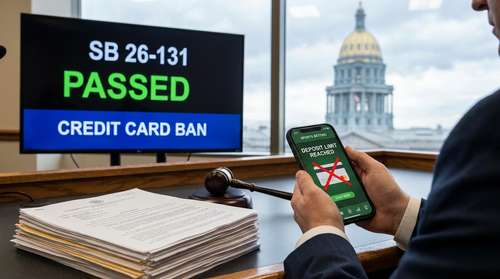
At the center of this legislative push is Senate Bill 131 Colorado, a bipartisan effort that completely rewrites the playbook for online operators. Sponsored by Democratic Senator Matt Ball and Republican Senator Byron Pelton, the sweeping measure establishes strict sports betting deposit limits, a total credit card ban for gambling, and severe restrictions on industry advertising. The bill now heads to the House Finance Committee, where it faces a ticking clock ahead of the May 13 legislative adjournment.
A Historic Shift in Colorado Sports Betting Regulations
Since voters approved legalization a few years ago, the local market has experienced explosive growth. Annual online sports wagers surged from roughly $1 billion in 2020 to more than $6.3 billion by the end of 2025. While this boom generated substantial tax revenue for the state, lawmakers argue the financial windfall has come at a steep social cost. Calls to the state's gambling addiction hotline have jumped nearly 50%, prompting immediate legislative action.
Advocates view SB 26-131 as the equivalent of a Colorado problem gambling act, establishing consumer protections that balance economic interests with public health. "Technology has rapidly transformed the industry, catching more and more people in the cycle of devastating gambling addiction," Sen. Ball noted during the floor debate, warning of the dangers posed by unchecked algorithms and aggressive marketing tactics.
Breaking Down the Strict New Sports Betting Deposit Limits
The core of the legislation focuses directly on user funding mechanics. Under the approved framework, operators will be prohibited from accepting more than six separate deposits from an individual within a rolling 24-hour period. Earlier drafts of the bill had capped this at five, but lawmakers amended the threshold to six before final passage. This physical friction is designed to interrupt the "chasing losses" behavior commonly associated with gambling disorders.
Paired with these caps is a comprehensive credit card ban for gambling. Major sportsbooks operating in the state—including DraftKings, FanDuel, BetMGM, and Caesars—will no longer be permitted to process credit card transactions. Fanatics already prohibits this funding method, but the state-wide mandate ensures that bettors can only wager with liquid funds they actually possess, preventing individuals from financing bets with borrowed money.
Ending Predatory Push Notifications
Beyond direct funding rules, the bill significantly alters how operators can interact with their user base. Sportsbooks will be barred from sending push notifications or text messages that solicit account holders to place wagers or make new deposits. This strikes at the heart of the retention strategies betting companies use to keep players engaged during live events.
The Advertising "Dead Zone" and Marketing Restrictions
Marketing practices took a massive hit under the new regulatory framework. The Senate approved a "dead zone" for broadcast sports betting advertisements, banning them entirely between 8:00 a.m. and 10:00 p.m.. Furthermore, operators are prohibited from airing commercials during live broadcasts of athletic competitions.
The language of the promotions themselves is also under the microscope. Industry-standard promotional terms like "bonus bet" or "no sweat" will be banned from marketing materials. Lawmakers argued these terms misrepresent the financial risks involved and normalize gambling behavior, particularly among underage audiences. Recent data highlighted during committee hearings revealed that 36% of boys aged 11-17 reported gambling with money in the past year, heavily influencing the strict stance on visibility.
The Prop Bet Compromise and Tax Revenue
While the approved restrictions are severe, the gambling industry did score one major concession. Initial drafts of the bill included a total prohibition on proposition bets—wagers on individual player performances or specific game events unrelated to the final score. The NCAA had actively lobbied for this ban to protect game integrity and student-athletes.
However, the Senate Appropriations Committee ultimately stripped the prop bet ban from the legislation following intense debate over state finances. Fiscal analysts projected that eliminating prop bets would cost the state roughly $2.4 million in tax revenue for the 2026-27 budget year. Because Colorado directs the majority of its sports betting tax dollars toward critical water conservation projects, lawmakers were unwilling to absorb such a massive hit.
By settling for just the credit card ban and deposit caps, the projected revenue loss shrinks to approximately $800,000. Sen. Ball acknowledged the difficult compromise, noting that preserving the state's water project funding was necessary to keep the broader consumer protections intact.
What This Means for US Sports Betting News in 2026
As the measure advances to the House, the rest of the country is paying close attention. The passage of these restrictions represents a massive headline for US sports betting news 2026, signaling a broader cultural shift. Similar debates are playing out nationwide; earlier this month, Louisiana lawmakers also considered—and ultimately scrapped—a prop bet ban over similar revenue concerns.
The outcome in Colorado could serve as a blueprint for other states struggling to reconcile the massive profits of legalized wagering with rising addiction rates. If the House Finance Committee advances the bill and it reaches the governor's desk, sportsbooks will be forced into a frantic scramble to update their platforms, adjust their marketing buys, and overhaul their compliance systems before the new rules take effect.