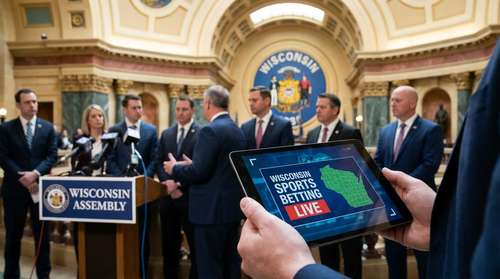
In a historic move that could fundamentally reshape the gambling landscape of the Badger State, the Wisconsin Assembly officially passed AB 601 Wisconsin on Thursday, setting the stage for statewide mobile betting legalization. The landmark legislation, which advanced on a voice vote without debate, proposes a unique "hub-and-spoke" model that would allow Native American tribes to offer digital sports wagering to anyone physically located within state lines, provided the betting servers remain on tribal lands.
Historic Vote in Madison Moves Bill Forward
The passage of A.B. 601 marks the most significant breakthrough in Wisconsin sports betting since the repeal of PASPA in 2018. For years, legal wagering has been strictly geo-fenced to physical tribal casinos and their immediate designated grounds. This new bill, championed by Assembly Majority Leader Rep. Tyler August and Rep. Kalan Haywood, aims to shatter those physical boundaries.
By passing this measure, the Assembly has signaled strong bipartisan support for a regulated digital market that prioritizes tribal sovereignty. "This legislation is an important step to bring Wisconsin in alignment with the majority of the country," Rep. Haywood noted, emphasizing the need to capture revenue currently flowing to the illegal offshore market.
Understanding the 'Hub-and-Spoke' Model
The core of AB 601 Wisconsin is its technical and legal framework, often referred to as the "hub-and-spoke" model. This system mirrors the structure successfully implemented by the Seminole Tribe in Florida. Under this framework, a bet placed by a fan on their smartphone in Milwaukee, Madison, or Green Bay is legally deemed to have taken place at the location of the server—on sovereign tribal land.
This distinct approach allows the state to bypass constitutional hurdles that generally prohibit non-tribal commercial gambling expansion. It effectively grants Wisconsin's federally recognized tribes, including the Forest County Potawatomi and Oneida Nation, exclusive control over the digital market. For the average bettor, the experience will be seamless: accessing a regulated app from their couch rather than driving to a casino to place a wager.
Tribal Sovereignty vs. Commercial Giants
While the bill is a massive victory for Wisconsin tribal gaming, it has drawn sharp criticism from national commercial operators. The Sports Betting Alliance, representing industry titans like DraftKings and FanDuel, has opposed the bill's current form. Their primary concern is that the legislation could effectively lock out commercial brands or force them into unfavorable tethering agreements where they serve merely as white-label vendors for tribal operators.
However, proponents argue that this model ensures the economic benefits of legal gambling Wisconsin 2026 stay within the state and its tribal nations. The bill stipulates that tribes would retain a significant portion of the revenue, using it to fund essential tribal government operations, healthcare, and education.
What Comes Next for Wisconsin Bettors?
Despite the excitement, Midwest sports betting news watchers know the process isn't quite finished. The bill now heads to the Senate, which has been considering its own version, SB 592. Political analysts expect the Senate to act quickly, potentially sending the legislation to Governor Tony Evers' desk within weeks. Governor Evers has previously signaled support for tribal-led gaming expansions.
Once signed, the real work begins: the state and tribes must negotiate amendments to their gaming compacts. These amendments then require approval from the U.S. Department of the Interior. If all goes smoothly, Wisconsin residents could be placing legal mobile wagers by the start of the 2026 NFL season, finally bringing the state into the modern era of sports entertainment.