With the massive summer tournament set to kick off on June 11, the global soccer community has closely tracked the dizzying evolution of the FIFA World Cup 2026 water bottle policy. Following intense public outcry from supporters, municipal leaders, and medical professionals, the sport's governing body has officially walked back a highly unpopular restriction that would have prevented spectators from bringing their own hydration into stadiums.
The policy shift arrives just under the wire, relieving some anxiety for the millions of travelers preparing to navigate extreme North American summer weather. Here is exactly how the updated regulations will impact the matchday experience.
The Updated World Cup 2026 Stadium Rules
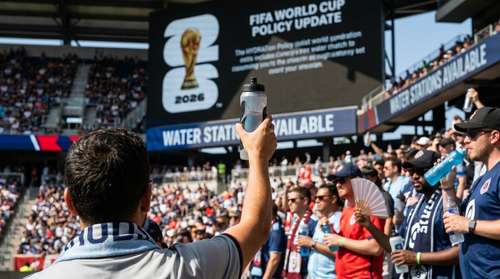
Just days before the opening matches, FIFA Chief Operating Officer Heimo Schirgi released an update clarifying the organization's revised stance. Spectators attending fixtures in the United States and Canada are now officially permitted to carry their own water into the stands, provided they follow strict guidelines.
Under the amended World Cup 2026 stadium rules, security checkpoints will enforce the following hydration guidelines:
- Permitted: One factory-sealed, soft-sided disposable plastic water bottle per person.
- Size Limit: The bottle cannot exceed a capacity of 20 ounces (590 milliliters).
- Prohibited: All hard-sided containers, including stainless steel tumblers, glass bottles, and rigid reusable plastics.
- Prohibited: Unsealed containers or outside beverages other than water.
This represents a significant U-turn from the strict policy announced just a few days prior, which mandated that all outside beverages be discarded before passing through the turnstiles. That short-lived mandate meant attendees would have relied solely on concession stands—operated by corporate sponsors like Coca-Cola, which sells Dasani water—to stay hydrated during potentially grueling afternoons.
World Cup 2026 Heat Safety and the Fan Backlash
The initial sweeping prohibition sent shockwaves through supporter networks, sparking immediate, widespread concerns regarding World Cup 2026 heat safety. June and July temperatures across North American host cities such as Houston, Miami, and Los Angeles routinely climb into the upper 90s, often accompanied by suffocating humidity that creates hostile conditions for daytime matches.
Public health officials and local political leaders quickly voiced their disapproval. Medical experts warned that limiting access to brought-in water could trigger a wave of heat exhaustion and dehydration emergencies among the densely packed crowds. Prominent figures, including Toronto Mayor Olivia Chow, publicly questioned the motives behind the ban, calling it a pure money grab. International critics echoed this sentiment, labeling the prohibition a dangerous scheme designed to drive up concession revenues.
By easing the FIFA stadium code of conduct, organizers have acknowledged these severe weather realities. Supporter groups have celebrated the FIFA water bottle ban backtrack as a necessary victory for public health, ensuring families have immediate access to hydration without immediately facing steep stadium pricing.
Why Reusable Bottles Remain Banned
While the updated guidelines offer relief, they notably fail to restore the original pre-tournament policy that allowed fans to bring empty, transparent, reusable containers up to one liter in size. Hard-sided vessels, including massively popular insulated sports flasks, remain strictly forbidden across all host venues.
Organizers cite standard safety and security protocols for maintaining this specific restriction. Hard-sided containers have historically posed a projectile risk in heavily crowded sporting environments. By limiting the allowance to soft, disposable plastics, security teams aim to mitigate the threat of injury to players, officials, and fellow spectators if tempers flare in the stands. The governing body noted that banning rigid containers aligns with existing security frameworks at major American sports venues.
Essential 2026 World Cup News for Fans
As the June 11 opening ceremony rapidly approaches, ticket holders must finalize their matchday logistics with these shifting regulations in mind. If you are packing for a game, securing a standard 20-ounce sealed bottle from a local convenience store should be at the top of your pre-match checklist.
Interestingly, this vital 2026 World Cup news for fans currently contains a notable geographic loophole. The recent policy update explicitly mentions stadiums in the United States and Canada, leaving attendees holding tickets for matches in Mexico—including the highly anticipated opening fixtures at Estadio Azteca—waiting for localized guidance. Until further announcements are made, those traveling to Mexican venues should prepare for the possibility of strict outside beverage bans.
For those who consume their permitted water early in the match, internal hydration stations and concession stands will be available. Host cities have also pledged to set up external cooling stations and water refill areas in official fan zones outside the stadiums. Navigating the logistics of a North American summer tournament requires patience and preparation, but this late-stage policy adjustment ensures the massive crowds will at least step into the sweltering heat with a baseline level of hydration.