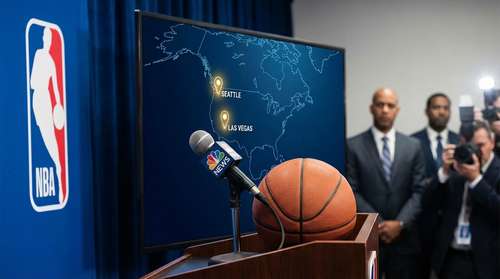
The landscape of professional basketball is on the precipice of its most significant transformation in over two decades. Following years of mounting speculation, the NBA Board of Governors vote on March 25, 2026, officially authorized the league to explore adding two new franchises. For fans eagerly awaiting NBA expansion 2026, the directive is clear: Seattle and Las Vegas are the exclusive targets for what would become the league's 31st and 32nd teams.
This momentous decision ends a 22-year drought since the Charlotte Bobcats joined the fray in 2004. If the vetting process proceeds smoothly over the coming months, these newly minted organizations could take the court as early as the 2028-29 season, dramatically reshaping the Western Conference and altering the competitive balance of the sport. The process marks a historic pivot for a league that has seen its global valuation soar, signaling that the time for strategic growth has finally arrived.
The Financial Stakes: Breaking Down the NBA Franchise Cost 2026
Bringing a professional basketball team to life in the modern era requires unprecedented capital. According to early league estimates, the NBA franchise cost 2026 is projected to command an astronomical fee between $7 billion and $10 billion per team. This valuation reflects the league's booming global popularity, driven by its recently minted 11-year, $77 billion media rights package that fundamentally changed the economics of the sport.
To navigate this lucrative endeavor, the NBA has tapped investment bank PJT Partners to serve as its strategic adviser. The firm will spend the coming months meticulously vetting ownership groups, scrutinizing arena infrastructure, and evaluating the broader economic viability of both markets. For the existing 30 team owners, the financial incentive is staggering; an expansion fee of $10 billion could deliver upwards of $300 million directly into the pockets of each current ownership group.
A Completely Transparent Bidding Process
During the latest Adam Silver expansion news press conference in New York, the NBA Commissioner emphasized that the league is prioritizing transparency above all else. Silver made it clear that no backroom deals have been finalized. "I just want to make sure everybody understands there's been no handshakes on the side," Silver stated to reporters. "There's no promises to anyone. This is a completely transparent process".
The commissioner also noted that while the league is highly optimistic about finalizing the evaluation by the end of the year, there is still a possibility that they could expand to just one market, or ultimately pause the initiative if global economic conditions shift out of their control.
The Seattle SuperSonics Return: Rectifying a 2008 Heartbreak
For the Pacific Northwest, Wednesday's vote represents a vital step toward healing a lingering sports wound. A Seattle SuperSonics return has been the holy grail for local fans since the original franchise relocated to Oklahoma City in 2008. The city has spent the last 18 years proving it remains a premier basketball market, refusing to let the culture of the sport fade.
Seattle already boasts a readymade home in Climate Pledge Arena. Originally known as KeyArena, the facility recently underwent a staggering $1.15 billion renovation and currently houses the NHL's Kraken alongside the WNBA's Storm. Anticipating this exact scenario, local ownership groups recently consolidated control of the arena's operations, preparing to seamlessly integrate a new basketball franchise. Should the bid succeed, the overwhelming expectation is that the team will reclaim the iconic SuperSonics moniker, restoring decades of cherished history to the Emerald City.
Placing Bets on a Las Vegas NBA Team
While Seattle offers historic nostalgia, Southern Nevada represents the league's ultimate modern frontier. The concept of a Las Vegas NBA team has evolved from a perceived gamble into an absolute certainty. The city has systematically built an undeniable sports infrastructure, successfully integrating the NHL's Golden Knights, the NFL's Raiders, the WNBA's Aces, and the upcoming MLB's Athletics.
The NBA is already deeply entrenched in the desert. Las Vegas has served as the vibrant hub for the NBA Summer League for over two decades and recently became the permanent host for the high-stakes NBA Cup semifinals and championship. Adding a permanent franchise is the logical climax to a partnership that has already generated massive revenue and year-round fan engagement.
What the Addition of New NBA Teams in Seattle and Las Vegas Means
The potential integration of new NBA teams Seattle Las Vegas will trigger a massive logistical domino effect across the league. Moving to 32 teams will necessitate a comprehensive structural overhaul. Fans can expect a complete realignment of the Western and Eastern Conferences. To balance the map, one or two current Western Conference teams—such as the Minnesota Timberwolves, New Orleans Pelicans, or Memphis Grizzlies—will likely migrate East.
Furthermore, an expansion draft will inevitably disrupt current rosters. Existing front offices will soon be forced to make agonizing decisions about which core players to protect and which assets to expose to the new franchises. While the target launch date of the 2028-29 season feels distant, the rigorous groundwork being laid today ensures that the league's next era will be its most competitive, lucrative, and geographically diverse yet.