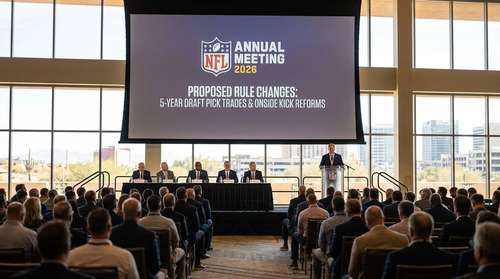
The league's power brokers have officially descended upon the desert. Kicking off today, March 29, the NFL Annual League Meeting 2026 in Phoenix is set to shape the future of professional football. With general managers, head coaches, and billionaire owners gathered to debate the league's trajectory, the docket is loaded with potentially landscape-altering NFL rule changes 2026. Headlining the agenda is a highly debated Cleveland Browns trade proposal that could fundamentally rewrite the playbook on franchise team building, alongside a major NFL onside kick rule update designed to inject more strategic intrigue and late-game drama into the sport.
The Radical 5-Year Draft Pick Trade Rule
Perhaps the most polarizing topic at the NFL owners meeting Phoenix is the push to extend how far into the future front offices can leverage their assets. Currently, the league restricts teams from trading draft picks more than three years in advance. The new 5-year draft pick trade rule, spearheaded by the Cleveland Browns, would stretch that window to five full seasons.
Proponents argue this shift would provide unprecedented roster-building flexibility. By mirroring the long-term asset management approach seen in the NBA, front offices could structure highly creative blockbuster trades, increase the liquidity of draft capital, and facilitate a far more active off-season market. A team looking to acquire a proven superstar wouldn't have to completely empty its immediate draft war room; instead, it could spread the cost over half a decade, preserving short-term depth while committing future capital.
However, the proposal faces intense scrutiny from traditionalists and analysts alike. Skeptics warn that extending the trade window invites organizational malpractice. A desperate general manager on the hot seat could easily mortgage a franchise's 2031 draft class to save their job in 2026, leaving behind a barren, cap-strapped roster for the next regime. Critics point to the NBA's famous Stepien Rule, which was literally created to prevent the Cleveland Cavaliers from trading away consecutive future first-round picks in the 1980s. In a physical sport where cheap, rookie-scale contracts are essential for navigating the salary cap, giving up five years of draft equity could be disastrous. While the Cleveland Browns trade proposal promises more thrilling off-season action, owners will have to carefully weigh the entertainment value against the genuine risk of long-term franchise crippling.
Overhauling the Onside Kick and Kickoff Mechanics
Special teams regulations remain a primary focus for the NFL competition committee 2026. Following the full integration of the dynamic kickoff format, the committee has pitched a comprehensive NFL onside kick rule update. If passed, the kicking team will be permitted to declare an onside kick at any time during the game, regardless of the current score. This marks a massive shift from the original 2024 restrictions that limited onside attempts strictly to the fourth quarter for trailing teams, returning an element of surprise and early-game risk to special teams coordinators.
Beyond the onside kick, the competition committee desperately wants to close a glaring loophole in the standard kickoff format. Last season, kicking units were actively incentivized to intentionally boot the ball out of bounds when kicking off from the 50-yard line following a penalty, as it gave the receiving team the ball at the 25-yard line instead of the 35. Under the new proposal, touchbacks on kicks originating from the midfield stripe will be spotted at the 20-yard line, eliminating the strategic advantage of deliberately kicking out of bounds.
Kickoff Alignment Tweaks
To further enhance player safety and return viability, the committee has also proposed modifying the kickoff alignment requirements for receiving players in the setup zone. The adjustment would reduce the minimum number of players with their front foot on the setup line from six down to five, while expanding the secondary line. This tweak aims to give return units slightly more spacing and tactical freedom to generate explosive plays without compromising the safety mandates that birthed the dynamic kickoff.
International Expansion and Roster Reduction Rules
As the NFL continues its aggressive global expansion, administrative procedures are evolving to keep pace. Another significant bylaw proposal on the table addresses the logistical nightmare of early-season transcontinental travel. The committee has recommended permitting the league office to adjust the procedures and deadlines for the final pre-season roster reduction specifically to accommodate teams scheduled for an international game in the very first week of the regular season.
This localized rule change acknowledges the unique hurdles faced by franchises traveling overseas. Providing flexible roster cutdown dates ensures these teams can properly evaluate their depth charts while managing international logistics, long-haul travel days, and time-zone acclimation periods without being unfairly penalized by the standard domestic deadlines.
Replay Booth Ejections and Officiating Contingencies
Finally, the league is looking to leverage its New York replay center for player discipline. A new proposal would allow designated members of the officiating department to consult with on-field referees regarding potential disqualifications for flagrant acts, even if a penalty wasn't initially thrown on the play. This ensures egregious non-football acts, like unseen punches or sideline altercations, aren't missed in the heat of the moment.
Furthermore, in a highly proactive move, the NFL is voting on a one-year contingency plan allowing the replay department to correct clear and obvious officiating misses. This temporary measure is deliberately designed to protect the integrity of the game in the event of a work stoppage involving the NFL Referees Association, ensuring that backup officials would have a robust safety net from the central command center.
As the owners cast their votes this week in Arizona, the ramifications of these decisions will undoubtedly ripple through the 2026 season and well into the next decade. Whether it is trading prime assets half a decade away or catching an opponent sleeping with a first-quarter onside kick, the NFL is actively engineering a more dynamic, unpredictable future.