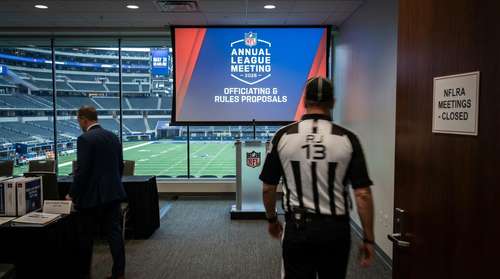
The shadow of the infamous 2012 "Fail Mary" is once again looming over the National Football League. As negotiations with the NFL referee union hit a dramatic standstill this week, the league is quietly but urgently bracing for a massive officiating crisis. With the current collective bargaining agreement set to expire on May 31, the prospect of an NFL referee lockout 2026 is rapidly transitioning from a distant anxiety to an imminent reality. To shield the sport from potential on-field chaos, the league has officially begun vetting and training a contingency roster of NFL replacement officials. At the same time, the competition committee is pushing for unprecedented replay rule changes to safeguard the integrity of the game.
The Root of the NFLRA Labor Dispute: A Financial Disconnect
At the NFL Annual League Meeting 2026 in Phoenix, Arizona, the tension between the league's front office and the NFL Referees Association (NFLRA) has been the dominant underlying narrative. The core of this NFLRA labor dispute revolves around baseline compensation, performance bonuses, and accountability metrics. While the NFL has reportedly proposed a 10% wage increase, union representatives are demanding substantial double-digit raises that mirror the skyrocketing revenues of a league that recently crossed the $20 billion annual mark.
Frustrations boiled over just days before the Arizona meetings when union negotiators abruptly walked out of a scheduled summit in Palm Beach, Florida, accusing league representatives of intentional stalling. The NFL is reportedly looking to redirect annual bonuses exclusively toward high-performing officials while simultaneously extending the probationary period for new hires. NFL executive Jeff Miller openly acknowledged the friction, noting that talks "have not gone as quickly as we would have wanted," and emphasizing that the league feels compelled to prepare for playing football in a distinctly different environment.
Vetting the Next Wave of NFL Replacement Refs
If a new CBA isn't signed by the May 31 deadline, the league will enter its first officiating work stoppage in 14 years. To prepare for this worst-case scenario, the NFL is actively evaluating roughly 150 lower-level referees, primarily drawing from small-college and Division III ranks. These NFL replacement refs are being prepped to serve as an emergency squad should a strike or lockout wipe out the primary roster before the preseason.
Fans and players alike vividly remember the chaotic first three weeks of the 2012 season. That officiating crisis culminated in a heavily scrutinized Monday Night Football touchdown in Seattle—the widely mocked "Fail Mary"—where an offensive pass interference penalty was completely missed on the final play. The fallout was so severe that it prompted White House intervention and a formal apology from Commissioner Roger Goodell. However, modern professional football offenses are faster and infinitely more complex than they were in 2012, making the deployment of unproven officials an even greater gamble today.
Radical NFL Officiating Rule Changes to Protect the Game
To mitigate the risk of catastrophic blown calls by inexperienced crews, the NFL's competition committee has formulated a radical one-season contingency plan. If NFL replacement officials are forced to take the field this fall, the league intends to drastically expand the authority of its central replay command center in New York.
These proposed NFL officiating rule changes would allow the replay center to proactively advise on-field crews and overturn "clear and obvious" mistakes. Historically, the central command's power has been strictly limited to objective boundary rulings, turnovers, or scoring plays. Under the new proposal, New York officials could step in to address subjective missed calls, including roughing the passer penalties and intentional grounding infractions. This essentially creates a "Remote Official" safety net designed to overrule glaring errors in real-time before they impact the final score.
The "DK Metcalf Rule" and Expanded Ejection Authority
A notable inclusion in the competition committee's proposal is what league insiders are calling the "DK Metcalf rule." Last season, the Pittsburgh receiver was involved in a flagrant off-field altercation with a heckling fan in Detroit. Because the on-field officials did not see the incident and failed to throw a penalty flag in real-time, the replay center was bound by the old rulebook and could not intervene to eject him.
The new contingency rules would empower the New York replay center to independently disqualify players for flagrant acts, unnecessary roughness, or non-football misconduct—even if no initial penalty was called on the play. This represents a monumental shift away from the traditional on-field authority structure, handing unprecedented policing power to league personnel hundreds of miles away from the stadium.
The Clock is Ticking at the NFL Annual League Meeting 2026
Franchise owners are slated to vote on these contingency measures before concluding the NFL Annual League Meeting 2026. The "Remote Official" proposal requires the approval of at least 24 of the 32 owners to be officially implemented. While the Arizona meetings are also addressing other significant matters—such as adopting a new 5-4-2 alignment for the dynamic kickoff and integrating AI technology into game management—the specter of an officiating lockout remains the most pressing issue.
Implementing a comprehensive safety net might provide some short-term operational comfort for the NFL, but it heavily underscores how far apart the two sides remain at the bargaining table. For a multi-billion dollar entertainment juggernaut, starting the season with Division III referees is a massive reputational risk. The league and the NFL Referees Association have exactly two months to bridge their financial divide before the May 31 deadline strikes. Until then, football fans must anxiously wait, hoping the upcoming season's integrity won't be compromised by a boardroom standoff.