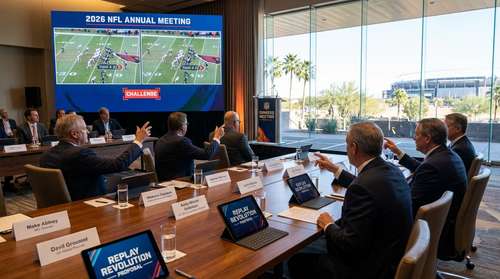
The Arizona desert is about to become ground zero for some of the most dramatic shifts the sport has seen in decades. When the NFL Annual Meeting 2026 officially begins tomorrow, March 29, league personnel and franchise owners will gather to vote on a slate of radical proposals. Front and center is a highly anticipated "replay revolution" that could permanently alter the balance of power between on-field referees and the league office.
Beyond the sweeping officiating adjustments, the Competition Committee and individual clubs have put forward aggressive solutions to recent game-management frustrations. From overhauling NFL onside kick rules to a blockbuster proposal that would stretch NFL draft pick trading out to a half-decade, the agenda for the NFL owners meeting Phoenix is packed with franchise-altering decisions. Needing 24 votes to pass, these NFL rule changes could redefine strategy from the opening kickoff through the trade deadline.
The Dawn of the NFL Replay Revolution
For years, coaches, players, and fans have voiced frustration over game-altering missed calls that slip past on-field crews. Now, the league is considering unprecedented intervention. The cornerstone of this year's NFL officiating news is a proposal granting the NFL Officiating Department in New York the authority to correct "clear and obvious misses" by the on-field crew in real-time.
Currently, replay officials face strict limitations on what they can review, often leaving flagrant non-football acts or missed penalties unaddressed if a flag wasn't thrown. Under the proposed NFL replay revolution, league personnel would be permitted to consult directly with the on-field crew to enforce ejections for severe fouls, even if the whistle was never blown during the play.
Interestingly, this sweeping measure serves a dual purpose. While pitched as a one-year contingency plan to safeguard the integrity of the game in the event of a work stoppage involving the NFL Referees Association, many insiders view it as a trial balloon. If successful, giving New York the power to overwrite glaring mistakes could easily become a permanent fixture of professional football.
Removing Restrictions on NFL Onside Kick Rules
Special teams strategy has been a revolving door of tweaks over the last few offseasons, largely driven by player safety initiatives. However, the implementation of the dynamic kickoff format inadvertently neutered the surprise onside kick, restricting teams to declaring an onside attempt only in the fourth quarter when trailing.
The Competition Committee is now pushing to lift those handcuffs. A newly submitted proposal would permit the kicking team to declare an onside kick at any time during the game, regardless of the score or the quarter. This immediate fix to the NFL onside kick rules would inject a necessary layer of unpredictability back into special teams.
If passed, no lead will be entirely safe. Head coaches would regain the ability to steal early momentum or execute a surprise recovery coming out of halftime, forcing receiving teams to stay vigilant from the opening whistle to the final gun.
Cleveland's Bold Push for Expanded NFL Draft Pick Trading
While the Competition Committee focused heavily on between-the-lines operations, the Cleveland Browns arrived with a resolution aimed squarely at the front office. Currently, general managers are permitted to trade draft picks up to three years into the future. Cleveland's proposal aims to shatter that ceiling, allowing NFL draft pick trading up to five seasons out.
The Browns cited "greater roster-building flexibility" in their submission, arguing that expanding the window gives franchises more maneuverability when navigating the salary cap or pursuing elite talent. The implications of such a change are staggering.
Imagine the leverage a team could generate by offering five consecutive first-round picks for a franchise quarterback. Conversely, desperate general managers on the hot seat might mortgage half a decade of their team's future for a short-term Lombardi push. It introduces a high-stakes, boom-or-bust element to roster construction that could turn the annual trade deadline into a chaotic frenzy.
What to Expect at the NFL Owners Meeting in Phoenix
As executives arrive in Arizona, the lobbying behind closed doors will be intense. To adopt any of these measures, the proposals require a 75 percent approval rate—meaning 24 of the 32 owners must give the green light before they are written into the rulebook.
Historically, measures introduced by the Competition Committee carry significant weight and stand a high chance of approval. The replay modifications, heavily tied to officiating stability, are expected to draw thorough debate but ultimately garner strong support. Meanwhile, club-submitted resolutions like Cleveland's five-year trading window face a steeper uphill climb, as traditionally conservative ownership groups weigh the risks of long-term franchise instability.
By the time the meetings conclude on April 1, the landscape of professional football could look vastly different. Between the prospect of New York dictating real-time penalty corrections, the return of the anytime onside kick, and the possibility of five-year draft trades, the decisions made this week in Phoenix will ripple through the league for years to come.