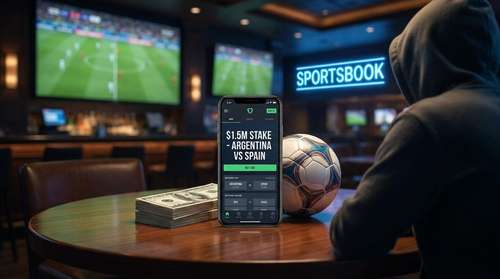
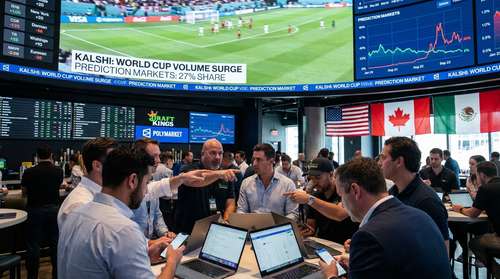
When Spain secured a dramatic 1-0 victory over Argentina at MetLife Stadium to win the 2026 FIFA World Cup on July 19, the most significant shift in the sports landscape was happening entirely off the pitch. A massive wave of retail capital flooded into prediction markets sports betting, fundamentally altering the traditional dynamics of the wagering industry. Newly compiled market data indicates that CFTC-regulated prediction platforms captured a staggering 27% of all legal U.S. sports betting volume during the 39-day global tournament. That figure marks a tremendous leap from the estimated 9% market share these exact platforms held just seven months ago at the start of 2026.
This unprecedented surge indicates that peer-to-peer event trading is no longer a niche financial experiment. It is actively challenging traditional oddsmakers and rewriting the playbook for operators heading into the lucrative fall football calendar.
The Kalshi World Cup Volume Phenomenon
The sheer scale of the Kalshi World Cup volume caught legacy oddsmakers completely off guard. Kalshi reported acquiring an astonishing 3 million new users over the course of the tournament. The platform's outright tournament winner market alone—culminating in Ferran Torres' decisive goal in extra time—drew an unprecedented $1.89 billion in trading volume. According to mobile intelligence data from Apptopia, Kalshi's mobile application consistently attracted more daily active users during the World Cup than the two largest U.S. online sportsbooks combined.
Unlike traditional fixed-odds wagering where users essentially bet against the house margin, prediction markets function as pure financial exchanges. Users buy and sell event contracts based on live probability. This peer-to-peer model allows for dynamic hedging, position trading, and fluid risk management throughout a match. Savvy bettors capitalized heavily on shifting odds in real-time during the tense Spain versus Argentina final, generating tens of millions in secondary market trades as the championship match remained completely deadlocked before extra time.
Polymarket Sports Contracts and the CFTC Advantage
The immediate catalyst for this explosive platform growth traces back to a landmark legal victory achieved this spring. In April 2026, the U.S. Court of Appeals for the Third Circuit definitively ruled that the Commodity Futures Trading Commission (CFTC) holds exclusive jurisdiction over these financial event contracts. This decision explicitly preempted state-level gaming regulators, such as New Jersey's Division of Gaming Enforcement, from policing the exchanges.
This ruling cleared the legal runway for both Kalshi and its primary rival. Polymarket sports contracts surged in popularity as the platform fully integrated its U.S. exchange under recent CFTC approvals. Operating under a federal financial regulatory framework grants prediction markets a massive structural advantage: they can offer contracts nationwide without securing costly, highly fragmented licenses from individual state gaming commissions.
The legal battles are far from over, however. Just last week, the Ninth Circuit Court of Appeals heard tense arguments from three federally recognized California tribes attempting to block Kalshi from offering sports contracts on tribal lands, arguing the practice violates the Indian Gaming Regulatory Act. Yet, as long as federal appellate courts continue siding with the CFTC's classification, these derivative exchanges maintain a clear path to market dominance.
To put the sheer velocity of this growth into perspective, consider the recent past. During the 2022 World Cup in Qatar, Polymarket handled a negligible $138,000 in tournament-related volume. Fast forward to the 2026 World Cup betting frenzy, and the platform processed billions of dollars across its domestic and international arms.
DraftKings vs Kalshi: The Looming NFL Clash
The aggressive expansion of financialized sports trading sets the stage for a massive industry collision this fall. In the sports betting news 2026 cycle, the brewing DraftKings vs Kalshi battle is rapidly becoming the dominant financial storyline. Traditional operators have spent billions on customer acquisition, localized state lobbying, and premium sports league partnerships over the past eight years. Now, they find themselves outflanked by federally regulated derivatives exchanges that boast lower overhead and highly engaged user bases. Furthermore, major retail brokerages like Robinhood are now routing users directly to Kalshi's event contracts, permanently blurring the lines between a sports wager and a retail brokerage transaction.
How Legacy Operators Are Responding
Wall Street analysts are already noting that the rapid rise of prediction platforms has "put feet to the fire" for traditional operators. To successfully defend their market share before the NFL season kicks off, legacy brands must rethink their fundamental product architecture. We are likely to see several tactical shifts from legal US sportsbooks:
- Enhanced Micro-Betting: Sportsbooks will aggressively expand their live, play-by-play wagering options to mimic the high-frequency trading feel of prediction markets.
- Better Cash-Out Mechanics: To compete with the fluid buying and selling of event contracts, traditional apps will need to offer fairer, more transparent secondary cash-out values.
- Aggressive Lobbying Pushback: Expect traditional gaming operators to intensify pressure on lawmakers to close what they perceive as a regulatory loophole allowing derivative platforms to offer sports gambling.
While legacy sportsbooks retain a powerful stronghold on recreational parlays and traditional point spreads, the sophisticated retail bettor is increasingly migrating toward exchange-based platforms. If the stunning 2026 World Cup betting data is any indicator, the definition of a sports wager has fundamentally evolved. The upcoming NFL season will severely test whether traditional oddsmakers can adapt to a reality where users demand to trade sports outcomes exactly like stocks.