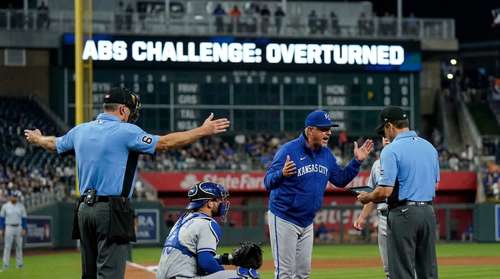
The dawn of the robot umpire era has officially arrived, bringing an unprecedented layer of strategy and controversy to the diamond. As the dust settles on the MLB Opening Day 2026 results, one storyline has completely overshadowed the box scores: the league-wide implementation of the automated strike zone. The highly anticipated MLB ABS challenge system 2026 made its regular-season debut this past weekend, and the initial data is staggering. Over the first 47 games of the season, players successfully overturned umpire decisions at a 53.7% clip, proving that human error behind the plate is finally facing real-time technological accountability.
Baseball purists and tech enthusiasts alike tuned in for the latest robot umpires MLB news, waiting to see how the Hawk-Eye tracking cameras would alter the rhythm of the game. What they got was a weekend full of tactical mastery from veteran catchers, spectacular failures at the plate, and the very first managerial ejection over a machine-assisted call.
Understanding the Automated Ball-Strike System Rules
To grasp the magnitude of these MLB rule changes 2026, you have to look at how teams are deploying their newfound power. Under the automated ball-strike system rules, teams receive a limited number of challenges per game. A batter, catcher, or pitcher can contest a ball or strike call by immediately tapping their cap or head. The Hawk-Eye system, accurate to within one-sixth of an inch, then visually confirms whether the ball clipped the three-dimensional strike zone.
Through the opening slate of games, the league saw 175 total challenges, averaging roughly 3.7 per contest. The data reveals a fascinating divide between the men throwing the pitches and the ones hitting them. While batters struggled to gauge the computerized zone—succeeding on just 42% of their 78 appeals—catchers proved to be elite judges of the plate, boasting a massive 64% success rate.
Salvador Perez ABS Challenges Show Veteran Savvy
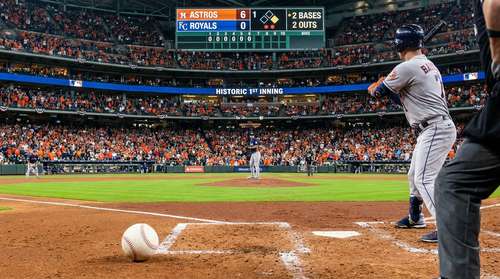
No player adapted to the new reality faster than Kansas City Royals captain Salvador Perez. While some teams floundered with the technology—the Houston Astros went an abysmal 0-6 on their appeals—the Salvador Perez ABS challenges became a masterclass in pitch framing and spatial awareness. The veteran backstop went a perfect 4-0 on his challenges, directly contributing to the Royals' flawless team challenge record over the weekend.
Other notable players experienced mixed results. Los Angeles Angels superstar Mike Trout showed a solid eye, going 3-1 on his appeals, while Atlanta Braves slugger Ronald Acuña Jr. went 0-2. The contrast underscores a developing reality: the challenge system isn't just a safety net; it is a distinct skill set that will separate the league's most spatially aware players from those relying entirely on traditional umpire tendencies.
The Human Umpire Impact
The technology also cast a harsh light on human performance behind the plate. Veteran umpire C.B. Bucknor saw six out of eight challenges against his calls succeed during a single 11-inning matchup between the Cincinnati Reds and Boston Red Sox. As the season progresses, this transparent feedback loop will undoubtedly force umpires to adjust their own zones to match the robotic standard.
The Derek Shelton Ejection 2026: Man Meets Machine
It only took until Sunday afternoon for the new system to generate its first major dispute, culminating in the historic Derek Shelton ejection 2026. The Minnesota Twins manager etched his name into the baseball trivia books during a tense ninth inning against the Baltimore Orioles at Camden Yards.
Trailing 8-6 with one out and a runner on first, Twins hitter Josh Bell worked a 3-2 count against Orioles reliever Ryan Helsley. The payoff pitch, a borderline slider, was called a ball by the home plate umpire. Bell began discarding his protective gear to take first base, a move that would have put the tying run aboard. Instead, Helsley tapped his cap to challenge. The ABS system revealed the pitch barely grazed the edge of the zone, flipping the crucial walk into a strikeout.
Shelton stormed out of the dugout, visibly furious. However, his anger wasn't directed at the Hawk-Eye cameras—he knew the technological ruling was final. Shelton argued that Helsley had delayed his challenge, violating the rule that requires players to signal immediately. Home plate umpire Chris Segal entertained the argument briefly before tossing Shelton, marking the first time a manager has been run from a game over the mechanics of a robot-assisted call.
Adapting to the Future of Baseball
The dramatic sequence in Baltimore perfectly encapsulates the growing pains and entertainment value of the new era. Managers can no longer scream at umpires about the strike zone itself, but they will fiercely police the procedural elements of the technology. Teams are already formulating deep analytics on when to use their appeals. Strategic minds across the league are treating these challenges like timeouts in basketball, saving them for high-leverage, late-inning counts that can decisively swing win probability.
As the season unfolds, the integration of this technology will dominate the narrative. Players will refine their internal strike zones, umpires will adapt to the uncompromising exactness of the cameras, and managers will test the boundaries of the appeal process. Opening weekend proved one thing definitively: the robots haven't stripped the emotion out of baseball. If anything, they have added a thrilling new dimension to the sport's oldest confrontation.