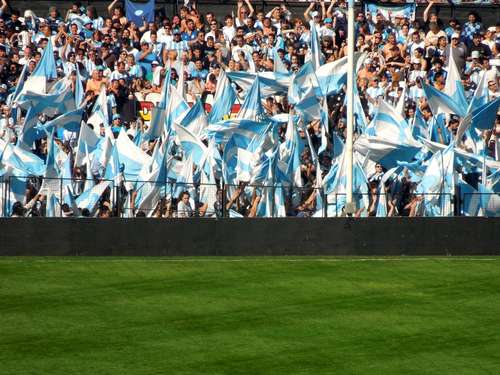
The Argentina vs England World Cup 2026 clash delivered exactly the kind of intensity fans anticipated, but the real drama unfolded after the final whistle. Following a grueling 2-1 victory over the Three Lions in the Atlanta semifinal on Wednesday, July 15, several South American players sparked a massive geopolitical row. During their post-match celebrations, the squad unfurled a controversial Argentina Falklands banner World Cup fans had handed them from the stands. Now, the UK government is officially stepping in, turning a triumphant sporting moment into a major diplomatic flashpoint.
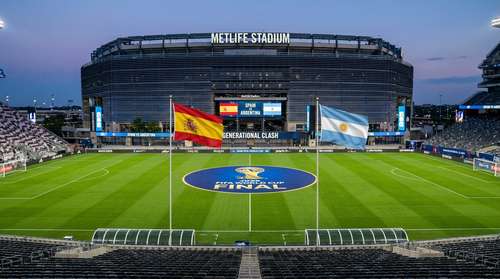
As the players celebrated securing their spot in the final against Spain, the political demonstration overshadowed the on-pitch achievements. The incident has forced football authorities into an uncomfortable corner, testing their commitment to maintaining neutrality at international tournaments.
UK Government Condemns World Cup 2026 Semi Final Controversy
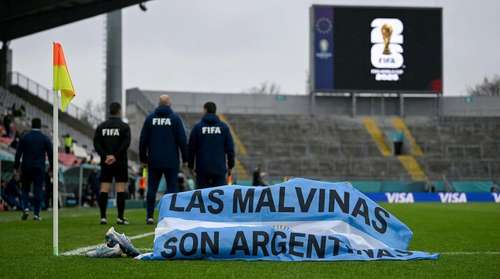
The display of the Malvinas son Argentinas banner—which translates to "The Malvinas are Argentine"—prompted an immediate and fierce reaction from British officials. UK Prime Minister Keir Starmer, who was reportedly watching the match while traveling to Ukraine by train for an overseas trip, swiftly backed calls for disciplinary action.
A spokesperson for the Prime Minister issued a defiant statement on Thursday regarding the Keir Starmer FIFA Argentina situation, declaring, "The World Cup might not be ours, but the Falkland Islands definitely are". The office reiterated that self-determination remains entirely with the islanders and affirmed that the UK's commitment to the territory will never waver.
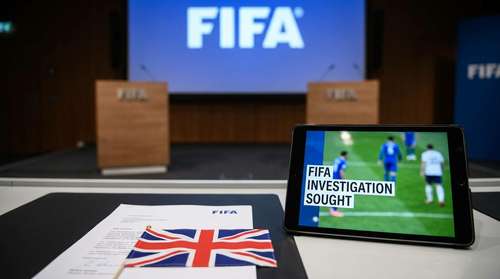
Business Secretary Peter Kyle further escalated the rhetoric in an interview. He described the flag-waving as an "egregious violation" of the sport's strict rules regarding political neutrality, stressing that politics and football must remain separate. Kyle urged the governing body to investigate the matter thoroughly, setting the stage for what could become a landmark disciplinary case.
Players at the Center of the FIFA Investigation Argentina England
The controversial scene materialized shortly after the referee blew the whistle on the highly anticipated, occasionally fractious semifinal. Former Tottenham Hotspur midfielder Giovani Lo Celso was prominently seen taking the banner from supporters before holding it aloft alongside notable teammates like Nicolas Otamendi, Lisandro Martinez, and Cristiano Romero.
The visual of the squad parading the sign across the Atlanta stadium turf instantly ignited the biggest World Cup 2026 semi final controversy of the tournament. Following the initial display, the players laid the sign face-up on the grass, cementing the politically charged imagery for global television audiences.
To understand the gravity of the FIFA investigation Argentina England rivalry, one must look at the historical context. The sovereignty of the South Atlantic archipelago—a British Overseas Territory situated roughly 300 miles east of the Patagonian coast—has been fiercely disputed. The friction culminated in a brief but tragic 10-week war in 1982 that resulted in the deaths of 649 Argentine troops and 255 British service personnel. Decades later, those deep-seated nationalistic sentiments continue to spill over into the fierce sporting rivalry between the two nations.
Argentine Leadership Defends the Celebration
While British authorities are demanding sweeping penalties, politicians in Buenos Aires are aggressively defending their national team's right to express their sovereignty claims. Argentine President Javier Milei publicly praised the players' actions during a radio interview, describing the stunt as "perfectly valid and legitimate" because it reflects a core sentiment shared by the entire country.
However, Milei also acknowledged the reality of international sports governance. He noted that while the players acted on patriotic impulse during the height of their emotional celebration, the stunt will likely lead to financial repercussions for the football association. Milei reiterated his political stance that Argentina will recover the islands through diplomatic channels.
The geopolitical temperature was already soaring even before kickoff. Argentina's Vice President Victoria Villarruel stoked the flames by referring to the English as "usurping pirates" in the lead-up to the high-stakes match. This broader political context guarantees that the fallout from the banner will extend well beyond the stadium.
Potential Sanctions: Will a FIFA Political Messaging Fine Be Issued?
With an official complaint looming, football's global governing body finds itself in a precarious position. The organization's disciplinary code explicitly prohibits displaying any "message that is not appropriate for a sports event," particularly those of a "political, ideological, religious or offensive nature". If the disciplinary panel moves forward with formal charges, a hefty FIFA political messaging fine is the most probable outcome.
Historically, fines for this specific type of infraction range between $5,000 and $20,000. In fact, Argentina faced a remarkably similar penalty in 2014 when players posed with an identical slogan during a pre-tournament warmup game in Buenos Aires. That incident resulted in a 30,000 Swiss franc (approximately $37,000) fine for the national football federation.
As fans await the official ruling, this incident serves as a stark reminder of football's immense cultural power. While the governing body strives to keep politics out of the game, the emotional weight of national identity and historical conflict remains inextricably linked on the world's biggest stage. Whether this translates into individual player suspensions or merely a financial penalty for the federation remains the paramount question ahead of Sunday's final.