The landscape of professional football has officially shifted. If you want to understand the current hierarchy of college-to-pro pipelines, look no further than our definitive 2026 NFL Draft recap. For a decade, the Southeastern Conference held an iron grip on the opening night of the draft, routinely churning out top-tier Sunday talent at an unrivaled pace. That era ended in Pittsburgh last week. Fueled by a historic surge from programs like Ohio State and newly minted national champion Indiana, the Big Ten has officially claimed the opening-round crown, sending ripples through front offices nationwide and officially signaling a new era of talent acquisition.
The Dawn of a New Era: Big Ten First Round Picks Surge
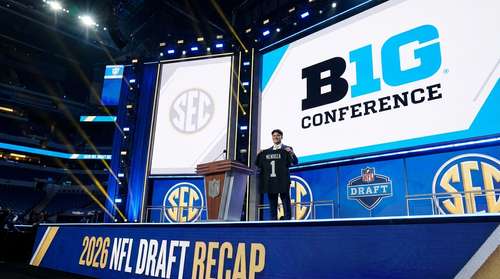
The numbers speak for themselves. The Big Ten first round picks tallied a staggering 10 selections on Thursday night, comfortably outpacing the rest of the country. This unprecedented performance means the famed SEC draft streak broken headline is finally a reality—marking the first time since 2015 that the SEC failed to lead the pack in opening-round selections. The SEC finished the night with just seven first-rounders, a sharp decline from their record-tying 15 picks in 2025.
A significant portion of this Big Ten takeover can be traced straight to Columbus. Ohio State tied an elite historical mark by having four players—Carnell Tate, Arvell Reece, Sonny Styles, and Caleb Downs—selected within the top 11 picks, matching the pace of legendary draft classes from 1967 Michigan State and 1946 Notre Dame. The Buckeyes didn't slow down after Thursday, ultimately pushing 11 total players into the professional ranks. But while Ohio State provided the traditional blue-blood foundation, it was the stunning evolution of another conference rival that truly flipped the script for evaluators.
Fernando Mendoza Raiders Selection and the Rise of Indiana
You cannot tell the story of the 2026 draft without highlighting the No. 1 overall pick. The Fernando Mendoza Raiders marriage was the worst-kept secret in football, but it cemented a Cinderella story for the ages. Mendoza, who transferred from Cal ahead of the 2025 season, transformed into a high-IQ, precision pocket passer under head coach Curt Cignetti. He threw for 3,535 yards and 41 touchdowns, led the Hoosiers to a flawless 16-0 season, and captured both the Heisman Trophy and the national championship over Miami.
When NFL Commissioner Roger Goodell announced Mendoza's name to kick off the draft outside Acrisure Stadium, it completely rewrote Indiana football NFL draft history. The Hoosiers are not historically known as an NFL quarterback factory, yet Mendoza's ascension to the top spot proves that elite talent development is no longer confined to traditional powerhouses. Las Vegas general manager John Spytek praised Mendoza's winning pedigree and team-first mentality. Scouts have heavily compared his methodical game management and pocket presence to veteran Jared Goff, believing Mendoza is uniquely equipped to revive the Raiders franchise.
Beyond the First Round: Big Ten vs SEC Draft Picks
While Thursday night belonged entirely to the Midwest, a deeper dive into the Big Ten vs SEC draft picks reveals a more nuanced reality regarding overall roster depth. Over the full three days, the SEC flexed its sheer volume. They set an all-time record with 87 total players selected across seven rounds, dominating Days 2 and 3 and easily clearing the Big Ten's 67 total picks.
When looking at the final NFL draft conference rankings 2026, a distinct "Super Two" tier has materialized. A remarkable 60% of all drafted players hailed from either the Big Ten or the SEC. NFL front offices are treating these two leagues as de facto minor leagues. For instance, Indianapolis Colts general manager Chris Ballard drafted exclusively from the Big Ten and SEC with all eight of his selections. When asked about this localized strategy, Ballard cited the unmatched week-to-week competitiveness required to survive in those conferences, noting that the SEC provides the closest possible replication of Sunday football.
A Shift in Defensive Talent
The draft also exposed a rare gap in top-end SEC defensive dominance. The first SEC player drafted was LSU cornerback Mansoor Delane, who went sixth overall to the Kansas City Chiefs. This marked the first draft without a top-five SEC player since 2018. Meanwhile, Big Ten defenders flew off the board early, proving that the physical, trenches-first mentality of the conference translates perfectly to modern NFL demands.
What This Power Shift Means for the League
The gap between the top two conferences and the rest of the sport is widening, but the internal battle between the Big Ten and the SEC is tighter than ever. The SEC's recent three-year absence from the National Championship game, coupled with this year's dip in top-tier draft talent, suggests the playing field at the absolute pinnacle has leveled. Coaching retirements—most notably the ripple effects of Nick Saban stepping away—NIL resources, and the expanded playoff format have allowed the Big Ten to hoard premium talent at a rate that rivals their Southern counterparts.
Draft weekend proved that NFL evaluators are adjusting their regional biases. As teams continuously seek immediate contributors who have been tested in pro-style systems against elite competition, the Big Ten's battle-tested prospects are commanding premium draft capital. The SEC remains a massive, unrivaled talent reservoir for building out a 53-man roster, but the crown for elite, franchise-altering prospects now officially resides up North.