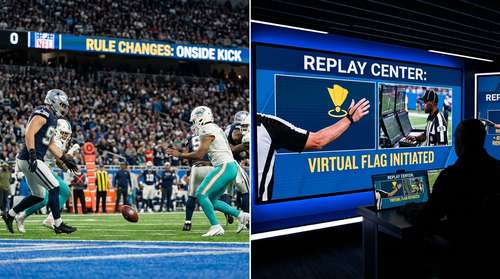
The landscape of professional football is facing a seismic shift following the latest league summit in Arizona. Owners overwhelmingly approved nine major adjustments this week, cementing the NFL rule changes 2026 as some of the most aggressive modifications in modern league history. A complete reimagining of late-game comeback mechanics and a massive expansion of centralized officiating authority highlight the updates. From lifting heavy restrictions on special teams to introducing immediate booth interventions, the league is fundamentally changing how games are managed, officiated, and won.
Transforming the Comeback: New Onside Kick Rules
NFL special teams rules have been under a microscope for years, but the latest tweaks throw out the conventional playbook. The league has officially removed the restriction that limited onside kicks to the fourth quarter for trailing teams. Under the new onside kick rules, a head coach can declare an onside attempt at any point during the game, regardless of the score.
While kicking teams must still notify officials before attempting the play, opening up the timing creates immense strategic possibilities. A team could score on their opening drive and immediately attempt an onside kick to steal a possession. Beyond the element of surprise, owners tweaked the setup zone alignment. Receiving teams are now required to place only five players on the restraining line, allowing up to four floaters to drop back into coverage.
Additionally, touchbacks resulting from kicks at the 50-yard line will now be placed at the 20-yard line instead of the 25. This specific adjustment removes the loophole incentive for kickers to intentionally boot the ball out of bounds to pin the opposing offense deep in their own territory.
New Era for Officiating: NFL Replay Center Ejections
Perhaps the most significant long-term shift involves on-field discipline. The command center in New York has officially been granted the power to initiate NFL replay center ejections for flagrant acts, even if on-field referees fail to throw a penalty flag.
This rule directly addresses a glaring oversight exposed last season when Pittsburgh receiver DK Metcalf swiped at a heckling fan in Detroit. Because the on-field crew missed the altercation in real-time, the replay booth was powerless to remove him from the game. Metcalf remained on the field, though the league later suspended him for two games. Moving forward, New York officials can instantly radio down to the head referee and toss a player for clear flagrant or non-football acts, tightening the grip on player conduct without waiting for post-game reviews.
Labor Disputes and the Rise of NFL Virtual Flags
The most controversial element of the NFL officiating changes is explicitly tied to looming labor uncertainty. With the collective bargaining agreement between the league and the NFL Referees Association set to expire on May 31, 2026, the league has passed a one-year contingency plan.
If a work stoppage occurs and replacement officials take the field, New York can throw NFL virtual flags to correct clear and obvious mistakes. This safety net allows the central officiating department to overrule blatant errors on the turf, from missed roughing the passer calls to phantom pass interference. The shadow of the 2012 referee lockout and the infamous Fail Mary in Seattle hung heavy over the recent owner meetings. The Roger Goodell 2026 updates make it clear the commissioner's office refuses to let television broadcasts descend into chaos if regular officials strike.
Beyond the Field: Roster Bylaws and Strategic Shifts
Beyond the immediate on-field action, the league also approved significant bylaws affecting how front offices manage personnel. A newly permanent rule allows teams to conduct one video or phone call with up to five unrestricted free agents during the two-day negotiation window prior to free agency. Furthermore, players placed on the Reserve/Physically Unable to Perform list can now begin their 21-day practice evaluation window following the team's second regular-season game. By shortening the mandatory waiting period, teams have greater flexibility to integrate recovering stars back into the active roster.
Coaches and special teams coordinators have mere months to adapt their playbooks to these sweeping adjustments. The freedom to execute an onside kick in the first quarter forces receiving units to remain on high alert from the opening whistle. Meanwhile, players must recognize that the watchful eye of the replay center means any extracurricular activity away from the play can result in an immediate shower. The game is evolving rapidly, and the margin for error has never been smaller.