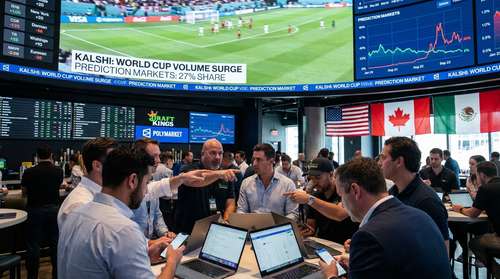
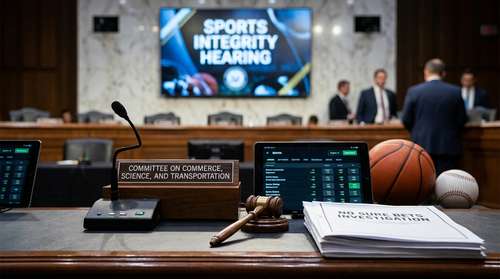
The rapidly expanding $165 billion American sports betting industry hit an unprecedented regulatory wall this week. Driven by the fallout from the NBA point-shaving scandal 2026 and expanding federal probes, lawmakers in Washington convened to address what many are calling an existential threat to American sports. The explosive Senate sports betting hearing—officially titled the "No Sure Bets" investigation—has ignited a fierce debate over the safety of live micro-betting data, youth-targeted advertising, and the unchecked rise of prediction markets.
Inside the 'No Sure Bets' Senate Hearing
On Wednesday, May 20, 2026, U.S. Senator Marsha Blackburn (R-Tenn.) convened the Senate Commerce Subcommittee on Consumer Protection to confront the growing friction between legal gambling expansion and sports betting integrity. The highly anticipated session revealed a deeply fractured ecosystem where even the primary stakeholders are pointing fingers at one another.
American Gaming Association President Bill Miller delivered some of the most aggressive testimony of the morning. He lambasted the rise of unregulated prediction platforms, characterizing them as "backdoor betting operations" that completely bypass state gaming taxes and tribal frameworks. Meanwhile, public health advocates sounded the alarm on the societal costs of instant, in-game wagering. Dr. Harry Levant, Director of Gambling Policy at the Public Health Advocacy Institute, warned lawmakers that professional sports leagues have fundamentally compromised their product. By partnering with data providers to push micro-bets on every pitch, snap, and free throw, Levant argued the leagues are fueling compulsive behaviors that devastate consumers and their families.
The hearing also featured intense bipartisan scrutiny directed at Patrick McHenry, Senior Advisor for The Coalition for Prediction Markets. Both Republican and Democratic senators pressed McHenry on whether his industry's federally regulated event contracts are simply exploiting a loophole to run nationwide sportsbooks. Senator Ted Cruz explicitly noted that these platforms are offering event contracts on sporting events that function exactly like traditional wagers.
Scandals Rock the Foundation: NBA and MLB Under Fire
The urgency on Capitol Hill didn't emerge in a vacuum. Lawmakers are reacting directly to a devastating string of criminal enterprises that have compromised top-tier athletic leagues in ways not seen since the early twentieth century.
Earlier this year, the sprawling NBA point-shaving scandal 2026 sent shockwaves through the professional basketball world. The federal investigation, tied to Pittsburgh-area gambler Shane Hennen who was detained at Harry Reid International Airport, resulted in the guilty plea of a former player and coach for disseminating insider injury information to a betting syndicate. The fallout also saw the Miami Heat unexpectedly cut veteran guard Terry Rozier over alleged connections to the scheme. These high-profile arrests and dismissals have left fans and oddsmakers questioning the legitimacy of late-season matchups.
Simultaneously, baseball is grappling with its own crisis. An ongoing MLB pitch-rigging investigation recently led to federal indictments against Cleveland Guardians pitchers Emmanuel Clase and Luis Ortiz. The duo was placed on unpaid, non-disciplinary leave after prosecutors in Brooklyn alleged they accepted bribes to provide bettors with advance notice of their pitch selections. These arrests have effectively obliterated the long-held argument that modern, multi-million dollar athlete salaries prevent match-fixing.
How Live Micro-Betting Data Amplifies the Threat
The traditional model of betting on a game's final outcome has been entirely eclipsed by micro-betting. As highlighted during the No Sure Bets investigation, gamblers can now wager on hyper-specific events: the velocity of the next fastball, whether the next basketball possession ends in a turnover, or the outcome of a single tennis serve. Because these individual actions can be intentionally manipulated by a single athlete without necessarily throwing the entire game, detecting fraud has become a logistical nightmare for independent monitoring firms like Integrity Compliance 360.
State-Level Prediction Market Bans and Regulatory Pushback
While Congress debates a unified federal framework, individual states are taking drastic unilateral action against financialized sports wagers. Following a highly contentious legislative session, Minnesota officially passed comprehensive prediction market bans in mid-May, effectively outlawing event contracts on sports. New York lawmakers quickly followed suit, pushing strict new responsible gambling measures while the Commodity Futures Trading Commission (CFTC) pursues aggressive litigation against unregulated trading platforms across multiple jurisdictions.
Traditional sportsbooks are not immune to the legislative squeeze. A mounting DraftKings regulatory backlash has forced industry giants to answer for their aggressive marketing tactics. Accused of utilizing youth-targeted advertising strategies, operators are now staring down the newly proposed Gaming Advertisement to Minors Enforcement Act. Lawmakers criticized the unregulated use of VIP hosts and ubiquitous social media promotions, prompting both DraftKings and FanDuel to preemptively scale back specific promotional campaigns and rethink their approach to younger demographics.
As the 2026 playoff seasons heat up across multiple sports, the landscape of legal wagering has never been more perilous. What began as a post-PASPA gold rush has morphed into a frantic race to establish federal guardrails before the next major scandal breaks. For sports executives, data providers, and bettors alike, the days of operating without rigorous oversight appear to be rapidly coming to a close.