
June 2026 is shaping up to be a completely unprecedented month for the American legal sports betting industry. Between a massive influx of casual bettors, a global sporting spectacle taking place on home soil, and highly correlated wager types, operators are tracking toward an extraordinary financial milestone. Early industry projections indicate that the US sportsbook hold record 2026 is on pace to completely shatter the previous national high of 12.4% established in June 2025. This historic profitability is not a fluke. It is the direct result of a massive surge in wagers placed on the ongoing global soccer tournament, combined with the betting public's rapidly increasing appetite for complex, multi-leg wagers.
The 2026 World Cup: A Summer Juggernaut
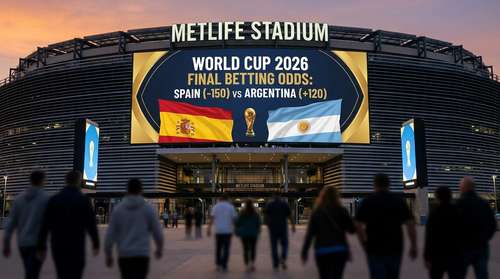
Historically, the summer months represent a cooling-off period for American sportsbooks. With the NFL and NBA seasons concluded, operators traditionally rely on daily baseball slates to maintain user engagement. However, the current North American soccer tournament has fundamentally rewritten the summer revenue playbook. Because the matches are being hosted in major domestic markets—such as the highly anticipated finals at MetLife Stadium in New Jersey—the time zones are perfect for prime-time domestic viewing.
This localized hype has driven incredible betting volume, making 2026 World Cup sports betting a daily fixture for millions of Americans. What makes soccer particularly profitable for sportsbooks is the traditional three-way moneyline. In American sports, bettors are accustomed to picking a clear winner. In soccer, the possibility of a draw adds a third outcome that casual fans often ignore. When a heavily favored team ends a group stage match in a tie, sportsbooks sweep the majority of tickets that were placed on either side to win. This dynamic alone is providing a massive boost to the projected sports betting revenue June 2026.
Driving Volume Through Targeted Offers
To capture this newly engaged audience, operators have flooded the market with aggressive World Cup betting promos. Instead of offering standard risk-free bets on match winners, sportsbooks are incentivizing specialized bet types. You will frequently see promotions requiring users to place a three-leg parlay to unlock bonus funds. By steering players toward player props—like predicting a specific striker to score or a team to record over a certain number of corner kicks—operators are funneling new users directly into their most profitable wagering options.
Same Game Parlays: The Ultimate Profit Engine
While the soccer tournament provides the volume, the true core driver behind these historic win rates is the wager type. Modern sportsbooks have perfected the art of the multi-leg bet, and same game parlay margins are now the undisputed fuel for industry profits. Bettors consistently chase lottery-style payouts by stringing together match winners, total goals, and individual player props into a single ticket.
Because the true odds of these correlated events happening together are heavily shaded in favor of the house, the sportsbooks retain a massive mathematical edge. The payout multipliers simply do not accurately reflect the actual probability of the combined events occurring. We see this explicitly when examining the FanDuel DraftKings hold percentage in recent weeks. Both major operators offer highly sophisticated live betting interfaces that allow users to build parlays seamlessly. FanDuel, which originally pioneered the correlated parlay format, and DraftKings, which continues to aggressively expand its market share, are reportedly maintaining local hold rates well above 15% in key regulatory states like New York and Massachusetts.
Historic Market Highs and Industry Outlook
The financial ramifications of this summer will likely echo through the rest of the year. State regulators in New York, which consistently ranks as one of the highest-handle markets in the country, are already reporting record-breaking tax revenue yields for the first half of June. To understand the sheer scale of this profitability, you have to look at how hold rate is calculated: it is simply the gross revenue retained by the sportsbook divided by the total amount wagered (the handle). When bettors wager hundreds of millions of dollars at an elevated 14% or 15% loss rate due to parlays, rather than the historical 7% average, state governments and operators share in a massive financial windfall.
Massachusetts and New York have both cultivated highly engaged betting populations. The influx of international tourists arriving for the North American matches, combined with locals placing wagers on their mobile devices from sports bars or right inside the stadiums, creates a perfect storm for handle growth. Analysts tracking American Gaming Association revenue data anticipate that this summer period could ultimately push the entire year of 2026 into completely uncharted territory for gross gaming revenue.
The consumer shift from straight bets to long-shot parlays has fundamentally altered the underlying math for sportsbooks. What used to be a low-margin, quiet summer period has been transformed into an absolute financial juggernaut. You can expect operators to double down on this exact promotional strategy as we move out of the summer and prepare for the upcoming football season. The technology driving these in-app parlay builders is constantly improving, making it easier than ever for a fan watching at home to risk five dollars for the chance to win five hundred. As long as the public remains enamored with the massive potential returns of these complex, high-risk bets, the house will continue to set new financial high-water marks.