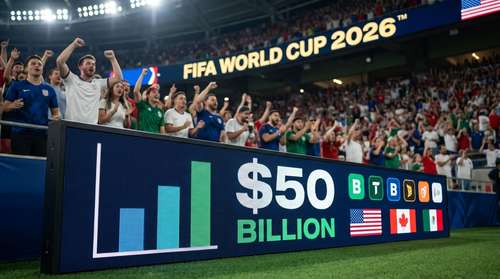
The knockout stage of the highly anticipated summer tournament has officially arrived, and it is bringing an unprecedented wave of financial action with it. As of Wednesday, July 1, 2026, we are witnessing 2026 World Cup betting records being completely rewritten. With 65% of the U.S. population now holding legal access to wagering platforms, the industry is experiencing a seismic shift. Analysts project that by the time the champion is crowned, the global sports betting handle $50 billion milestone will be comfortably surpassed. However, the most compelling story of this tournament isn't just the sheer volume of money changing hands—it's how modern sports fans are fundamentally changing the way they place their stakes.
The Shift to Share-Based Trading
For the first time in tournament history, traditional betting operators are facing serious, high-volume competition from alternative financial platforms. The surge in sports prediction markets World Cup contracts has been nothing short of explosive. Rather than betting against the house, fans are participating in peer-to-peer exchanges, buying and selling shares based on binary outcomes.
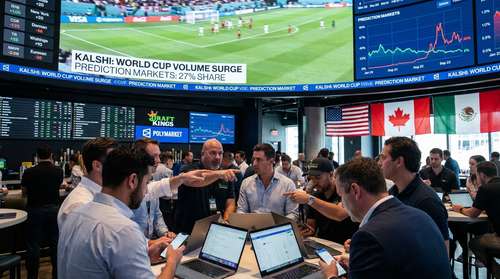
This paradigm shift is best illustrated by the staggering Kalshi sports betting volume, which has skyrocketed as the tournament progresses into the Round of 32. In total, these modern prediction platforms have generated over $5 billion in tournament contracts. The appeal lies in the ability to trade out of positions in real time, locking in profits before a match even concludes.
Simultaneously, the decentralized Polymarket World Cup odds reflect a highly liquid, incredibly active market. The outright championship winner pool alone has attracted more than $1.5 billion in trading volume. As the Round of 32 kicks off, traders currently price Spain as the tournament favorite at 16%, followed closely by France at 12% and reigning champion Argentina at 10%.
How Traditional Sportsbooks Are Keeping Pace
While prediction platforms are capturing the attention of tech-savvy traders, traditional FIFA World Cup 2026 sportsbooks are far from obsolete. The newly expanded 48-team format, featuring an exhaustive 104 matches across the United States, Mexico, and Canada, has created the perfect storm for major operators. Because kickoff times are highly favorable for North American viewers, sportsbooks are maintaining maximum user engagement during prime daylight and evening hours.
The Rise of Micro-Betting
To manage this crushing demand and keep bettors engaged during slower stretches of play, top sportsbooks have heavily expanded their micro-betting infrastructure. Instead of simply wagering on full-time outcomes or point spreads, you can now bet on hyper-granular, play-by-play events. Markets predicting who will win the next corner kick, the result of a specific penalty, or whether a player will receive a yellow card in the next five minutes are seeing record engagement. This continuous cycle of micro-moments has been crucial in driving the overall handle toward that historic $50 billion mark.
USA vs. Bosnia and the Knockout Stage Surge
The most significant driver of this week's betting frenzy is the onset of the sudden-death knockout stage, highlighted by the massive action surrounding Wednesday’s critical match. The USA vs Bosnia World Cup betting markets are currently drawing some of the highest single-game volumes of the tournament so far. The USMNT, fresh off winning Group D, faces a rugged and dangerous Bosnia and Herzegovina side at the San Francisco Bay Area Stadium in Santa Clara.
Prediction markets currently give the United States an 83% implied probability of advancing to the Round of 16. Over on traditional sportsbooks, the Americans are listed as heavy -185 moneyline favorites. Despite the lopsided odds, sharp bettors are taking close note of Bosnia's physical style of play. Tactical analysts warn that the European side is perfectly built to exploit the specific defensive vulnerabilities the Americans showed during the group stage. Whether you are day-trading prediction shares or laying traditional moneyline bets, this high-stakes matchup represents a pivotal moment for both the host nation and the sportsbooks holding the liability.
A Transformative Moment for Global Wagering
As the tournament pushes deeper into July, the financial trajectory of the global sports betting industry is crystal clear. The 2026 World Cup has proven that treating sports outcomes as tradable commodities is no longer a niche concept—it is the new standard.
- Market Mainstreaming: The sheer accessibility of the sport, coupled with 65% legal US market penetration, has permanently normalized soccer betting in North America.
- Trading vs. Betting: The $5 billion volume in prediction markets proves that event-contract trading is successfully pulling demographics away from legacy sportsbooks.
- In-Play Dominance: Live betting and micro-markets now account for a substantially larger percentage of the overall handle than traditional pre-match wagers.
With traditional operators optimizing their live-betting algorithms and prediction platforms offering unprecedented flexibility, fans have never had more control over their capital. This summer is doing far more than crowning a soccer world champion; it is permanently rewriting the playbook for global sports entertainment and interactive wagering.