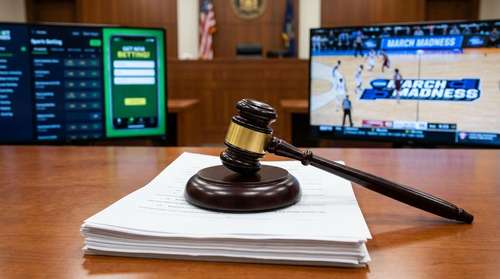
Just as the 2026 men's and women's college basketball tournaments reach their fever pitch, the action off the court has suddenly rivaled the drama on the hardwood. The NCAA vs DraftKings lawsuit has sent shockwaves through the gambling and collegiate sports industries, dropping right in the middle of the busiest wagering period of the year. The collegiate governing body filed an emergency temporary restraining order in federal court, demanding the sportsbook giant immediately halt its use of iconic phrases like "March Madness" and "Final Four" across all promotional platforms.
This aggressive legal maneuver highlights a growing tension between amateur athletics and the booming wagering industry. For fans tracking the latest March Madness betting news, the courtroom battle presents a fascinating showdown over who actually owns the colloquial language of college basketball.
The Core of the Trademark Confrontation
At the center of this sports betting trademark dispute is a federal complaint filed in the U.S. District Court for the Southern District of Indiana on March 20. The NCAA's filing leaves no room for ambiguity. The organization is fiercely protecting its federally registered properties, which include "Elite Eight," "Sweet Sixteen," and variations like "March Mania". According to the filing, DraftKings has been heavily embedding these protected marks into its betting menus, promotional graphics, and marketing publications without authorization.
The NCAA argues that this unauthorized use creates a dangerous false association. Millions of sports fans—and vulnerable young adults—might mistakenly believe the NCAA endorses the gambling platform. The association has long maintained a strict prohibition on advertising or sponsorships associated with betting, citing the need to shield student-athletes from the pressures of gambling-related harassment.
The NCAA's posture doesn't exist in a vacuum. The association has spent the last few years grappling with a wave of alarming betting scandals that have threatened the fundamental integrity of collegiate athletics. Given this turbulent backdrop, the NCAA is moving aggressively to build a firewall between its crown jewel event and the gambling ecosystem. The governing body insists that allowing platforms to use its specific branding threatens competition integrity by eroding public trust and exposing athletes to improper influence. Furthermore, the NCAA requested the greater of treble damages or treble DraftKings' profits.
The Sportsbook Fires Back
Among the most high-profile DraftKings legal issues 2026 has delivered, the sportsbook operator isn't taking this emergency restraining order lying down. In a formal response filed recently, DraftKings laid out a robust defense anchored in the First Amendment. They argue that their use of these iconic phrases constitutes fair use, claiming the terms are universally recognized names utilized daily by millions of fans, journalists, and participants in the ecosystem.
DraftKings explicitly stated that it does not use the tournament names as official trademarks. Instead, the company insists it uses the phrases in plain text to accurately identify the matchups and their respective games, much like how it displays the NIT. The operator also pointed out a perceived contradiction in the NCAA's stance, noting its indirect ties to the wagering world through an exclusive data distribution partnership with Genius Sports. Under that agreement, Genius provides official postseason data to sportsbooks through 2032.
Navigating Commercial Boundaries
From a legal perspective, DraftKings claims the NCAA's request for an emergency restraining order is a contrived and manufactured emergency. Furthermore, they pointed out that other online operators offering NCAA tournament sports betting are not currently facing similar litigation.
This dynamic mirrors the NFL's aggressive protection of the Super Bowl, which famously forces commercial entities to use the phrase "The Big Game." If the NCAA prevails regarding these Final Four betting trademarks, sportsbooks might be forced to adopt similarly clunky workarounds. This would fundamentally alter how brackets and game odds are presented to the consumer.
Future Impacts on the Industry
The outcome of this high-stakes standoff will likely establish a major precedent for sportsbook marketing regulations moving forward. As the lines between sports entertainment, broadcasting, and wagering continue to blur, the guardrails protecting intellectual property are being tested like never before. Legal experts are watching closely to see if a judge will agree that these terms have simply become everyday nomenclature, or if the NCAA can successfully monopolize the language surrounding its tentpole events.
If the temporary restraining order is granted, DraftKings will be forced to execute a massive, mid-tournament overhaul of its user interface and marketing campaigns just as the Final Four tips off. Bettors might log into their apps to find sterile, generic labels replacing the familiar branding they've come to expect.
For now, the federal court system will decide whether the madness extends beyond the hardwood and permanently alters the vocabulary of the sports wagering industry.