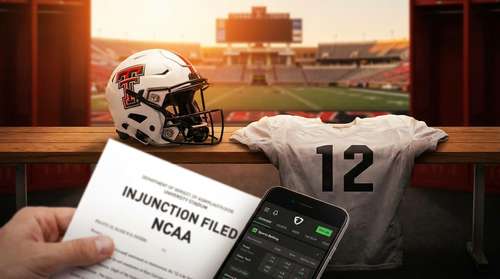
The college football world is holding its collective breath as a pivotal, unprecedented legal battle unfolds in a Lubbock County courtroom. On Monday, attorneys for the NCAA and Texas Tech quarterback Brendan Sorsby clashed over an emergency Brendan Sorsby injunction that could completely alter the landscape of collegiate athletics. Sorsby, a highly-touted transfer hoping to salvage his 2026 senior season, is fighting a permanent eligibility ban stemming from the largest college football betting scandal 2026 has seen so far. With millions in NIL investments and the Red Raiders' upcoming season hanging in the balance, this high-stakes showdown has transformed into a massive test of the NCAA’s zero-tolerance gambling policies versus modern mental health advocacy.
Inside the High-Stakes Courtroom Showdown
Renowned antitrust attorney Jeffrey Kessler—famous for negotiating the landmark House v. NCAA settlement—is spearheading Sorsby's defense in the 99th District Court. The core of this Jeffrey Kessler NCAA lawsuit strategy focuses on painting a picture of a 22-year-old athlete grappling with a severe, clinically diagnosed gambling disorder rather than a corrupt player trying to manipulate game outcomes.
According to his legal team, Sorsby recently completed a rigorous 35-day residential rehabilitation program. Kessler argued that the NCAA is effectively weaponizing a mental health crisis. He emphasized to Senior Judge Ken Curry that his client's compulsion was driven by acute anxiety, not financial greed. By aggressively pushing this NCAA sports gambling lawsuit, Sorsby's camp hopes to secure a temporary injunction that would allow him to suit up for Texas Tech this fall while the broader legal battle plays out.
The Scope of the Quarterback's Betting History
However, the NCAA presented staggering, unfiltered details to justify its permanent ban, providing a stark look at the undeniable severity of the Texas Tech quarterback betting timeline. Lead NCAA attorney Taylor Askew pushed back hard in court, arguing that allowing Sorsby to return to the very high-pressure collegiate environment that triggered his addiction would be entirely counterproductive to his ongoing recovery.
More importantly, the sheer volume of the wagers cannot be ignored. Court filings revealed that Sorsby allegedly placed more than 2,900 bets totaling roughly $90,000 during his time at Indiana and Cincinnati. The most damaging revelation centers around the Brendan Sorsby Indiana bets. While a freshman on the Hoosiers' roster, Sorsby reportedly placed at least 40 wagers on Indiana football games and individual players. Even after transferring to Texas Tech and signing a compliance form in January, he allegedly continued to wager through proxies using Venmo and Zelle to fund accounts on prediction apps outside of Texas, where sports betting remains strictly illegal.
Setting a Dangerous Precedent for College Athletics
For the NCAA, this particular case is a clear, bright-line issue. Askew warned Judge Curry that granting the injunction would establish a catastrophic precedent that fundamentally undermines the integrity of collegiate sports. If Sorsby is allowed to play, it would effectively make college sports the only major athletic organization in the country to tolerate an athlete returning to the field after directly betting on their own locker room. The NCAA maintains that protecting the sport from match-fixing and insider information must remain the absolute priority.
Yet, Sorsby’s defense team pointed to what they view as sheer hypocrisy in the governing body's disciplinary actions. Kessler didn't hold back in highlighting the NCAA's own lucrative data-sharing partnerships with sportsbooks, noting that billions of dollars are wagered on college athletics annually. Furthermore, during closing arguments, Kessler referenced a recent gambling case involving former Indiana assistant volleyball coach Brett Agne. Agne allegedly bet on his own school but only received a minor suspension equivalent to 10% of the season. Sorsby's camp vehemently argues that a lifetime ban for a student-athlete actively dealing with an addiction is heavily disproportionate when compared to the leniency sometimes shown to adult coaching staff.
A Ticking Clock for Texas Tech
As Texas Tech University stands firmly behind their transfer quarterback, the clock is rapidly winding down. Sorsby, who transferred to Lubbock from Cincinnati in January surrounded by massive expectations, did not attend Monday's hearing. However, his football future is entirely tethered to Judge Curry's pending decision.
Kessler explicitly requested a ruling by June 15. This tight timeline is incredibly critical; if the injunction is denied, Sorsby will need enough time to pivot and apply for the NFL Supplemental Draft before its hard June 22 deadline. A rejection would force Texas Tech to scramble for a new offensive identity just months before kickoff, effectively tanking the immediate return on their significant NIL investment.
For now, the Red Raiders' 2026 campaign remains in absolute limbo. The final outcome of this high-stakes dispute will do much more than determine one quarterback's immediate eligibility. It promises to set a permanent, nationwide tone for how college football navigates the increasingly murky waters of ubiquitous sports betting advertisements, student-athlete mental health, and institutional accountability. Whether Judge Curry decides to grant the temporary injunction or uphold the NCAA's uncompromising lifetime ban, the legal reverberations of this courtroom drama will undoubtedly be felt across every locker room in America.