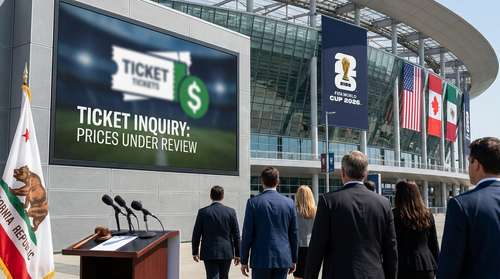
The countdown to the largest sporting event in history has hit a massive legal roadblock. California Attorney General Rob Bonta has officially launched a probe into FIFA World Cup 2026 ticket prices and sales tactics following widespread reports of deceptive seating practices. What was supposed to be a triumphant North American celebration has rapidly morphed into a consumer protection battlefield, leaving thousands of furious fans wondering if they will ever see the pitch.
With global demand shattering expectations, the secondary market has gone entirely off the rails. Fans are staring down average resale prices of $1,600 for group stage fixtures, while the 2026 final at New Jersey’s MetLife Stadium is commanding astronomical sums. But beyond the staggering financial barrier to entry, it is the fundamental fairness of the primary ticketing rollout that has triggered state-level intervention.
Rob Bonta FIFA Investigation Exposes 'Bait-and-Switch' Allegations
On May 13, Bonta sent a formal letter to global soccer's governing body demanding transparency over what many fans are calling a classic bait-and-switch operation. According to a wave of consumer complaints, FIFA sold early access tickets based on detailed stadium seating categories, but subsequently altered those classifications before issuing exact seat assignments. Consequently, buyers who paid premium rates for Category 1 or 2 tickets suddenly found their seats downgraded to less desirable vantage points.
“Some consumers have reported feeling deceived because the seats they were ultimately assigned belonged to a lower-tiered category based on the seating map available to them at the time of purchase,” Bonta noted in his correspondence. California consumer protection laws strictly prohibit marketing practices designed to mislead buyers, making the state a formidable opponent for the Swiss-based organization.
The inquiry directly impacts ticket holders for matches slated at California venues, notably Levi's Stadium in the San Francisco Bay Area and SoFi Stadium World Cup 2026 tickets in Inglewood. Bonta is demanding clear answers regarding how seating categories were presented, what specific disclosures were made to buyers during checkout, and how FIFA intends to remediate affected buyers through refunds or seat corrections. FIFA previously claimed their initial maps were merely an "orientation guide," a defense that has done little to calm the public outrage.
The FIFA Adaptive Pricing Scandal Squeezes Out Families
The 2026 World Cup ticketing controversy extends far beyond domestic consumer rights. In recent days, the organization's aggressive use of an "adaptive pricing" model—heavily mirroring the dynamic pricing used by the live concert industry—has drawn fierce condemnation from within the sport. This algorithmic approach allows prices to surge exponentially in response to the intense, real-time demand of 500 million ticket requests.
Even official Football Associations are feeling the severe financial squeeze. Reports indicate that after a brief initial purchase window, national federations attempting to secure tickets for players' families and official guests were subjected to this dynamic model. The average cost for these internal allocations has reportedly approached $3,000 per seat, threatening to drain the operational budgets of smaller footballing nations before the tournament even kicks off. Critics argue this FIFA adaptive pricing scandal fundamentally betrays the inclusive spirit the organization publicly champions.
Secondary Market Chaos: World Cup 2026 Ticket Resale
For the average supporter locked out of the primary lotteries, the secondary market paints a grim picture. The World Cup 2026 ticket resale ecosystem is currently operating at unprecedented levels, far surpassing any previous tournament. Recent data from live events aggregators shows that the average cost across all 104 tournament matches sits at roughly $1,603, making it the most expensive live sporting event ever tracked.
The pinnacle of this pricing explosion surrounds the July 19 championship match. The World Cup final 2026 ticket cost at MetLife Stadium currently averages an eye-watering $16,094 on the secondary market, with the absolute cheapest entry points hovering above $6,300 for nosebleed sections. Only a few thousand tickets are currently circulating, signaling that the supply simply cannot match the structural demand. Even on FIFA’s official resale exchange, transactions carry an additional 15% fee, pushing the financial burden higher for desperate buyers trying to legitimize their purchases.
What Happens Next for Fans and Ticket Holders?
The collision between American consumer protection laws and global soccer governance is uncharted territory. California’s aggressive legal stance could force FIFA to alter its fulfillment strategies or risk massive legal penalties in one of its most vital host markets. If Bonta’s office uncovers systemic violations, it could trigger a domino effect, prompting attorneys general in other North American host states to launch parallel investigations into their local stadium ticket allocations.
The expanded 48-team format was designed to bring the sport to more people than ever before, but the current financial reality suggests a highly exclusionary event. For now, fans holding early purchase receipts are anxiously waiting to see where they will actually be sitting when the tournament kicks off. Those still hoping to buy their way into the stadiums must navigate an incredibly volatile landscape defined by algorithmic surges and secondary market gouging. The beautiful game is coming to North America, but the price of admission has never been steeper.