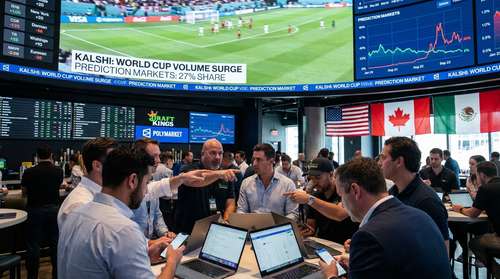
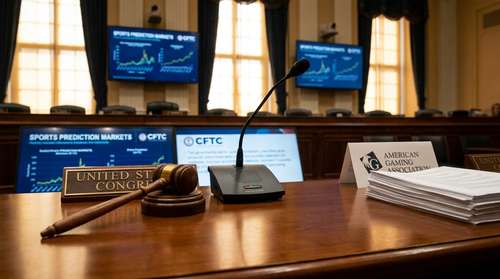
On July 21, 2026, the U.S. House Agriculture Subcommittee on Commodity Markets convened a highly anticipated session to address a rapidly expanding—and intensely controversial—frontier in American wagering. The core focus of the session was the explosive growth of sports prediction markets. As trading volumes on these platforms shatter previous records, federal lawmakers are weighing whether to classify platforms like Kalshi as financial derivatives exchanges or traditional gambling operations,.
The hearing highlighted a deepening rift between federal regulators and the traditional gaming industry. Representatives from state and tribal organizations testified that federally regulated platforms are bypassing strict state consumer protections and directly threatening tribal gaming authority. This regulatory battle comes as event-based trading captures an increasingly massive share of wagering volume that traditionally went to mainstream sportsbooks.
The Battle Lines: Financial Derivatives or Unlicensed Gambling?
At the center of the CFTC prediction markets hearing is a complex jurisdictional tug-of-war. For years, the Commodity Futures Trading Commission (CFTC) has overseen event trading under the umbrella of financial derivatives. However, as these exchanges pivot heavily into athletics, the regulatory boundaries have blurred significantly.
Lawmakers questioned whether sports event contracts—which allow users to trade shares on whether a specific team will win or a player will hit a statistical milestone—are simply a rebranded form of betting. Defenders of the platforms maintain they are operating legally under the Commodity Exchange Act. Financial regulation attorneys Carl Kennedy and Robert A. Schwartz testified that the CFTC already possesses the statutory authority to regulate these contracts and weed out bad actors without requiring Congress to write new laws,.
Yet, critics argue that the underlying economic reality of these products is indistinguishable from standard sports wagering. The debate over Kalshi sports betting practices has already triggered legal showdowns across the country. Just weeks prior to the hearing, a Michigan court temporarily sidelined Kalshi from offering athletic contracts to local residents, arguing the platform violated local gambling statutes. Despite legal pushback, proponents argue the exchange format allows for market making and exiting positions—features standard in financial markets but unavailable against the house at a typical casino.
Tribal Sovereignty and the American Gaming Association Push Back
The traditional gaming sector is aggressively pushing Congress to intervene. During Tuesday's testimony, commercial and tribal operators made it clear that they view the unchecked expansion of these platforms as an existential threat to the strictly regulated environments built over decades.
Chris Cylke, Senior Vice President of Government Relations for the American Gaming Association, delivered a blunt assessment. He testified that platforms offering event contracts are operating as nationwide sportsbooks while skirting state gaming laws, compliance checks, and taxes. According to the AGA's latest data, state governments have lost an estimated $1.2 billion in tax revenue over the past 18 months due to the diversion of consumer funds to these financialized platforms,.
The Economic Impact on Indian Country
The financial and legal stakes are particularly high for Native American tribes. David Bean, Chairman of the Indian Gaming Association, delivered compelling testimony regarding the erosion of sovereign authority caused by tribal gaming prediction markets operating outside local oversight,. Bean testified that sports trading on federal exchanges directly undermines the sovereignty of tribal and state governments by ignoring established gaming compacts.
Tribal governments are reportedly experiencing 5% to 10% drops in overall revenue. Bean equated this decline to the devastating financial impact of eliminating the annual budget of the Bureau of Indian Affairs. For tribal nations that rely on casino revenue to fund local schools, healthcare, and vital infrastructure, the sudden shift of players toward lightly taxed federal exchanges represents a severe and immediate economic threat,.
Market Integrity and Consumer Protection in the Spotlight
Subcommittee Chairman Dusty Johnson (R-S.D.) and Ranking Member Don Davis (D-N.C.) repeatedly steered the conversation toward market integrity,. If these platforms are allowed to expand under CFTC oversight, lawmakers questioned whether the historically understaffed agency has the manpower to police them. Carl Kennedy noted in his testimony that average daily event-contract listings on one major platform skyrocketed from roughly 1,600 in April 2025 to over 162,000 by April 2026. Managing that volume requires massive regulatory resources.
Beyond regulatory capacity, youth access dominated the consumer protection debate,. Traditional sportsbooks are bound by rigorous identity verification and minimum age requirements—typically restricted to users 21 and older. Because prediction exchanges operate under financial regulatory frameworks, individuals as young as 18 can legally open accounts and trade on sports outcomes,. Lawmakers pressed witnesses on whether this loophole exposes younger adults to predatory gambling practices masked as stock market-style investments,.
The Future of Sportsbooks vs Prediction Markets
The congressional clash marks a pivotal moment for the future of American wagering. As the legislative dust settles, the core conflict of sportsbooks vs prediction markets remains entirely unresolved. Traditional operators are demanding that Congress explicitly ban sports-related contracts on regulated exchanges—a move supported by pending legislative efforts and intense industry lobbying,.
Conversely, prediction exchange executives argue that their platforms offer better odds, higher liquidity, and a more transparent alternative to the hefty margins baked into traditional casino models. They warn that a blanket ban would stifle domestic financial innovation, kill a booming tech sector, and inevitably push retail traders toward unregulated, offshore crypto alternatives.
While the House Agriculture Subcommittee took no immediate legislative action on July 21, the hearing guarantees that Washington will no longer treat event contracts as an afterthought,. Whether these platforms continue to expand under federal financial regulators or are forced to comply with local gambling laws, the final decision will fundamentally restructure how Americans interact with the sports they love.