Just days after starting in Ivory Coast's opening 1-0 victory against Ecuador at the 2026 FIFA World Cup, striker Elye Wahi found himself sidelined—not by a tactical decision or injury, but by a Canadian border control checkpoint. The 23-year-old forward was initially denied a visa for his nation's crucial Group E clash with Germany in Toronto. The sudden travel restriction stems from an active criminal probe that has rocked international soccer: an Elye Wahi spot fixing investigation tied to a lucrative sports betting scandal 2026.
While Wahi eventually received last-minute clearance from the Ivorian Football Federation (FIF) to enter Canada, the controversy surrounding his late-May arrest by French anti-corruption police remains a severe threat to his career. The scandal exposes a darker side of modern sports wagering, illustrating how highly specific wagers can compromise the integrity of the game without altering the final scoreboard.
The Roots of the Elye Wahi Spot Fixing Allegations
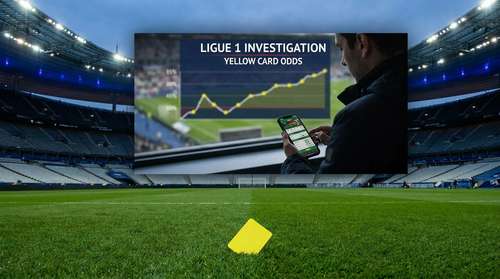
The current Ligue 1 gambling investigation centers on a May 17 domestic match between OGC Nice and FC Metz. During the scoreless draw, Wahi received a yellow card in the 35th minute. To casual observers inside the stadium, it looked like a standard, aggressive foul. To betting integrity monitors across Europe, it triggered immediate and massive red flags.
According to the Ligue de Football Professionnel (LFP), integrity partners flagged a highly unusual volume of international wagers specifically predicting that Wahi would be booked during the match. Because this was his fifth caution of the season, the card conveniently triggered a suspension for the first leg of Nice's high-stakes relegation playoff against Saint-Étienne. Following his suspension, Wahi returned to score twice in the second leg, securing a 4-1 victory to keep his team in France's top flight.
However, the statistical anomaly at the sportsbooks prompted the LFP to file a formal criminal complaint regarding potential sports corruption. On May 29, just weeks before the World Cup kicked off in North America, French police detained and questioned the forward. A spokesperson for the Marseille public prosecutor's office confirmed the arrest was part of a broader probe into organized fraud, money laundering, and the handling of proceeds of crime. He was released without charge following his interview, but the authorities made it clear that the investigation remains ongoing.
World Cup Match Fixing Fears and the Canada Travel Drama
The specter of World Cup match fixing instantly became a massive international storyline when details of the arrest broke shortly after Ivory Coast's June 14 tournament opener in Philadelphia. Wahi played 55 minutes in the win over Ecuador, completely unaware that his legal troubles back in France were about to trigger a diplomatic travel crisis.
When the team prepared to cross the border into Toronto to face four-time champions Germany, Canadian immigration authorities temporarily barred Wahi due to the pending criminal inquiry. It took emergency interventions for the FIF to secure his travel authorizations. While he is legally cleared to compete alongside his Elephants teammates, the intense media scrutiny has undoubtedly cast a heavy shadow over Ivory Coast's tournament run.
The Growing Threat of Prop Bet Manipulation
This high-profile case highlights a modern evolution in sports corruption. Historically, fixers paid off referees, goalkeepers, or key defenders to throw entire games. Today, the sheer volume of micro-betting markets has paved the way for prop bet manipulation.
In what is commonly referred to as "spot-fixing," corrupt actors target minor, isolated events within a match—such as a player earning a card, the timing of the first throw-in, or the number of corner kicks. Because these events rarely influence the actual outcome of the match, players might feel less moral friction about participating, incorrectly believing it is a victimless crime.
Why Yellow Card Sports Betting is Highly Vulnerable
Yellow card sports betting is particularly susceptible to foul play. A forward can easily execute a late tackle, delay a restart, or argue with an official to guarantee a booking. For criminal syndicates, these discrete actions are highly profitable. By distributing wagers across offshore accounts and international exchanges, bad actors attempt to bypass local sportsbook integrity and fraud detection systems.
Fortunately, modern sportsbooks utilize advanced algorithms that detect deviations from normal betting behavior. In Wahi's case, the sheer influx of international money placed on a routine yellow card proposition was mathematically impossible for regulators to ignore. The LFP swiftly forwarded the suspicious materials to the French National Police's Central Department for Racing and Gaming, proving that digital footprints in modern betting are increasingly difficult to hide.
What Happens Next in the Ligue 1 Gambling Investigation?
At 23 years old, Wahi—who joined Nice on loan from German club Eintracht Frankfurt in January and scored nine goals across 18 matches—is considered a highly dynamic young attacker. His professional trajectory now hinges entirely on the findings of the Marseille public prosecutor. While the LFP has refrained from launching formal disciplinary proceedings while the police investigation remains active, they emphasized their commitment to taking severe action if the allegations are validated.
For now, the striker remains a free man, uncharged and actively representing his country on the sport's biggest stage. Yet, as the investigation unfolds, the global soccer community is left grappling with the reality that the integrity of the game is constantly being tested by the lucrative temptations of the shadow betting economy.