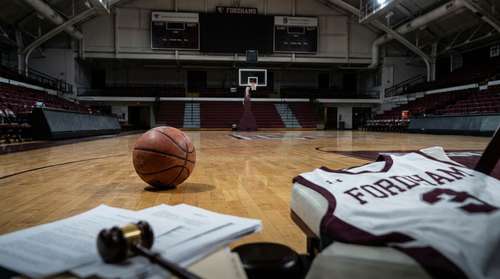
The sports world is still reeling from the explosive Fordham basketball betting scandal that recently culminated in unprecedented disciplinary action. As the dust settles around a massive federal investigation into game manipulation, the NCAA handed down its final verdict. Former players Elijah Gray and Will Richardson were permanently expelled from collegiate athletics after being ensnared in a sweeping point-shaving syndicate. Yet, what has truly captivated national attention following a shocking admission released on May 6, 2026, is Gray's stunning defense regarding a heavily scrutinized 2024 matchup. Despite allegedly accepting a hefty bribe to throw a game, the embattled forward now claims he abandoned the plot mid-game and actively sought victory on the court.
Inside the Federal Sports Betting Charges 2026
The intricate web of corruption unraveled when the Department of Justice unsealed a sprawling indictment earlier this year, targeting dozens of individuals across multiple basketball leagues. At the center of these federal sports betting charges 2026 were illicit efforts to manipulate college games, primarily orchestrated by professional gamblers and a former NBA player. The Eastern District of Pennsylvania's investigation pulled no punches, ultimately charging 26 individuals, including professional fixers and athletes across 17 different NCAA programs.
The conspirators approached collegiate athletes with a seemingly legitimate pitch, masquerading as representatives offering lucrative Name, Image, and Likeness (NIL) deals. According to the NCAA and federal prosecutors, fixers offered both Gray and Richardson between $10,000 and $15,000 each to manipulate a February 23, 2024, game against the Duquesne Dukes. The betting syndicate heavily wagered at least $195,000 across multiple sportsbooks, banking on the Rams to fail to cover a +3.5 point spread. Instead of an easy payday for the gamblers, the matchup took an unexpected turn that ultimately exposed the entire criminal operation.
Elijah Gray Point-Shaving Defense: A Bizarre Twist
When examining the mechanics of the Elijah Gray point-shaving incident, the narrative defies standard sports corruption tropes. Court documents and recent NCAA findings reveal that Gray initially agreed to the illicit arrangement. However, the forward told NCAA enforcement staff that he suffered a crisis of conscience on the hardwood. Gray claimed he reneged on the backroom deal, played with his standard effort, and ultimately helped his team secure a decisive 79-67 victory over Duquesne.
The fixers lost their substantial wagers. Text messages intercepted by the FBI highlight the sheer absurdity of the aftermath. One of the primary organizers texted Gray to complain about the failed scheme. Gray reportedly texted back, "I tried," complaining that the Duquesne players were simply "not hoopin," making it impossible to let the opposing team cover the spread. Today, Gray maintains that his text was merely a brush-off to the furious gamblers and insists he never actually collected the bribe money. Despite his bizarre defense that he actually tried to win, Gray pleaded guilty to bribery charges late last year and is currently awaiting federal sentencing.
Will Richardson Fordham Basketball Tenure Ends in Disgrace
While Gray cooperated extensively with the ensuing NCAA probe, his former teammate took a drastically different approach. The Will Richardson Fordham basketball career came to an unceremonious halt after investigators determined he not only communicated with the known bettors but actively obstructed the ongoing investigation.
The NCAA stated that Richardson provided false information during his interviews and denied any involvement in the plot. This direct denial contradicted social media connections, phone records, and testimony from third-party witnesses. Evidence showed that Richardson remained in contact with the fixers long after the botched Duquesne game. His refusal to collaborate with enforcement staff ensured that the governing body would levy maximum penalties against him, stripping away any remaining collegiate eligibility.
The Weight of the NCAA Lifetime Gambling Ban
The permanent expulsion of Gray and Richardson underscores a zero-tolerance policy from collegiate authorities. An NCAA lifetime gambling ban is rarely handed down without overwhelming evidence, signaling to athletes nationwide that the consequences for game manipulation are absolute. Neither player had competed since the 2024-25 season—having transferred to other programs like Temple, Wisconsin, and Albany before the investigation escalated—but this ruling officially closes the door on their athletic careers.
Protecting College Sports Betting Integrity
As state-legalized gambling expands at a breakneck pace, maintaining college sports betting integrity has become an existential battle for the NCAA. Bad actors exploiting the NIL landscape to groom young athletes represents a terrifying new frontier for regulatory watchdogs. The fixers knew exactly how to bypass traditional institutional safeguards by pretending to be legitimate business partners. Student-athletes, eager to capitalize on their commercial rights, are increasingly vulnerable to these sophisticated overtures.
When evaluating sports betting scandals today, the Fordham basketball betting scandal serves as a glaring warning sign. It highlights the urgent need for robust education programs and stricter vetting processes for individuals contacting players online. If athletes cannot differentiate between a legitimate brand sponsor and a criminal syndicate, the fundamental fairness of collegiate athletics remains in severe jeopardy. The bizarre tale of a point-shaving plot ruined by a team playing too well might draw laughs from casual fans, but for the administrators navigating the Fordham basketball betting scandal fallout, it is nothing short of an institutional nightmare.