With just over a month until the June 11 tournament kickoff, the scramble for FIFA 2026 World Cup tickets has erupted into a full-blown financial standoff. Football's governing body is facing intense global backlash after prices for the upcoming North American tournament reached unprecedented highs, exacerbated by a controversial new dynamic pricing model. Despite fan groups labeling the strategy a "monumental betrayal," FIFA President Gianni Infantino and organization spokespeople have vehemently defended the 2026 World Cup ticket prices, insisting the costs simply reflect "market rate" demand and standard North American sports industry practices. However, with World Cup final ticket resale listings reportedly hitting an eye-watering $2.3 million, the debate over accessibility has reached a boiling point.
The $2.3 Million World Cup Final Ticket Resale Controversy
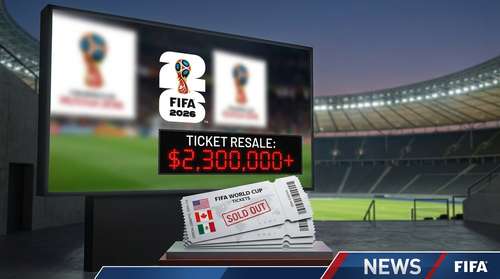
The focal point of this massive FIFA ticket controversy lies in the official resale marketplace. For the highly anticipated final on July 19, 2026, at MetLife Stadium in New Jersey, several tickets were listed by resellers for $2,299,998.85 each. Situated in the lower deck behind a goal, these multimillion-dollar listings highlight a system that places zero caps on what sellers can charge.
While FIFA does not directly set these astronomical secondary market prices, the organization financially benefits from them. Under the current structure, FIFA collects a 15 percent purchase fee from the buyer and a 15 percent resale fee from the seller—effectively imposing a 30 percent tax on all transactions on its official platform. If one of the $2.3 million tickets were to sell, the governing body could pocket nearly $600,000 in fees from that single transaction. This structure has left ordinary supporters completely priced out, transforming the world's most popular sporting event into an exclusive luxury experience.
Beyond the immediate sticker shock, supporters have raised serious allegations regarding transparency. During the initial ticketing phases, many fans claimed they experienced a "bait-and-switch" tactic. According to multiple supporters, premium seats were initially withheld, only to be reintroduced later under new, vastly more expensive categories. Additionally, widespread complaints have surfaced regarding fans being assigned to less favorable sections than they originally applied for, prompting further distrust in the allocation system.
Gianni Infantino World Cup News: Defending the 'Market Rate'
The public relations response from FIFA has only poured gasoline on the fire. In recent Gianni Infantino World Cup news, the organization has stood firm on its pricing methodology. Infantino recently justified the surging costs by pointing to unprecedented global demand, equating the ticket requests to "1,000 years of World Cups at once".
Furthermore, a FIFA spokesperson directly addressed the public outcry over the exorbitant resale marketplace listings, stating that the fees and pricing strategies provide a secure environment for fans. According to the organization, the facilitation fees are explicitly "aligned with industry standards across North American sports and entertainment sectors". By treating football like an elite American entertainment property rather than a global grassroots sport, FIFA has effectively sanctioned the drastic inflation. The introduction of a dynamic pricing model for the first time in the tournament's history has meant that even standard face-value tickets fluctuate wildly based on algorithms and real-time demand.
Legislative Pushback and Last Minute World Cup 2026 Tickets
The financial strain is becoming increasingly apparent as the last minute World Cup 2026 tickets phase gets underway this May. While over 17 matches have completely sold out, expensive inventory remains available for many group-stage fixtures. For example, tickets for the United States men's national team games have peaked at over $4,100 on the primary market. Even lesser-demand group stage matches, which theoretically start at $60, are virtually impossible to secure at base value due to limited allocations and the dynamic pricing surges.
However, the aggressive monetization has finally met real-world legislative resistance. In early May 2026, the Canadian province of Ontario passed the 'Putting Fans First Act'. This new local law effectively bans the reselling of event tickets above their original face value, forcing FIFA to forcibly remove marked-up resale listings for all six matches scheduled at Toronto's BMO Field. For these specific games, fans are now restricted to buying and selling strictly at face value, dealing a significant operational blow to FIFA's unrestricted secondary market model.
Evaluating the True World Cup 2026 Cost of Attendance
For the average global football fan, the World Cup 2026 cost of attendance has become a logistical and financial nightmare. Between dynamic pricing, premium tier reclassifications, and a completely unrestrained official secondary market, the barriers to entry have never been higher. While FIFA boasts a record $871 million prize pool and points to reinvestment in the sport's global development, the optics of million-dollar stadium seats remain devastating to the sport's working-class roots. As the June 11 opening match in Mexico City rapidly approaches, the standoff between football's governing body and its most dedicated supporters shows no signs of resolution.