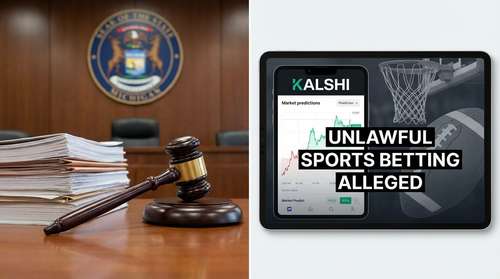
LANSING, Mich. – In a significant escalation of the battle between state regulators and prediction markets, Michigan Attorney General Dana Nessel has filed a lawsuit against KalshiEx, LLC, accusing the federally regulated exchange of operating as an illegal sportsbook. The complaint, filed this week in the Ingham County Circuit Court, alleges that Kalshi is violating the state’s Lawful Sports Betting Act (LSBA) by offering unregistered wagers on sporting events to Michigan residents.
State Claims Kalshi Operates as Unlicensed Sportsbook
The lawsuit, filed on behalf of the Michigan Gaming Control Board (MGCB), seeks an immediate permanent injunction to halt Kalshi’s operations within the state. Attorney General Nessel contends that while Kalshi markets itself as a financial exchange trading “event contracts,” its current offerings—which include outcomes on Detroit Pistons games, college basketball spreads, and player performance metrics—are functionally identical to sports betting.
“Corporations cannot circumvent state gaming laws by simply relabeling their products,” Nessel said in a statement regarding the Michigan Kalshi lawsuit. “My office will hold those who sidestep Michigan’s consumer protections accountable and ensure that betting in our state remains lawful, fair, and subject to the oversight our residents expect and deserve.”
The filing argues that Kalshi induces consumers to believe its operations are legal under Michigan law when they have not obtained the necessary licensure from the MGCB. Unlike licensed operators such as DraftKings or FanDuel, Kalshi does not pay state taxes on these specific sports wagers or adhere to Michigan’s strict responsible gaming mandates.
Prediction Markets vs. Gambling Laws
At the heart of the legal dispute is the classification of Kalshi’s products. Kalshi operates as a Designated Contract Market (DCM) regulated by the federal Commodity Futures Trading Commission (CFTC). The company has long maintained that its “event contracts” are financial derivatives, not bets, and therefore fall under federal jurisdiction rather than state gambling laws.
However, the Michigan Attorney General’s office rejects this distinction, particularly regarding sports. The complaint details how Kalshi’s platform allows users to trade on specific sports outcomes, such as the point spread of a Rider University vs. Marist basketball game or the total points scored in a Pistons match. State prosecutors argue that these are clear-cut examples of illegal sports betting in Michigan disguised as financial trading.
“Despite calling its product ‘event contracts,’ consumers are placing wagers on the outcome of sporting events,” the lawsuit states. The state further alleges that Kalshi exposes residents to gambling addiction risks without the safeguards required of licensed operators, such as self-exclusion lists and deposit limits.
Broader Legal Battle: Polymarket Retaliates
The Michigan Kalshi lawsuit is part of a rapidly widening conflict between state attorneys general and prediction markets. Just hours after Nessel’s filing, Kalshi’s competitor, Polymarket, filed a preemptive lawsuit against Nessel and the MGCB in the U.S. District Court for the Western District of Michigan.
Polymarket’s federal suit argues that state enforcement actions are preempted by the Commodity Exchange Act (CEA), which grants the CFTC exclusive jurisdiction over event contracts. This aggressive legal maneuvering highlights the high stakes for the industry. If states like Michigan successfully classify these markets as gambling, it could dismantle the business model for prediction markets offering sports derivatives across the United States.
The timing is critical. This legal flurry follows a recent ruling in Nevada where a federal judge remanded similar enforcement cases back to state court, suggesting that federal commodities law does not automatically override a state’s police power to regulate gambling within its borders. This precedent may strengthen Nessel’s hand in the Michigan proceedings.
Implications for Sports Betting Regulation in 2026
As the legal battles unfold, the outcome will likely set a national precedent for sports betting regulation in 2026 and beyond. Michigan has been a leader in online gaming regulation since legalizing it in 2021, and the MGCB has shown zero tolerance for unlicensed operators.
For now, Michigan residents utilizing Kalshi face uncertainty regarding the platform's future availability in the state. If the Ingham County Circuit Court grants the Attorney General’s request for an injunction, Kalshi would be forced to geo-block Michigan users immediately, pending the outcome of the litigation.
The case represents a critical test of whether the federal “derivative” classification can shield companies from state-level gambling prohibitions. With the MGCB standing firm, the line between financial innovation and unlawful sports wagering is set to be drawn in a Michigan courtroom.