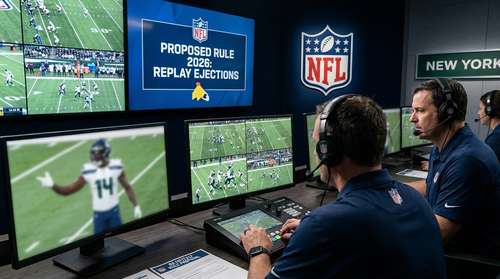
As the league prepares for the upcoming meetings in Phoenix, a slew of revolutionary proposals are on the table. Among the most talked-about NFL rule changes 2026 is a massive shift in how player discipline will be handled during games. The NFL Competition Committee has officially submitted a proposal that would dramatically expand the jurisdiction of the league's officiating headquarters. Coined by insiders as the "DK Metcalf rule," this new mandate would allow the New York replay center to independently eject players for flagrant or non-football acts, regardless of whether a penalty flag was thrown on the field.
What is the Proposed 'DK Metcalf Rule'?
The push for centralized replay authority traces back to a highly controversial incident during the 2025 season. During a heated matchup in Detroit, Pittsburgh receiver DK Metcalf found himself in a physical altercation with a heckling fan. Because the on-field officials had their backs turned and did not witness the scuffle, no penalty flag was thrown.
Under the current rulebook, NFL replay center ejections are strictly conditional. Officials in New York can only step in and advise an ejection if a flag has already been dropped on the play. As a result, Metcalf remained in the game despite his actions, though the league later handed down a two-game suspension.
This glaring loophole prompted immediate action from the competition committee. The new DK Metcalf rule aims to empower the officiating center to correct missed calls involving egregious behavior. If approved, New York will serve as an ever-watchful "eye in the sky," capable of removing a player from the contest for throwing punches, swiping at fans, or committing other severe non-football acts that the standard officiating crew happens to miss.
Expanding Centralized Replay Authority
Historically, the NFL has hesitated to take judgment calls completely out of the hands of the crew on the field. However, this proposal signifies a major philosophical shift in NFL player discipline news. The committee's proposition isn't just about policing extracurricular scuffles—it is about ensuring the integrity of the game when chaos ensues.
In addition to ejections for unflagged acts, the expanded centralized replay authority would give the replay center the ability to intervene during the final two minutes of either half and throughout the entirety of overtime. During these critical, high-leverage windows, New York would have the green light to overturn or enforce specific penalties.
If enacted, the centralized authority could drop a flag or correct missed calls for several infractions, including:
- Unnecessary roughness
- Unsportsmanlike conduct (such as throwing a punch, forearm, or kick)
- Leaping and leverage penalties on special teams
- Running into or roughing the kicker
By giving the replay command center the autonomy to stop play, issue ejections, and correct objectively wrong calls in real time, the league is effectively eliminating the blindspots that have frustrated fans and coaches alike.
A Safety Net for the NFL Officiating Work Stoppage
While the DK Metcalf incident catalyzed this specific disciplinary change, the broader push for replay intervention is heavily tied to looming labor disputes. The league is currently bracing for a potential NFL officiating work stoppage. The collective bargaining agreement with the NFL Referees Association (NFLRA) expires on May 31, 2026, and negotiations over referee performance standards and probationary periods have yielded minimal progress.
If you watched football during the 2012 season, you vividly remember the tipping point of the last major referee lockout: a disputed game-winning touchdown catch by the Seattle Seahawks over the Green Bay Packers, famously dubbed the "Fail Mary". The outrage from that missed offensive pass interference call was so severe that it prompted comments from the White House, forcing an immediate end to the lockout.
To shield inexperienced replacement crews from similar game-wrecking blunders, the competition committee wants the New York office to act as a robust failsafe. Under a special one-year provision linked to this proposal, if replacement refs are utilized, the expanded replay rules will allow the league's officiating department to correct any "clear and obvious" mistakes that alter the game. This sweeping safety net would instantly correct missed calls involving illegal contact, face masks, roughing the passer, and intentional grounding.
Next Steps at the 2026 NFL Annual League Meeting
For the DK Metcalf rule and the broader replay expansion to become official, the proposal must secure overwhelming support from ownership. The vote is slated to take place at the 2026 NFL Annual League Meeting, which kicks off on March 29 in Phoenix.
Passing the measure requires a supermajority. At least 24 of the 32 club owners must vote in favor for the proposal to take effect this fall.
Given the dual benefits of closing a disciplinary loophole and providing a safety net for a potential referee strike, the rule is expected to garner significant support. NFL executives and competition committee leaders have made their stance abundantly clear: they are focused on making sure the game goes on seamlessly. By granting the replay center the teeth to enforce ejections for flagrant acts, the league is taking a proactive step toward a cleaner, more accountable brand of football.