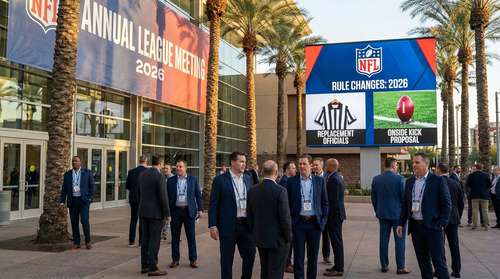
The warm Arizona sun sets the backdrop for what is shaping up to be one of the most consequential gatherings in modern professional football. Today, team owners, general managers, and head coaches convened for the opening of the NFL Annual League Meeting 2026. With Commissioner Roger Goodell in Phoenix to oversee the proceedings, the league's top brass are preparing to vote on a slate of game-altering proposals. However, the sweeping NFL rule changes 2026 present only half the story. The league is simultaneously bracing for a potential work stoppage, accelerating contingency plans that include the controversial return of NFL replacement officials.
With the current Collective Bargaining Agreement between the league and the NFL Referees Association (NFLRA) set to expire on May 31, tensions are at their highest since the infamous 2012 season. Here is a detailed look at the sweeping adjustments and high-stakes labor contingencies being debated this week.
Revolutionizing the Third Phase: Competition Committee Proposals
The NFL competition committee has submitted five primary playing rule proposals this year, mostly aimed at refining the massive special teams overhaul implemented over the last two seasons. After the introduction of the dynamic kickoff breathed new life into return rates, the league is now looking to address the unintended consequences and strategic quirks that quickly emerged.
The Radical Onside Kick Rule Proposal
Perhaps the most universally anticipated vote centers on the onside kick rule proposal. Currently, teams are heavily restricted, only allowed to declare an onside kick attempt in the fourth quarter when trailing. The competition committee is proposing a total removal of this limitation, permitting the kicking team to declare an onside kick at any time during the game. If passed, this would dramatically alter game management and late-half strategies, opening the door for aggressive head coaches to steal possessions early in the first or third quarters.
Tweaking the Dynamic Kickoff Alignment
To further refine the dynamic kickoff, owners will vote on modifying the alignment requirements for the receiving team's setup zone. The proposal seeks to reduce the minimum number of receiving players with their front foot on the setup line from six to five. Additionally, the committee wants to eliminate the incentive for kickers to intentionally boot the ball out of bounds from the 50-yard line—a penalty loophole heavily exploited last season. Under the proposed fix, touchbacks resulting from out-of-bounds kicks from midfield would be spotted at the 20-yard line instead of the 25.
The Shadow of an NFL Referee Lockout
While the on-field product is receiving its annual polish, the off-field labor dispute is commanding equal attention in the resort hallways. Negotiations between the NFL and the NFLRA broke down spectacularly last week, reportedly ending after just three hours at the bargaining table. The union is seeking a 10.3 percent compensation increase, while the league has countered with a 6.7 percent offer.
With the May 31 expiration date rapidly approaching, the reality of an NFL referee lockout is becoming impossible to ignore. In response, the league is identifying a pool of approximately 150 potential replacement referees—primarily drawn from the collegiate ranks—to begin onboarding and training as early as April.
Digital Guardrails for Replacement Officials
To avoid a repeat of the disastrous 2012 Fail Mary scenario, the competition committee introduced a unique, one-year contingency proposal. If a work stoppage occurs, this temporary measure would empower the centralized NFL Officiating Department in New York to correct clear and obvious misses made by on-field replacement officials. Essentially, the replay command center would act as a highly involved safety net, fixing egregious errors involving penalties, possession, and game-altering impacts from afar to maintain competitive integrity.
Roster Building and Disqualification Oversight
Beyond kickoffs and labor disputes, the docket features several intriguing resolutions regarding roster construction and player safety. The Cleveland Browns have submitted a resolution allowing teams to trade draft picks up to five seasons into the future, a significant jump from the current three-year limit. If approved, this would provide front offices with unprecedented flexibility for orchestrating blockbuster trades.
Furthermore, the league aims to grant the central replay command center the authority to consult with on-field officials regarding player disqualifications. This means that even if a flagrant foul or non-football act isn't penalized live on the turf, the New York office could still intervene and eject the offending player before the next snap.
The votes cast by the 32 owners over the next few days will undeniably shape the upcoming season. Whether fans witness the strategic chaos of a first-quarter onside kick or the controversial reliance on backup referees under strict digital supervision, the landscape of professional football is preparing for a seismic shift.