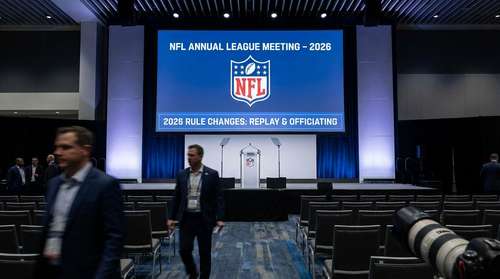
The National Football League is bracing for a highly disruptive offseason, and the looming threat of an NFL replacement referees lockout has forced the league's hand. With the current collective bargaining agreement set to expire on May 31, the competition committee has officially unveiled a slate of blockbuster NFL rule changes 2026. If approved, these measures will dramatically reshape how games are officiated and played.
Chief among the proposals headed to the NFL Annual League Meeting 2026 on March 29 is a historic, one-year contingency plan. The league wants to grant the centralized replay center the unprecedented power to overturn "clear and obvious" errors made by on-field officials. Alongside an intriguing NFL onside kick rule change, the upcoming owner votes in Phoenix could redefine the sport's immediate future.
Avoiding Another "Fail Mary" During a 2026 NFL Officiating Work Stoppage
The scars of the 2012 officiating crisis clearly still linger in the league offices. Nobody wants a repeat of the infamous "Fail Mary" game between the Green Bay Packers and Seattle Seahawks, which ultimately forced the league and officials back to the negotiating table. With the NFL Referees Association CBA expiring at the end of May, the potential for a 2026 NFL officiating work stoppage is suddenly very real.
To insulate the product on the field from inexperienced replacement officials, the competition committee has drafted a targeted, one-year stopgap. The proposal allows the league's officiating department in New York to step in and correct glaring mistakes that directly impact the game.
Expanding Replay Center Officiating Authority
If passed, this rule would give the command center unprecedented replay center officiating authority. Under the proposed framework, New York could step in to advise replacement officials on missed penalties that carry heavy game implications, such as roughing the passer and intentional grounding.
Furthermore, the centralized replay staff would have the power to overturn erroneous calls regarding illegal contact, face masks, horse-collar tackles, and even offensive or defensive pass interference—provided there is clear evidence of incidental foot tangling.
In a separate but related proposal dubbed by some insiders as the "DK Metcalf rule," the replay center would also gain the authority to eject players for flagrant acts or non-football conduct, even if the on-field crew completely missed the infraction and threw no flag.
The Radical NFL Onside Kick Rule Change
While the referee lockout contingency plan has dominated headlines, the competition committee is also trying to inject more late-game excitement into the sport. Over the past few years, kickoff modifications have made the game safer but virtually eliminated the successful onside kick.
To counter this alarming drop in recovery rates, the league is considering a massive NFL onside kick rule change. The new proposal would permit the kicking team to declare an onside kick at any point during the game. Currently, trailing teams are only permitted to attempt these kicks in the fourth quarter. By opening the window to all four quarters, aggressive head coaches could drastically shift momentum early in a matchup.
The committee also plans to modify the alignment requirements for the receiving team in the setup zone. Last season's dynamic kickoff format was largely successful, but the league wants to refine the spacing to maintain competitive return rates while prioritizing player safety. The new proposal reduces the minimum number of receiving players with their front foot directly on the setup line from six to five, tweaking the geometry of the return game.
Other kickoff tweaks on the docket include eliminating the incentive for a kicking team to intentionally boot the ball out of bounds from the 50-yard line, closing a loophole that the Dallas Cowboys famously exploited against the Kansas City Chiefs to pin them deep.
Roster Flexibility and Advanced Draft Pick Trading
Beyond the actual gridiron, front offices are also lobbying for strategic advantages. The Cleveland Browns have submitted a compelling proposal to allow draft selections to be traded up to five seasons into the future. The current bylaws restrict future draft pick trades to a three-year window. Expanding this horizon would grant general managers significantly more flexibility when constructing blockbuster trades or navigating salary cap constraints.
Additionally, the competition committee is pushing for a bylaw amendment to permit players on the Reserve/Physically Unable to Perform (PUP) list to begin a 21-day practice period immediately following their team's second regular-season game. This would streamline the return-to-play process for star athletes recovering from offseason surgeries, getting them back onto the active roster faster.
What to Expect at the NFL Annual League Meeting 2026
All eyes now turn to Phoenix, Arizona, where team owners, general managers, and head coaches will convene starting March 29. For any of these sweeping NFL rule changes 2026 to take effect, they require a 75 percent supermajority. That means at least 24 of the 32 franchise owners must vote in favor.
Historically, owners are hesitant to hand too much power to the replay center, fearing games will become bogged down by endless reviews. However, the anxiety surrounding a potential work stoppage might be the exact catalyst needed to push this one-year measure across the finish line.
The stakes are incredibly high. Whether it is ensuring competitive integrity during a referee lockout or reviving the lost art of the onside kick, the decisions made this week will have a profound impact on the gridiron this fall.