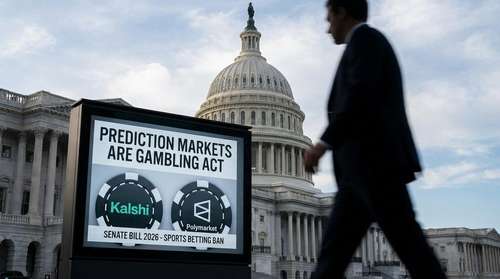
The landscape of online wagering is facing a sudden upheaval. On Monday, March 23, 2026, a bipartisan duo in the U.S. Senate introduced the Prediction Markets Are Gambling Act, a sweeping legislative measure aimed at shutting down what lawmakers describe as an illegal 'backdoor' to nationwide sports betting. Spearheaded by Senators Adam Schiff (D-CA) and John Curtis (R-UT), the bill directly targets federally regulated financial exchanges that currently offer sports event contracts across all 50 states.
For months, financial exchanges have operated in a regulatory gray area, treating sports outcomes as commodity futures rather than traditional wagers. Now, lawmakers are drawing a hard line, particularly as hundreds of millions of dollars flood into these unregulated spaces during one of the most lucrative times of the athletic calendar.
Decoding the Senate Sports Betting Bill 2026
At the heart of this controversy is how these prediction platforms bypass local jurisdictions. By registering as designated contract markets under federal oversight, these companies have effectively sidestepped state-level gambling laws and tribal gaming monopolies. The new Senate sports betting bill 2026 seeks to amend the Commodity Exchange Act, explicitly prohibiting any federally registered entity from listing contracts tied to sporting events, athletic competitions, or casino-style games.
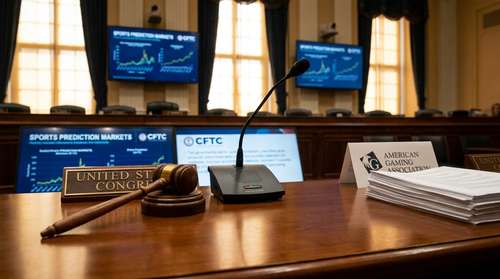
Senator Schiff did not mince words when introducing the legislation, stating that sports prediction contracts are simply sports bets wearing a different name. The core issue revolves around CFTC gambling regulation. Under its current leadership, the Commodity Futures Trading Commission (CFTC) has faced intense criticism for greenlighting these platforms and allegedly abdicating its responsibility to prevent unlicensed gambling in the commodities market.
The Kalshi Sports Betting Ban: Closing the 50-State Loophole
If passed, the legislation will immediately trigger a Kalshi sports betting ban, gutting a significant portion of the company's business model. Currently, these platforms allow residents in jurisdictions with strict prohibitions to place wagers seamlessly. Because the platforms classify their offerings as financial derivatives, they operate nationwide.
This federal preemption has created massive headaches for state regulators. Residents searching for legal sports betting California options or the latest Texas sports wagering news often find themselves legally locked out of traditional sportsbooks. Yet, those same residents can easily download a prediction market app and buy shares on whether the Los Angeles Lakers or Dallas Mavericks will win their next game. The new legislation explicitly preserves state authority, ensuring that local jurisdictions and sovereign tribal nations maintain control over their gaming environments without federal interference.
Platforms React Amidst Polymarket March Madness Betting Surge
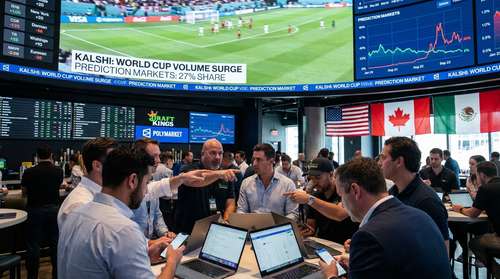
The timing of the bill is no coincidence. The introduction aligns perfectly with the explosion of Polymarket March Madness betting. According to recent data from the platforms, trading volume for the 2026 NCAA men's basketball tournament winner contract quickly surpassed $100 million. Last month, Super Bowl trading volume on these same prediction markets exceeded $1 billion.
Facing this existential threat to their revenue streams, prediction platforms are scrambling to self-regulate. Within hours of the bill's announcement, major players rushed to announce stricter internal guardrails. New policies include preemptively blocking college and professional athletes from trading contracts related to their respective sports, an effort designed to crack down on potential insider trading and market manipulation.
What This Means for State and Tribal Sovereignty
The push to rein in these exchanges has generated powerful allies. Tribal gaming leaders, particularly the California Nations Gaming Association, have applauded the legislation. They argue that prediction platforms have actively undermined tribal sovereignty by operating unlicensed mobile betting operations across state lines. In Utah, where all forms of gambling are strictly prohibited by criminal law, Senator Curtis emphasized the need to protect families from speculative financial products masquerading as investments.
Traditional sportsbooks have also quietly monitored the situation. Following the bill's announcement on Monday, shares in regulated gaming companies saw an initial surge, highlighting the broader industry's desire for an even playing field where all operators must adhere to the same state licensing requirements and tax structures.
The Future of CFTC Gambling Regulation
The legislative road ahead will test the lobbying power of the burgeoning prediction market industry. Companies in the space argue that restricting their platforms will only drive consumers to offshore, black-market websites where no consumer protections exist. Furthermore, they claim their markets offer a fairer choice to traders because there is no traditional 'house' manipulating odds or limiting successful participants.
However, momentum appears to be shifting toward heavy restriction. Just last week, a Nevada judge issued a temporary restraining order blocking certain event contracts in the state, and Arizona recently became the first state to file criminal charges against a prediction platform for operating an illegal gambling business. With the introduction of the Prediction Markets Are Gambling Act, the federal government is signaling that the era of treating sports wagers as commodity futures is rapidly coming to an end.