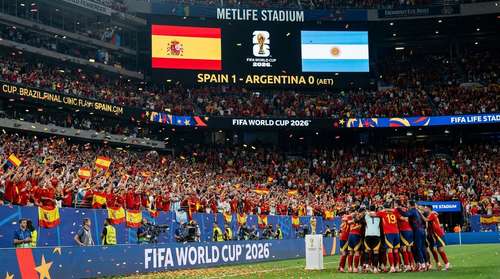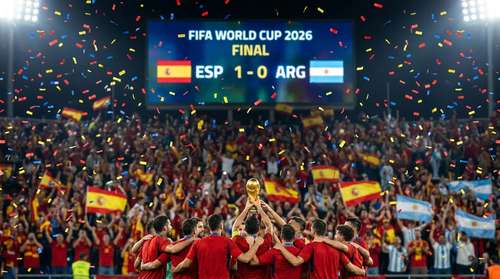
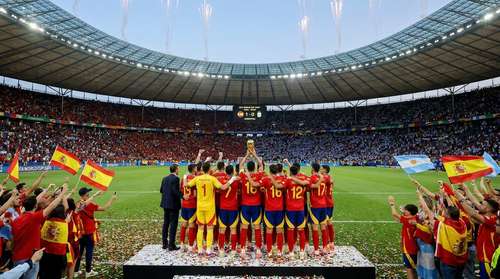
The confetti that rained down on MetLife Stadium on Sunday night was red and gold, signaling a dramatic shift in international football's hierarchy. In a fiercely contested FIFA World Cup 2026 final, Spain defeated defending champions Argentina 1-0 after a grueling battle that stretched into extra time. Substitute Ferran Torres delivered the decisive blow in the 106th minute, etching his name into Spanish lore and securing La Roja's second-ever men's global championship. The victory simultaneously closed the book on the international career of the game's greatest player, marking a bittersweet end to Lionel Messi's last World Cup.
A Tactical Chess Match in New Jersey
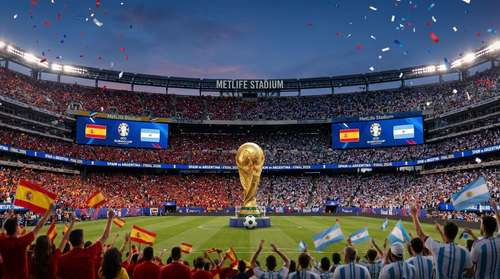
With over 80,660 fans packed into the New York-New Jersey venue, the highly anticipated Spain vs Argentina 2026 clash lived up to its billing. The MetLife Stadium crowd was a vibrant mosaic of Argentina's iconic sky blue-and-white stripes and Spain's deep red kits, creating a deafening backdrop to the action. The event transcended sports, featuring an unprecedented Super Bowl-style halftime show that underscored the massive scale of this North American tournament.
Both sides showcased relentless defensive organization throughout standard time. Argentina pressed aggressively, relying on a rugged midfield to win physical battles, while Spain favored their signature possession-heavy approach to tire out the South Americans. The tactical standoff forced an exhausting 90 minutes that yielded few clear-cut chances. It wasn't until the extra periods that the European champions finally cracked the stubborn Argentine defense.
Ferran Torres' Extra-Time Heroics
For much of the evening, Argentina's Emiliano Martínez and Spain's Unai Simón traded brilliant saves, keeping the scorelines blank and the tension palpable. Argentina pushed hard for a consecutive title, leaning on Messi's playmaking abilities to unlock the Spanish backline. Yet, Spain's disciplined structure held firm, setting the stage for a late substitution that would change the course of football history.
Entering the fray with fresh legs, Torres instantly altered the attacking dynamic. The highly anticipated Ferran Torres World Cup goal arrived shortly after the first extra-time interval. Capitalizing on a momentary lapse in Argentina's defensive rotation, Torres found a sliver of space inside the penalty area. He collected a precise through ball and fired a low, blistering shot past a diving Martínez in the 106th minute. The stadium erupted, and the Spanish bench spilled onto the pitch in sheer euphoria.
The reality of the impending defeat visibly weighed on the defending champions. Despite throwing numbers forward in the final 14 minutes and moving center-backs into the penalty area as makeshift strikers, La Albiceleste could not find an equalizer. For Lionel Messi, the final whistle brought a mix of exhaustion and quiet resignation. The loss ends an incredible streak for Argentina and prevents the superstar from capturing back-to-back world titles before his retirement from the national team.
Rodri Wins Golden Ball as Spain Makes History
While Torres delivered the match-winning moment, the architect of Spain's broader tournament success was undeniably their midfield maestro. Following the final whistle, veteran Rodri was awarded the Rodri Golden Ball 2026, officially recognizing him as the best player of the tournament. His exceptional passing accuracy, defensive interventions, and ability to dictate the tempo were central to navigating Spain through a grueling knockout bracket.
Becoming the Spain World Cup champions 2026 carries massive historical significance beyond just securing their first trophy since 2010. By lifting the cup, the nation achieved an unprecedented milestone. Spain is now the first country in the sport's history to simultaneously hold both the men's and women's World Cup titles, cementing a golden era for the Spanish football federation.
Kylian Mbappé Secures the Golden Boot
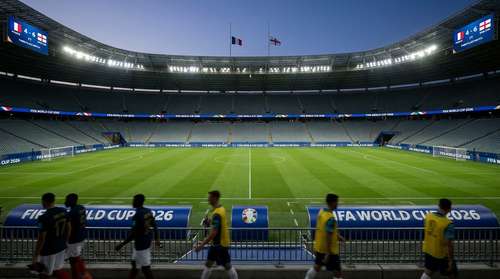
Though France was eliminated by Spain in the semifinals, their superstar captain still left a massive footprint on the tournament. The Kylian Mbappe Golden Boot was confirmed after the conclusion of the final, recognizing his astonishing 10-goal tally over the past month. Mbappé became the first player since Gerd Müller in 1970 to reach double digits in a single World Cup, providing a silver lining for Les Bleus following their third-place finish against England.
A Defining Moment for the 48-Team Era
The 2026 edition of the tournament will be remembered as a massive logistical and sporting success. The expanded 48-team format, featuring a record 104 matches, brought more nations to the global stage than ever before. Yet, despite the presence of debutants and underdog stories, it was the traditional footballing royalty who ultimately survived the grueling 39-day gauntlet.
Spain's triumph in this marathon tournament required remarkable squad depth, elite conditioning, and tactical flexibility. Managerial decisions, particularly the timely introduction of Torres, proved to be the absolute difference-maker when legs were heaviest. As the 23rd edition of the global showcase officially wraps up, the torch has firmly been passed back to Europe. La Roja leaves American soil not just as tournament winners, but as undisputed masters of the modern international game.