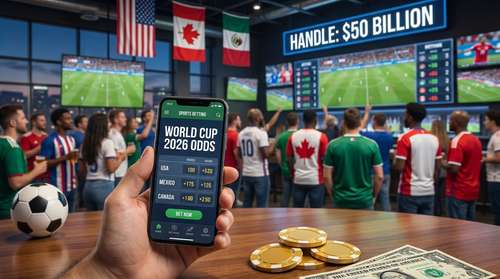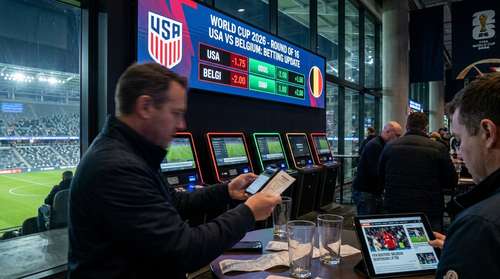
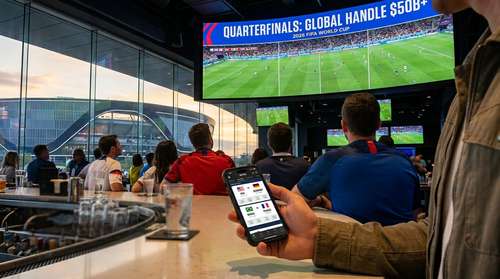
The 2026 FIFA World Cup has evolved into a global spectacle not just on the pitch, but across sportsbook ledgers worldwide. As eight teams prepare for the quarterfinals, the tournament has officially set a new standard for sports wagering. Analysts report that global wagers have shattered previous benchmarks, crossing an estimated $50 billion milestone. This staggering figure secures the tournament's title as the largest sports betting event in history. For bettors looking at the latest World Cup 2026 betting odds, the unpredictability of this expanded 48-team tournament has created a thrilling, high-stakes environment from the opening whistle to this week's pivotal knockout rounds.
Shattering the World Cup Betting Record
When the tournament kicked off in early June, financial analysts and gaming experts projected unprecedented wagering volume. Yet the reality of the past four weeks has outpaced even the most optimistic forecasts. To put this into perspective, the 2022 tournament in Qatar generated roughly $35 billion in global wagers. The 2026 edition has completely eclipsed that figure, establishing an awe-inspiring World Cup betting record.
The surge stems largely from the tournament's expanded format. Featuring 48 nations and a sprawling 104-match schedule, the sheer volume of games gave oddsmakers a massive runway for customer engagement. The 40 additional matches compared to previous editions created millions of extra bet slips and live betting opportunities. Favorable broadcast times across the United States, Canada, and Mexico also removed the friction that previously kept casual fans from placing daytime wagers. With every major upset—like Norway’s stunning elimination of five-time champion Brazil or Argentina’s dramatic 3-2 comeback against Egypt—the sports betting handle 2026 figures have surged as bettors scramble to capitalize on shifting futures markets.
The North American Betting Boom
While global numbers are staggering, the United States market is experiencing its own historic surge. Domestic handle is projected to top $3 billion before the final match at MetLife Stadium. This represents a massive leap from four years ago, driven heavily by a matured regulatory environment where approximately 65% of the U.S. population now has access to legal sportsbooks.
For American operators, the 2026 FIFA World Cup sports betting landscape is a goldmine for customer acquisition and retention. Heavyweights in the space are seeing unprecedented traffic. DraftKings soccer betting volume broke internal company records during the group stages, fueled by high engagement in matches featuring the US Men's National Team and traditional powerhouses. The opening matches for the United States and Brazil actually stood as the top two soccer events in the sportsbook's history regarding active customers.
Competitors are fighting fiercely for market share, rolling out aggressive marketing campaigns and enhanced odds. FanDuel World Cup promotions have dominated commercial breaks, offering lucrative same-game parlay boosts and live-betting specials that keep users glued to their screens long after kickoff.
Quarterfinal Matchups Fueling the Action
As the tournament pauses briefly before the July 9 quarterfinals, bookmakers are preparing for another tidal wave of action. The final eight teams offer a bettor’s dream mix of heavy favorites and Cinderella stories. The matches will take place across four major American venues: Boston, Los Angeles, Miami, and Kansas City.
Historic European Dominance and Underdog Stories
Europe holds six of the eight quarterfinal spots, setting up blockbuster clashes. France will face tournament surprise Morocco, while Spain lines up against a formidable Belgian squad. Norway, fresh off their historic upset of Brazil, will test their momentum against England. Finally, Lionel Messi’s Argentina remains the lone South American contender left, squaring off against Switzerland after surviving a massive scare in the Round of 16.
These high-stakes matchups are generating intense action. Oddsmakers are constantly adjusting lines, balancing heavy public money on traditional juggernauts like France and Argentina while managing the massive liabilities attached to long-shot darlings like Norway and Morocco. If an underdog team makes a deep run to the final, sportsbooks could face significant payouts.
The Evolution of Soccer Wagering
The way fans bet on soccer has transformed fundamentally over the past four years. Traditional moneyline bets have taken a backseat to highly customizable wagers. Bettors are heavily utilizing same-game parlays, combining match outcomes with specific player props—like Kylian Mbappé to score a goal or Lionel Messi to record an assist.
Micro-betting has also taken a firm hold on the market. Sportsbooks are allowing fans to wager on pitch-by-pitch micro-events: the outcome of the next corner kick, whether a yellow card will be issued in the next five minutes, or the precise result of a penalty shootout. This continuous engagement loop is a primary reason why the sports betting handle 2026 numbers have skyrocketed so rapidly.
With billions of dollars hanging in the balance over the next two weeks, the drama of the 2026 World Cup isn't just about who will hoist the trophy on July 19. It is about a rapidly expanding global betting ecosystem that has officially crossed into uncharted territory, transforming the fan experience forever.