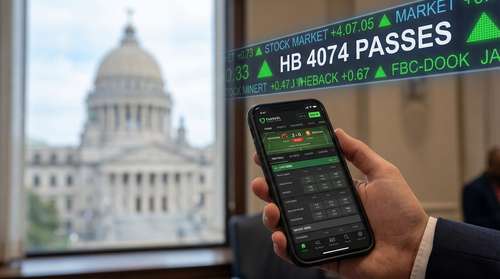
The Mississippi House of Representatives has overwhelmingly approved HB 4074, a landmark piece of legislation that could finally bring statewide mobile sports betting to the Magnolia State. In a decisive 100-11 vote on Wednesday, lawmakers advanced the Mississippi Mobile Sports Wagering Act, sponsored by Rep. Casey Eure. The bill proposes a unique tax structure designed to balance the interests of the state’s powerful casino industry with the growing demand for online wagering. If enacted, the legislation would impose a 22% tax on mobile sports betting revenue while simultaneously cutting the tax rate for physical casinos, a strategic move aiming to generate approximately $100 million annually for the state.
The ‘Grand Bargain’: Higher Mobile Taxes, Lower Retail Rates
One of the most innovative aspects of HB 4074 is its financial framework, which Rep. Casey Eure has crafted to appease long-standing opposition from brick-and-mortar casino operators. Historically, physical casinos in cities like Biloxi and Tunica have feared that mobile betting would ‘cannibalize’ their business, keeping visitors away from their properties.
To address this, the bill introduces a ‘grand bargain.’ While it sets a robust 22% tax rate on new mobile wagering revenue—aligning Mississippi with the national average—it also offers a significant concession to existing operators. The legislation proposes reducing the state gaming tax on physical casinos from 8% to 6%. This reduction is estimated to save the state's 26 casinos roughly $48 million per year, capital that proponents argue can be reinvested into property upgrades and employee wages.
Financial Impact: Boosting the Retirement System
Beyond the mechanics of the gambling industry, HB 4074 is being pitched as a vital financial lifeline for Mississippi’s public sector. Rep. Eure projects that the 22% mobile tax will generate roughly $100 million in annual revenue once the market matures. The bill explicitly mandates that the first $50 million of this revenue be directed annually to the Public Employees’ Retirement System (PERS) for the next decade.
This dedicated funding stream addresses a critical need, as the state’s retirement system faces long-term funding challenges. By tying the expansion of gambling directly to the financial security of retired public servants, the bill has garnered broader bipartisan support in the House than previous attempts.
Market Structure and Tethering
Under the provisions of HB 4074, the mobile market would be ‘tethered’ to the state’s existing gaming infrastructure. Each of Mississippi's 26 licensed casinos would be permitted to partner with one online sportsbook operator (a ‘skin’). This is a tightening of previous proposals that considered allowing up to two skins per property. This structure ensures that major national brands like DraftKings, FanDuel, and BetMGM must collaborate with local stakeholders to enter the market.
The Senate Hurdle: An Uphill Battle Remains
Despite the crushing victory in the House, the bill’s future is far from guaranteed. It now heads to the Mississippi Senate, where similar legislation has died in committee for years. The primary obstacle remains the Senate Gaming Committee and its chairman, Sen. David Blount.
Sen. Blount has consistently maintained that the purpose of legalizing gaming in Mississippi was to drive tourism, investment, and jobs—benefits he argues are not provided by betting on a smartphone from a living room. In previous sessions, he has refused to advance mobile betting bills without the explicit backing of the Mississippi Gaming Commission or clear evidence that it won't harm the physical casino industry. Proponents hope the new tax cut for casinos included in HB 4074 will finally be the key to unlocking the Senate's door.
What’s Next for Mississippi Bettors?
If the Senate defies expectations and passes the bill, and it is subsequently signed by Governor Tate Reeves, the legislation sets an aggressive timeline. The bill outlines a potential launch date of no later than December 8, 2026. This would allow Mississippi bettors to legally wager on their mobile devices just in time for the NFL playoffs and college football bowl season.
For now, residents must continue to visit a physical sportsbook to place a legal bet. However, with the House’s decisive action and the strategic inclusion of tax relief for casinos, the odds of legalization are shorter than they have ever been.