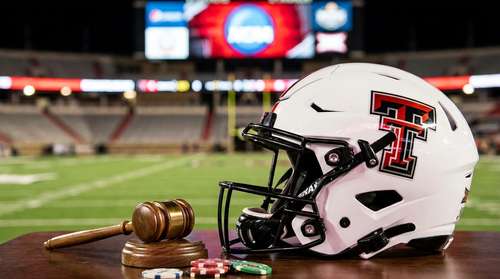
The highly publicized Brendan Sorsby lawsuit has reached a dramatic conclusion. On Thursday, June 18, 2026, the former Texas Tech quarterback officially filed a voluntary dismissal of his lawsuit against the NCAA in Lubbock County. This stunning reversal ends a chaotic, weeks-long legal battle over his eligibility and officially closes the book on his collegiate career in the wake of a massive college football betting scandal. Ineligible to return to the college gridiron, Sorsby is now pivoting his focus toward the professional ranks by applying for the NFL Supplemental Draft.
The dismissal of the lawsuit was not merely a sudden change of heart by the star athlete. It was forced by an uncompromising ultimatum from Texas Tech University. After initially defending Sorsby, the university definitively informed him on June 15 that they would not allow him to take the field for the 2026-27 football season. This decision rendered the temporary injunction he previously won from a Texas judge effectively useless.
Texas Tech's Ultimatum and the Big 12 Backlash
The timeline of Sorsby’s exit paints a picture of a university retreating under immense external pressure. On June 8, a Lubbock County judge granted Sorsby an injunction that circumvented his NCAA suspension, making him temporarily eligible to play. However, this legal maneuvering triggered swift and severe pushback from the Big 12 Conference and rival institutions.
Facing the prospect of Texas Tech playing a court-cleared but NCAA-ineligible player, the Big 12 Conference filed a federal lawsuit in Dallas against the university and state officials. The conference threatened catastrophic sanctions, including steep fines and barring the Red Raiders from the Big 12 Championship game. Furthermore, rival schools openly discussed boycotting games against Texas Tech to protest their handling of the sports betting scandal.
By Monday, the mounting pressure proved too formidable. Texas Tech Regent Chair Cody Campbell released an open letter confirming Sorsby would not play for the team. The university's legal documents confirmed the harsh reality: Texas Tech essentially benched Sorsby permanently, leaving him with no choice but to voluntarily dismiss the case. For the program's leadership, the reputational and financial risks had simply become unsustainable.
Inside the College Football Betting Scandal
The controversy surrounding Sorsby stems from what has become one of the most glaring violations of NCAA sports gambling rules in recent history. The 22-year-old quarterback admitted to placing thousands of impermissible sports wagers totaling over $90,000 during his collegiate tenure. Most alarmingly, this included placing bets on his own team's games during his freshman season at Indiana four years ago.
Following his time at Indiana, Sorsby transferred and played two seasons at Cincinnati before moving to Texas Tech in January 2026. While at Texas Tech, the NCAA's investigation caught up with him, officially ruling him permanently ineligible. The sheer volume of the wagers—and the crossing of the ultimate integrity line by betting on his own program—made his initial legal victory a lightning rod for criticism across the broader sports world.
Protecting the Integrity of the Game
The Big 12's aggressive counter-lawsuit underscores a critical juncture for college athletics. Conference officials argued that permitting Sorsby to play would irreparably undermine public confidence in athletic competition. In a landscape where legal sports gambling is ubiquitous, governing bodies are fighting tooth and nail to enforce baseline NCAA sports gambling rules and maintain the fundamental integrity of their contests.
A Pivot to the 2026 NFL Supplemental Draft
With his bridge burned at Texas Tech and his NCAA eligibility officially dead following the lawsuit’s dismissal, Sorsby's only remaining path is professional football. To enter the NFL Supplemental Draft, a player must officially lose their collegiate eligibility, a condition Sorsby finally met by dropping the case.
He faces a hard June 22 deadline to submit his application for the supplemental draft. Assuming the NFL approves his entry—a decision that requires the league to weigh his undeniable talent against his gambling history—he is tentatively scheduled to hold a pro day workout for NFL scouts on July 10.
The NFL Supplemental Draft is a rarely used mechanism designed for players whose eligibility status changes dramatically after the standard April draft has concluded. It operates on a blind bidding system. NFL teams submit a bid indicating which round's pick they are willing to forfeit in the upcoming year's standard draft. If a team successfully claims Sorsby, they will lose that corresponding pick in the 2027 NFL Draft. Given that no player has been selected in the supplemental draft since safety Jalen Thompson in 2019, Sorsby’s entry is generating intense intrigue.
Sorsby presents a fascinating, albeit risky, dilemma for NFL franchises. Widely considered an elite arm talent, some NFL insiders have compared his raw throwing mechanics to top-tier quarterbacks, suggesting his arm talent ranks inside the top eight globally. However, the NFL famously enforces strict anti-gambling policies. General managers must now determine if spending a future draft pick on Sorsby is worth the potential liability of bringing a player fresh out of a high-profile college football betting scandal into their locker room.