As the 2026 World Cup commands global attention, soccer fans are facing an unprecedented and highly sophisticated digital threat. A massive wave of illegal sports betting scams 2026 has emerged, leveraging cutting-edge generative technology to deceive millions of punters. In the crosshairs of this massive fraud are Manchester United captain Bruno Fernandes and Real Madrid sensation Jude Bellingham. Their identities have been entirely hijacked by unlicensed offshore operators, marking a dangerous evolution in digital fraud and exposing fans to severe financial risk.
The Fabrication of the QH88 Bruno Fernandes Video
In recent days, a highly convincing, one-minute promotional video began circulating widely across social media channels. The footage purportedly showed Bruno Fernandes signing a lucrative ambassadorial contract at Old Trafford. The platform in question was QH88, an unlicensed Vietnamese sportsbook. However, joint investigative reporting by the Norwegian football magazine Josimar and The Guardian revealed that the QH88 Bruno Fernandes video is a complete fabrication.
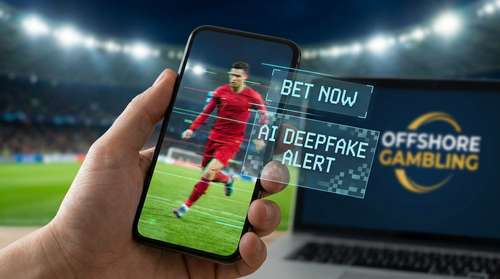
A rigorous frame-by-frame analysis of the footage confirmed it as an advanced Bruno Fernandes deepfake betting trap. While cybersecurity experts noted minor continuity errors, blurred background faces, and subtle visual artifacts, these red flags were virtually invisible to casual fans scrolling through their feeds on a smartphone. The offshore sportsbook demonstrated remarkable brazenness by building an entire digital ecosystem around this fictitious partnership. They boldly played the counterfeit video on a continuous loop on their homepage, specifically designed to lure unsuspecting bettors searching for action during the summer tournament.
Jude Bellingham AI Gambling Apps and Fake News
Fernandes is not the only international superstar to become a digital marionette for organized crime. Real Madrid midfielder Jude Bellingham was similarly targeted by a different unlicensed operator known as Nightwin. In this instance of Jude Bellingham AI gambling deception, the scammers did not just stop at doctored imagery.
The operators manufactured entirely fake BBC news articles to lend immediate credibility to their criminal enterprise. Fans who clicked on the fraudulent links were directed to download an application dubbed "Bellingham Bet." This digital storefront boasted a fabricated 4.9-star rating and proudly displayed over 1.9 million fake downloads. Nightwin, which allows registrations from within the United Kingdom without requiring a VPN, has absolutely no connection to the English international. The sheer audacity of this AI sports betting fraud highlights a rapid escalation in the tactics used to defraud vulnerable sports fans.
The Unstoppable Rise of Offshore Sportsbook Deepfakes
Why are international regulatory bodies struggling to combat these offshore sportsbook deepfakes? The primary issue lies in the exceptionally murky legal structures of global gambling. These illicit platforms operate almost exclusively from offshore havens where the ultimate beneficial owners are completely shielded by local privacy laws and complex webs of shell companies.
When legal teams representing elite athletes attempt to serve cease-and-desist letters to these operators, their demands evaporate into the void. You cannot successfully sue an entity when its owners are ghosts hidden behind a registry in a distant jurisdiction. For example, Nightwin is licensed solely in Curaçao under a company called Flybergom B.V., which was incorporated just weeks ago in May 2024. This same shell corporation also runs the DK88 brand targeting illegal markets in Malaysia and Singapore. Historically, illegal betting operators merely stole club crests and player photographs. Now, the accessibility of advanced machine learning tools has handed them the power to bypass traditional copyright enforcement entirely.
Navigating the 2026 World Cup Betting Scam Epidemic
The timing of these synthetic media campaigns is far from an accident. With global attention fixated on the pitch, the potential victim pool for a World Cup betting scam has never been larger or more engaged. Fans eager to back their favorite national teams are highly susceptible to platforms that appear to hold the blessing of their sporting heroes.
Active players are strictly prohibited from deriving any benefit from sports betting operators, whether legal or not, under FIFA's stringent Code of Ethics. For context, when former Everton defender Yerry Mina appeared in a television advert for a Colombian sportsbook in 2019, he was promptly fined £10,000 by the Football Association. The idea that stars of Fernandes or Bellingham's caliber would risk their World Cup participation to back unlicensed offshore casinos is absurd to industry insiders. Yet, the deepfakes are more than convincing enough to trick the average punter.
The digital hijacking of soccer's elite serves as a massive wake-up call. As artificial intelligence continues to blur the line between reality and fabrication, bettors must rely exclusively on heavily regulated, licensed sportsbooks. Verifying the legitimacy of an endorsement now requires extensive due diligence, proving that in the modern era of sports gambling, seeing is no longer believing.