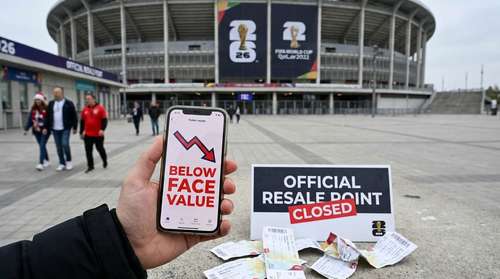
As the clock ticks down to the summer of 2026, the anticipated football frenzy in North America is hitting an unprecedented economic roadblock. According to a comprehensive market report released today, May 4, 2026, a shocking disparity has emerged in the global ticketing landscape. While FIFA 2026 ticket prices were initially set with an ambitious $380 face-value fee for standard group stage matches, values on independent exchanges have plummeted. This dramatic drop is sending shockwaves through host cities and sparking urgent questions about the economic accessibility of the newly expanded 48-team tournament.
The Secondary Market Crash: The Hunt for Cheap Tickets
For months, supporters bracing for exorbitant costs assumed that securing a seat at any North American match would require breaking the bank. However, the current reality of the World Cup 2026 secondary market paints a vastly different picture. The sheer volume of matches—104 games spread across the United States, Canada, and Mexico—has created a massive oversupply of inventory for lower-profile group stage fixtures.
Fans looking for cheap World Cup tickets are bypassing official channels entirely. Early buyers and speculative resellers who purchased standard category seats during the blind-draw phases are now panicking as demand for certain international matchups softens. Unable to recoup their initial investment, many are offloading their seats at massive discounts. Today's ticketing report indicates that some group stage entry passes are moving for roughly $190, nearly half of FIFA's unyielding benchmark. Matches held in sprawling, non-coastal venues are seeing the sharpest declines, revealing a clear disconnect between the governing body's valuation and actual consumer demand.
The Divide: USMNT Matches and the MetLife Finale
Despite the crash at the lower end of the spectrum, the top tier of the tournament remains fiercely competitive and astronomically expensive. The plummeting market values do not apply to the heavy hitters. In fact, USMNT World Cup tickets are currently trading at record premiums. The anticipation surrounding the host nation's opening fixtures on the West Coast has driven domestic demand into overdrive, leaving everyday supporters priced out of seeing their home team take the pitch.
The disparity becomes even more jarring when looking ahead to the knockout stages. The scramble for the MetLife Stadium 2026 final is reaching a fever pitch, with secondary platforms listing early speculative tickets well into the five-figure range. This dual-reality market—where lesser-known nations play to potentially heavily discounted crowds while marquee matches remain exclusively for the wealthy—is creating a deeply fragmented fan experience that threatens the overarching atmosphere of the event.
Looming FIFA 2026 Attendance Concerns
This unprecedented price gap is not just a frustrating problem for scalpers losing money; it has triggered very real FIFA 2026 attendance concerns. North American venues, largely consisting of massive, 70,000-plus capacity NFL stadiums, require immense turnout to avoid the visual and atmospheric disaster of empty seats broadcast to billions around the globe.
Host city organizing committees are quietly sounding the alarm. Local governments and hospitality sectors expected a guaranteed economic windfall and packed houses for every single one of the 104 games. Instead, the inflated official face value has deterred local fans from engaging with the tournament's smaller fixtures. If everyday sports enthusiasts feel alienated by the governing body's initial pricing strategy, those colossal venues could see noticeable gaps in the stands during the early weeks of the competition, heavily impacting local match-day revenue.
The Impact of the 48-Team Expansion
The root of this imbalance traces directly back to the tournament's historic format change. Introducing 16 additional teams naturally dilutes the initial match quality, bringing in nations that may lack a massive traveling supporter base. Asking a casual local fan to pay nearly $400 for a weekday afternoon group stage game between two emerging football nations was an ambitious gamble that the open market is firmly rejecting.
Fan Backlash and the Rigid Official Ecosystem
Supporters groups across North America and Europe are vocally protesting what they describe as a completely out-of-touch pricing model. The backlash is heavily directed at the lack of flexibility within the official ecosystem. Fans who purchased tickets early on but can no longer travel or afford the trip are heavily penalized by the FIFA official resale platform. Because the governing body's proprietary exchange does not allow sellers to list tickets below the original face value, fans are effectively trapped holding overpriced inventory they cannot move.
International travelers, already burdened by inflated transatlantic flight and accommodation costs, find this structural rigidity incredibly frustrating. It forces desperate ticket holders onto third-party platforms, fueling the current race to the bottom for prices. Without a dynamic pricing mechanism to adjust to real-world demand within their own system, organizers are watching their controlled ticketing environment fracture.
As we close in on the opening ceremonies, the pressure continues to mount on event directors to address the pricing fallout. Whether they intervene to stimulate local interest or simply let the open market dictate the reality of stadium attendance, the economics of this historic event are proving to be as unpredictable as the game itself.