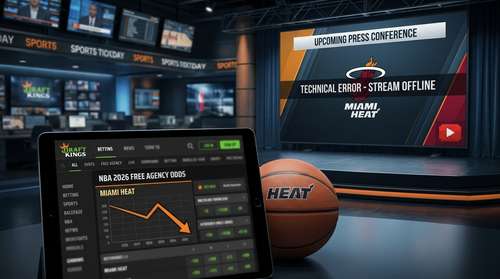

DraftKings (NASDAQ: DKNG) has officially declared the end of the traditional sportsbook era and the beginning of the "exchange wagering" age. In a thunderous Q4 earnings call on Thursday evening, CEO Jason Robins unveiled a massive strategic pivot toward prediction markets—a move designed to capture a projected $10 billion annual revenue opportunity and finally bypass the legislative gridlock in states like Texas and California.
The announcement comes just days after Super Bowl LX, where decentralized competitor Kalshi reportedly handled over $1 billion in trading volume, shattering records and leaving traditional Nevada sportsbooks—which handled just $133.8 million—in the dust. While DraftKings stock tumbled nearly 16% in after-hours trading due to soft 2026 guidance, Robins remained defiant, framing the dip as the cost of seizing a "once-in-a-generation" shift in how Americans wager.
The $10 Billion Loophole: Cracking Texas and California
For years, DraftKings has fought expensive, losing battles to legalize sports betting in the two distinct "white whales" of the industry: Texas and California. With legislative efforts in Austin stalled until 2027 and California tribes maintaining a stranglehold on gaming, Robins is now changing the game entirely.
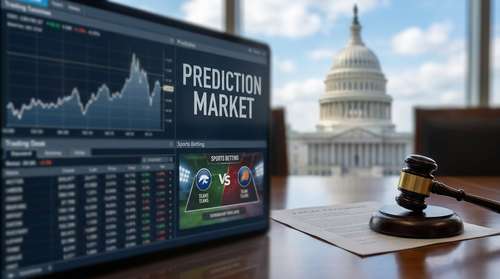
By reclassifying wagers as "event contracts" regulated federally by the CFTC (Commodity Futures Trading Commission) rather than state gaming boards, DraftKings plans to legally offer betting-like products in these prohibited jurisdictions.
"Predictions is the most exciting new growth opportunity we have seen since PASPA was struck down in 2018," Robins told investors. "We believe this is a $10 billion annual gross revenue opportunity in the years ahead, primarily because it opens the map completely."
The company’s new dedicated app, DraftKings Predictions, initially launched in December 2025, is set for a massive expansion. Unlike a sportsbook where you bet against the house, this exchange model allows users to trade "Yes/No" shares on outcomes—from NBA player point totals to inflation rates—directly with each other.
The Kalshi Wake-Up Call: Super Bowl LX Changed Everything
If there was any doubt about the viability of prediction markets, Super Bowl 60 erased it. While traditional books sweated over point spreads, Kalshi capitalized on what they call "culture bets."
Reports indicate that Kalshi saw over $100 million in volume merely on which song Bad Bunny would perform first during the halftime show. In total, the platform's $1 billion handle dwarfed the regulated numbers from Las Vegas. This disparity signaled a massive consumer appetite for high-frequency, novelty trading that traditional sportsbooks simply cannot offer under current regulations.
"The consumer has spoken," said a senior analyst at Eilers & Krejcik Gaming. "They don't just want to bet on the spread. They want to trade the news, the halftime show, and the weather. DraftKings realized they were competing for crumbs while Kalshi was eating the whole cake."
Strategic Acquisitions: Crypto.com and Railbird
DraftKings isn't building this ecosystem from scratch. The company confirmed a major partnership with Crypto.com Derivatives North America to introduce player-specific contracts for the NFL and NBA. This allows users to "trade" the performance of stars like Luka Dončić or Patrick Mahomes in real-time, effectively replicating the popular player prop market but within a federally regulated exchange framework.
Furthermore, the integration of Railbird Exchange, acquired in late 2025, will provide the liquidity engine needed to match millions of orders instantly. Robins emphasized that liquidity is the "killer app" of prediction markets, and DraftKings intends to be the primary market maker to ensure tight spreads and instant fills.
Wall Street Reacts: Short-Term Pain for Long-Term Gain?
Despite the bold vision, Wall Street punished DKNG stock on Friday. The company's 2026 revenue guidance of $6.5 billion to $6.9 billion fell significantly short of the consensus $7.3 billion estimate. The shortfall is largely attributed to the heavy upfront investment required to scale the Predictions platform and acquire customers in non-betting states.
"We are deploying growth capital to win," Robins assured stakeholders. "We are targeting hundreds of millions in revenue for DraftKings Predictions in the near term, but we aren't optimizing for 2026 EBITDA. We are optimizing for market dominance in 2030."
The Regulatory Battlefield
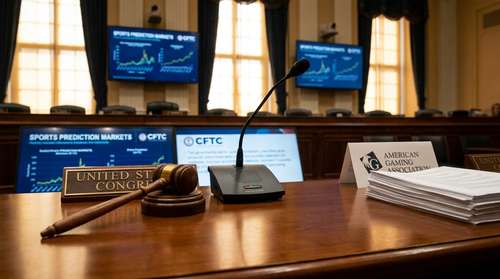
The pivot is not without risks. While the CFTC has recently taken a more permissive stance toward event contracts (notably dropping its appeal against Kalshi), the line between "financial hedging" and "gaming" remains blurry. However, with the precedent set by Kalshi's court victories, DraftKings appears confident it can operate freely in states that have historically banned its core product.
As of today, the race is on. DraftKings is betting the house that the future of sports gambling isn't gambling at all—it's trading.