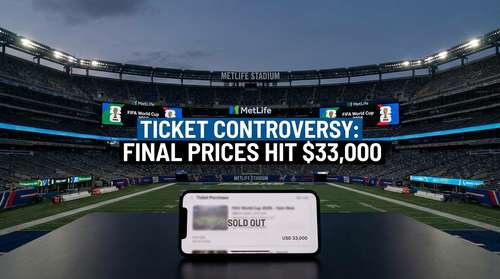
Just weeks before the global soccer community descends upon North America, a massive FIFA 2026 ticket controversy is threatening to overshadow the beautiful game. What began as a celebration of the sport has devolved into a public relations nightmare, with international ticketing experts and U.S. lawmakers accusing the governing body of orchestrating a brazen FIFA artificial scarcity scandal. The focal point of the outrage? Staggering markups that have seen the premium World Cup 2026 final ticket price skyrocket to nearly $33,000 for the championship match.
While the demand for the expanded 48-team tournament is undeniable, the math behind the curtain paints a troubling picture. Despite millions of initial applications, thousands of seats remain completely empty across multiple host cities. This stark contrast between reported demand and actual availability has led to serious questions about FIFA's aggressive pricing tactics and deliberate inventory holdbacks.
The Mechanics of the FIFA Artificial Scarcity Scandal
The root of the current outrage lies in how soccer's global governing body is releasing its inventory. Instead of making all available seats public during the "Last-Minute Sales Phase" that began on April 1, FIFA has been systematically drip-feeding tickets into the market. For example, ticketing trackers noted that matches at AT&T Stadium in Dallas showed virtually zero availability for three straight weeks in April, before sudden, highly limited drops occurred later in the month.
This staggered release creates the illusion of immediate sell-outs, putting immense pressure on buyers while masking the reality of 2026 World Cup unsold tickets. The situation has escalated directly to the halls of Congress. U.S. Representatives Frank Pallone and Nellie Pou recently sent a formal letter to FIFA President Gianni Infantino demanding full transparency. The lawmakers explicitly challenged the opaque use of FIFA dynamic pricing 2026 strategies, demanding explanations by May 22 regarding hidden inventory, unexplained resale fees, and the exact number of tickets actually available.
"FIFA also appears to be restricting ticket supply to shape demand," the lawmakers noted in their correspondence, highlighting that holding back matches creates artificial panic among fans who fear missing out entirely.
How Much Are World Cup Final Tickets?
If you find yourself asking how much are world cup final tickets right now, prepare for massive sticker shock. For the highly anticipated July 19 finale, the cost of attendance has entered the stratosphere. Originally, premium Category 1 seats were advertised with a high-end ceiling of roughly $10,990. However, in a move that blindsided fans and watchdogs alike, those prime MetLife Stadium 2026 tickets have quietly been rebranded as "Front Category 1" and repriced at a jaw-dropping $32,970 on the official sales site.
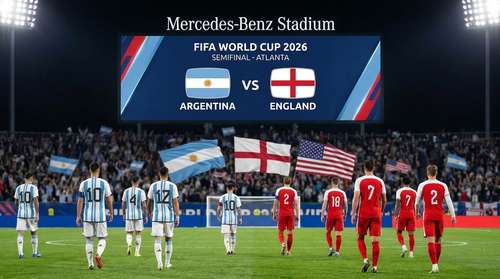
This aggressive markup isn't limited to the final in East Rutherford, New Jersey. Semifinal matches at AT&T Stadium in Texas and Mercedes-Benz Stadium in Atlanta have seen top-tier tickets surge past $11,130 and $10,635 respectively. Even the U.S. Men's National Team opener against Paraguay at SoFi Stadium in Los Angeles saw premium locations secretly transition into higher-priced tiers, leaping from around $2,735 to over $4,000 for upgraded placements.
Thousands of 2026 World Cup Unsold Tickets Remain
Perhaps the most baffling element of the FIFA 2026 ticket controversy is that stadiums are far from sold out. While Infantino has consistently defended the pricing structure by pointing to over 500 million global ticket requests, the reality on the primary market tells a remarkably different story. According to ticketing experts, aggressive pricing is currently keeping buyers at bay.
Industry analysts, including "The Price of Football" co-author Kieran Maguire, suggest this is a calculated effort at revenue maximization. Maguire recently noted that the governing body has seemingly abandoned traditional supporters in pursuit of maximum profit through small, scarcity-driven ticket drops. Ticketing executive Jim McCarthy echoed this sentiment, explaining that selling out the tournament wouldn't be difficult, but the current price points are simply too aggressive for the average consumer to absorb.
FIFA Dynamic Pricing 2026: Profit Over Fans?
The frustration is compounded by a digital infrastructure that routinely leaves buyers staring at loading screens for hours during unannounced ticket releases. Fans who initially bought standard Category 1 tickets—expecting prime sideline views—have reported being relegated to less desirable corner sections. They later watched their originally desired midfield seats pop up as "Front Category 1" for nearly double the initial cost.
With the opening whistle just around the corner, FIFA is playing a dangerous game of chicken with the global fanbase. Organizers must now decide whether to drop prices to fill the stadiums, or hold the line to protect their carefully crafted market illusion. Whatever the final outcome, the sheer audacity of a $33,000 World Cup 2026 final ticket price will undoubtedly be remembered as a turning point in how international sporting events monetize their most dedicated supporters.